-
Posted on: 12 Mar 2026
-
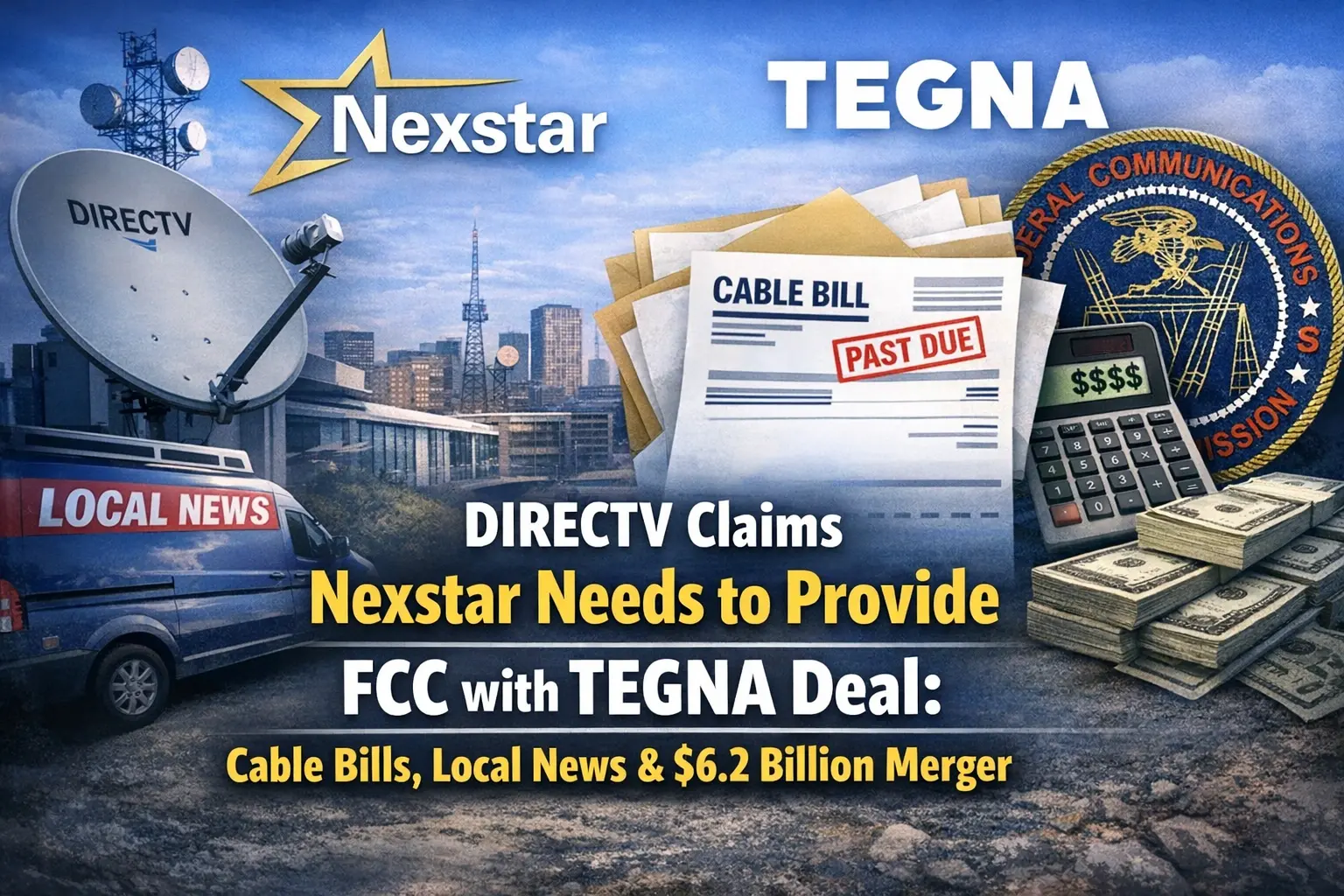
The media merger world is heating up again. On March 6, 2026, satellite giant DIRECTV fired off a strongly worded letter to the Federal Communications Commission (FCC), demanding that Nexstar Media Group hand over key economic studies it already gave the Department of Justice (DOJ). These documents supposedly support Nexstar’s proposed acquisition of TEGNA—a deal valued at around $6.2 billion that could reshape local television across America.
If you’re wondering why this obscure regulatory spat matters, here’s the short answer: DIRECTV argues the merger will drive up your cable or satellite bills through higher retransmission fees and reduce the diversity of local news in dozens of markets. By withholding economic data from the FCC while sharing it with the DOJ, Nexstar is playing favorites with regulators, according to DIRECTV. The satellite provider wants the FCC to hit pause on the entire deal until the full record is public.
This isn’t just insider drama—it’s a high-stakes fight over competition in local TV, consumer costs, and the future of broadcast ownership rules. In this comprehensive guide, we break down the background, DIRECTV’s exact claims, the economic data dispute, potential impacts, and what happens next. Whether you’re a consumer worried about rising bills or a media watcher tracking consolidation, this is everything you need to know.
Background: The Nexstar-TEGNA Merger Explained
Announced in August 2025, the Nexstar-TEGNA deal would combine two of the largest local television station owners in the U.S. Nexstar already controls nearly 200 stations, while TEGNA owns 64 more, including major-market outlets in cities like Los Angeles, Denver, and Phoenix.
Together, the companies would reach a massive share of U.S. households—potentially pushing well beyond the FCC’s long-standing 39% national audience reach cap. This rule, designed to prevent any single entity from dominating the airwaves, has been under pressure for years as streaming and cord-cutting change how Americans watch TV.
Nexstar CEO Perry Sook has been bullish. In early March 2026, an investor remarked he confirmed the company provided “over 2 million documents” to the DOJ during its second request for information. He highlighted “economic studies” that argue traditional market definitions for video competition need updating to include streaming services like Netflix and YouTube TV.
The deal needs approval from both the DOJ (focused on antitrust competition) and the FCC (which reviews under a broader “public interest” standard, including localism, diversity, and competition). FCC Chairman Brendan Carr and even President Trump have signaled support, with hints that the 39% cap could be waived or eliminated to let the deal close—possibly in late 2026.
But not everyone is on board. Multichannel video programming distributors (MVPDs) like DIRECTV and Optimum, plus rural broadband groups like NTCA, have lined up in opposition. They fear the combined Nexstar-TEGNA powerhouse would wield unprecedented leverage in retransmission consent negotiations—the fees stations charge cable and satellite providers to carry their signals.
DIRECTV’s March 6 Letter to the FCC: The Core Claims
In its filing (docketed publicly via the FCC’s Electronic Comment Filing System), DIRECTV doesn’t mince words. The company has already submitted its own factual evidence and expert economic analysis urging the FCC to deny the license transfer application outright.
DIRECTV’s key argument: Nexstar cherry-picked regulators. While flooding the DOJ with over 2 million pages—including favorable economic studies—the company has not placed those same studies into the FCC’s public record. DIRECTV says this violates basic principles of administrative fairness. The FCC cannot properly evaluate the deal’s public interest impact without seeing the full picture Nexstar used to defend it before the DOJ.
Specifically, DIRECTV demands that Nexstar immediately file:
- All economic studies and reports submitted to the DOJ in support of the transaction.
- Any analyses showing (or attempting to show) that the merger won’t harm competition in local video markets.
Without this data, DIRECTV argues, the FCC proceeding lacks a complete record. The satellite provider wants the merger review placed on hold until Nexstar complies.
This move builds on earlier opposition. DIRECTV and others have warned that the deal would eliminate head-to-head competition in dozens of Designated Market Areas (DMAs), giving the combined company massive bargaining power over retransmission fees.
The Economic Data Dispute: Why It Matters for Regulatory Review
The DOJ’s review is narrower: Does the merger substantially lessen competition under antitrust law? Nexstar’s economic studies apparently argue that “video” markets are broader today, encompassing not just broadcast and cable but also streaming. If successful, this framing could downplay the loss of local station competition.
The FCC, however, must consider the public interest—including effects on local news diversity, emergency information access, and consumer prices. DIRECTV’s own expert analysis claims the deal will:
- Raise retransmission consent fees significantly.
- Pass those costs directly to consumers via higher monthly bills.
- Reduce viewpoint diversity as newsrooms consolidate.
By pointing to CEO Sook’s public comments praising the studies, DIRECTV cleverly uses Nexstar’s own words against it. The studies exist and were deemed “very good information” by the CEO—yet they’re missing from the FCC docket.
Industry watchers note this is a classic regulatory strategy: force transparency so opponents (and the public) can challenge the underlying assumptions.
Consumer and Industry Impact: Higher Bills and Less Local News?
Opponents paint a stark picture. Retransmission consent fees have already skyrocketed in recent years. Rural providers report average increases exceeding $100,000 per station in some cycles. A super-sized Nexstar-TEGNA entity controlling hundreds of stations could demand even more, experts say.
For the average household:
- Cable and satellite subscribers could see an extra $5–10 monthly hit if fees rise 20–30% in affected markets.
- Over-the-top streaming services that carry local channels (like YouTube TV or Hulu + Live TV) might pass on costs, too.
- In overlap markets (nearly 70% of TEGNA’s DMAs), head-to-head competition disappears, weakening negotiating leverage for distributors like DIRECTV.
On the news side, critics worry about reduced local journalism. Combined ownership often leads to shared newscasts, layoffs, and homogenized coverage. Rural broadband groups like NTCA have warned that higher fees could accelerate cord-cutting in areas already struggling with video service access.
Supporters counter that the scale helps local stations compete against Big Tech and national networks. Nexstar argues the deal preserves “viable, reliable sources of trusted, locally-focused news” in an era of declining ad revenue.
Who Supports vs. Opposes the Deal?
Opposition:
- DIRECTV (leading the data transparency fight)
- Optimum and other MVPDs
- NTCA – The Rural Broadband Association
- Free Press and public interest groups (historical opposition to consolidation)
Support:
- FCC Chairman Brendan Carr
- President Trump (public backing cited in reports)
- Nexstar and TEGNA executives
The political angle is notable: The Trump administration has shown willingness to relax ownership rules, contrasting with stricter scrutiny under previous leadership.
What Happens Next? Timeline and Potential Outcomes
The merger is currently under active review. Nexstar expects a late-2026 close, possibly with some station divestitures to address overlap concerns.
DIRECTV’s March 6 letter adds friction, but industry insiders doubt it will derail the process entirely. The FCC could:
- Order Nexstar to file the studies (quick transparency win).
- Ignore the request and proceed toward approval with conditions (retransmission fee caps?).
- Use the dispute to justify deeper scrutiny and potential denial (unlikely given current FCC leanings).
Consumers should watch for FCC public notices and any DOJ settlement announcements. Station sales in key markets could emerge as a compromise.
Final Thoughts: A Turning Point for Media Consolidation?
DIRECTV’s push for economic transparency highlights a broader tension in 2026 media regulation: traditional broadcasters seeking scale versus distributors and consumers fearing monopoly power. Whether the FCC forces Nexstar to disclose its studies or waves the deal through, one thing is clear—this $6.2 billion transaction will have ripple effects on your TV bill and local news for years.
Stay informed. The outcome could redefine how local television operates in the streaming age.