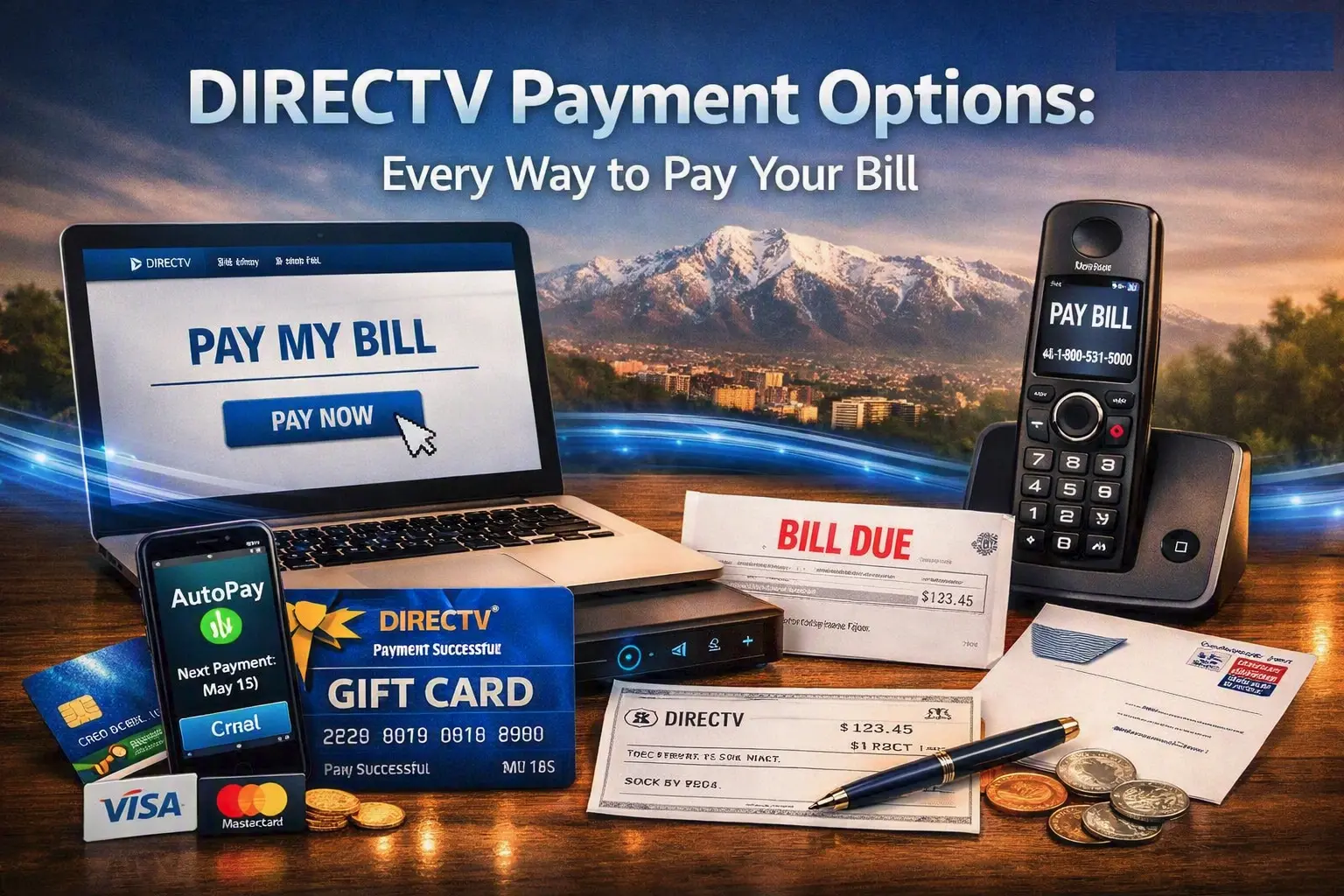
DirecTV bills can be paid seven ways: through the DirecTV website or app (signed in or as a guest), by enrolling in AutoPay, through a bank's own Bill Pay service, by phone, by mail with a check or money order, in person at a Western Union location, or through a third-party bill-payment aggregator such as doxo. Customers who are behind on payments may qualify for a scheduled payment arrangement or a short service interruption extension.
However, these options depend on account standing and are not offered to every customer. Split payments across two methods are generally no longer supported for a single transaction, though partial payments from one method may still be accepted on accounts in good standing.
Satellite and streaming TV billing has become a recurring source of consumer friction. Missed due dates, unclear fee structures, and confusion over which payment channel is fastest have all been cited by federal regulators as ongoing pain points in the pay-TV industry. For DirecTV subscribers specifically, understanding the full range of payment options — not just the default "pay online" path — can mean the difference between an on-time payment and an avoidable service interruption.
Key Findings
Seven distinct payment channels exist, ranging from fully automated (AutoPay) to fully manual (mailed check).
AutoPay enrollment can reduce the monthly bill, with some subscribers reporting temporary bill credits for enrolling.
Payment arrangements are conditional, not universal — DirecTV determines eligibility based on account status, and satellite customers have more flexibility than internet-streaming customers, who are generally required to use AutoPay.
DirecTV has no retail storefronts, so in-person payment is limited to Western Union locations rather than company-owned offices.
Federal rules under the Television Viewer Protection Act, effective since 2020, require pay-TV providers to disclose fees up front and allow a 24-hour cancellation window — provisions relevant to anyone comparing billing transparency across providers.
Top DirecTV Payment Options
1. Paying Online (Signed In)
The primary payment channel is the DirecTV account portal. After signing in, a subscriber navigates to Billing & Payments, selects the amount to pay, and can optionally schedule the payment up to 60 days in advance, depending on account standing. Saved payment methods include checking or savings accounts (via routing and account number) or a credit or debit card, and the portal also allows a one-time "unsaved" payment method for subscribers who don't want to store card or bank details.
2. Paying Online (Without Signing In)
For subscribers who don't want to log in — or who are paying on behalf of someone else's account — DirecTV offers a guest payment option that requires only the account number and billing ZIP code. This is functionally identical to the signed-in flow but skips account-level features like scheduled future payments.
3. AutoPay
Enrolling in automatic bill pay drafts the monthly amount from a stored bank account or card on the due date each cycle. Beyond convenience, some subscribers have reported temporary monthly credits for enrolling. AutoPay is worth particular attention for one reason: subscribers who stream DirecTV over the internet rather than via satellite dish are generally required to use AutoPay, which also means payment-arrangement and "promise to pay" options are typically unavailable to that group — making a valid, up-to-date payment method on file especially important for streaming subscribers.
4. Bank Bill Pay
Many subscribers prefer to route payments through their own bank's Bill Pay feature rather than DirecTV's portal. This involves adding DirecTV as a payee inside a bank's website or app, entering the PO Box listed on the DirecTV statement as the payee address, and entering the account number (without hyphens or spaces). Because the subscriber's bank — not DirecTV — controls the send date, this method gives more control over cash-flow timing but requires extra lead time, since the payment travels through the bank's own disbursement schedule rather than posting instantly.
5. Phone Payment
Subscribers can pay by calling DirecTV's billing line, generally available daily from early morning to midnight Eastern time. Phone payment is often the fastest route for subscribers who don't want to navigate a web portal or who need to make a same-day payment close to a disconnection deadline.
6. Mail
Traditional check or money order payment remains available. Subscribers mail payment to the address printed on their monthly statement — mailing addresses can vary by account type, so using the address on the current bill (rather than a cached or searched address) is important to avoid delays.
7. In-Person via Western Union
DirecTV does not operate retail stores, but cash-preferring customers can submit payment at Western Union locations, which serve as an in-person bridge for a company that otherwise operates entirely online and by phone.
8. Third-Party Bill Aggregators
Services like doxo allow bill payment across many billers, including DirecTV, from a single dashboard, typically via a linked bank account, debit, or credit card. These platforms are not affiliated with DirecTV and may charge a fee depending on the funding method, so subscribers comparing convenience against cost should check the fee disclosure before checkout.
Research Insights
The structure of DirecTV's payment system reflects a broader shift across the pay-TV and telecom industry: providers are steadily narrowing support for split or partial multi-method payments while expanding self-service digital channels. That trade-off has a real consumer impact. On one hand, digital-first payment (AutoPay, guest pay, app-based scheduling) reduces missed payments and administrative overhead for both the company and the subscriber. On the other hand, subscribers who rely on multiple partial payments across a billing cycle — a common budgeting strategy for fixed-income or hourly-wage households — lose flexibility as split-payment support is phased out.
The distinction between satellite and internet-streaming account types is also worth flagging as an industry trend rather than a DirecTV-specific quirk. As pay-TV providers increasingly deliver service over broadband rather than dish hardware, streaming-based accounts are being funneled toward mandatory AutoPay enrollment industry-wide, since automated billing lowers churn and reduces the operational cost of manual collections. Subscribers evaluating providers on billing flexibility should treat "streaming vs. satellite delivery" as a meaningful factor, not just a technical detail.
Consumer Impact
For most subscribers, the practical takeaway is to match the payment method to the situation rather than defaulting to whichever channel is most familiar:
Situation | Best-suited method |
|---|---|
Want to avoid ever missing a due date | AutoPay |
Prefer control over exact send date | Bank Bill Pay |
Close to a disconnection deadline | Phone payment |
No online banking or smartphone access | Mail or Western Union |
Managing several household bills in one place | Third-party aggregator (fee may apply) |
Behind on payment, satellite account | Ask about a payment arrangement or service-interruption extension |
Subscribers who fall behind should know that DirecTV's payment-arrangement and short extension options are conditional and account-status-dependent — they are not guaranteed, and streaming-only accounts on mandatory AutoPay typically don't qualify. Contacting the provider before a due date passes, rather than after, generally preserves more options.
Future Outlook
Regulatory pressure on pay-TV billing transparency is unlikely to ease. The FCC has an open proceeding examining customer-service quality across cable, broadband, and satellite TV providers, including how easily consumers can reach a live representative, decline automatic renewals, and cancel service — all of which sit adjacent to payment and billing practices. Combined with existing Television Viewer Protection Act requirements around upfront fee disclosure and a 24-hour cancellation window, the direction of travel points toward more standardized, more transparent billing disclosures across the industry over the next several years, even as individual providers continue tightening which payment configurations (like split payments) they support.
Research Methodology
This article is based on a review of DirecTV's own published support documentation for consumer and business billing, third-party bill-payment platform disclosures (Doxo, Deferit), independent telecom customer-service reporting, and current Federal Communications Commission consumer-complaint and rulemaking materials related to pay-TV billing transparency. Where DirecTV support content and third-party reporting differed on details such as hours of operation or fee structures, the provider's own published support pages were treated as authoritative.
Frequently Asked Questions
Can I split a DirecTV payment across two different cards or bank accounts?
Split payments across multiple methods for a single transaction are generally no longer supported. However, accounts in good standing may still be able to make separate partial payments over time using different methods, so subscribers with cash-flow constraints should check current eligibility on their account before assuming this isn't possible.
Does enrolling in AutoPay actually lower my bill?
Some subscribers have reported temporary monthly credits of $5 or more for enrolling in AutoPay, though promotional credit amounts and eligibility can change, so it's worth confirming the current offer when enrolling rather than relying on past terms.
What happens if I stream DirecTV over the internet and my card on file expires?
Because internet-streaming accounts are generally required to use AutoPay, an expired or invalid payment method can lead directly to a missed payment without the payment-arrangement safety net available to satellite customers. Updating payment details before the card expires is the most reliable way to avoid an interruption.
Is there a way to pay DirecTV without going online at all?
Yes. Phone payment, mailed check or money order, and in-person payment at a Western Union location are all available for subscribers without internet banking or a smartphone.
What should I do if I can't pay my DirecTV bill by the due date?
Satellite customers may be eligible to schedule a payment after the due date, enter a "promise to pay," or request a one-time service-interruption extension of up to five days. Eligibility depends on account status and history, so contacting DirecTV before the due date passes is generally more effective than waiting until after service is interrupted.
Can I pay my DirecTV bill through my bank's website instead of DirecTV's?
Yes, through the bank's own Bill Pay feature. This requires adding DirecTV as a payee using the PO Box on the statement and the account number without hyphens or spaces, and it gives the subscriber more control over the exact payment date.
Are third-party bill-payment apps safe to use for a DirecTV bill?
Aggregator platforms are not affiliated with DirecTV, and while many are legitimate payment-routing services, subscribers should confirm any fees before checkout and verify the payment posts to the correct DirecTV account number.
Conclusion
DirecTV's payment infrastructure has consolidated around digital self-service — online, app-based, and AutoPay — while still preserving traditional channels like mail and in-person Western Union payment for subscribers who need them. The most consequential distinction for most households isn't which channel feels most convenient day to day, but whether their account type (satellite vs. internet-streaming) affects their access to payment flexibility if they ever fall behind. Readers comparing pay-TV and broadband billing practices more broadly can find additional provider research and consumer resources on <strong>sattvforme.com</strong>, and subscribers with account-specific billing questions can also reach a representative at <strong>(855) 213-2250</strong> for guidance on which payment option fits their situation.