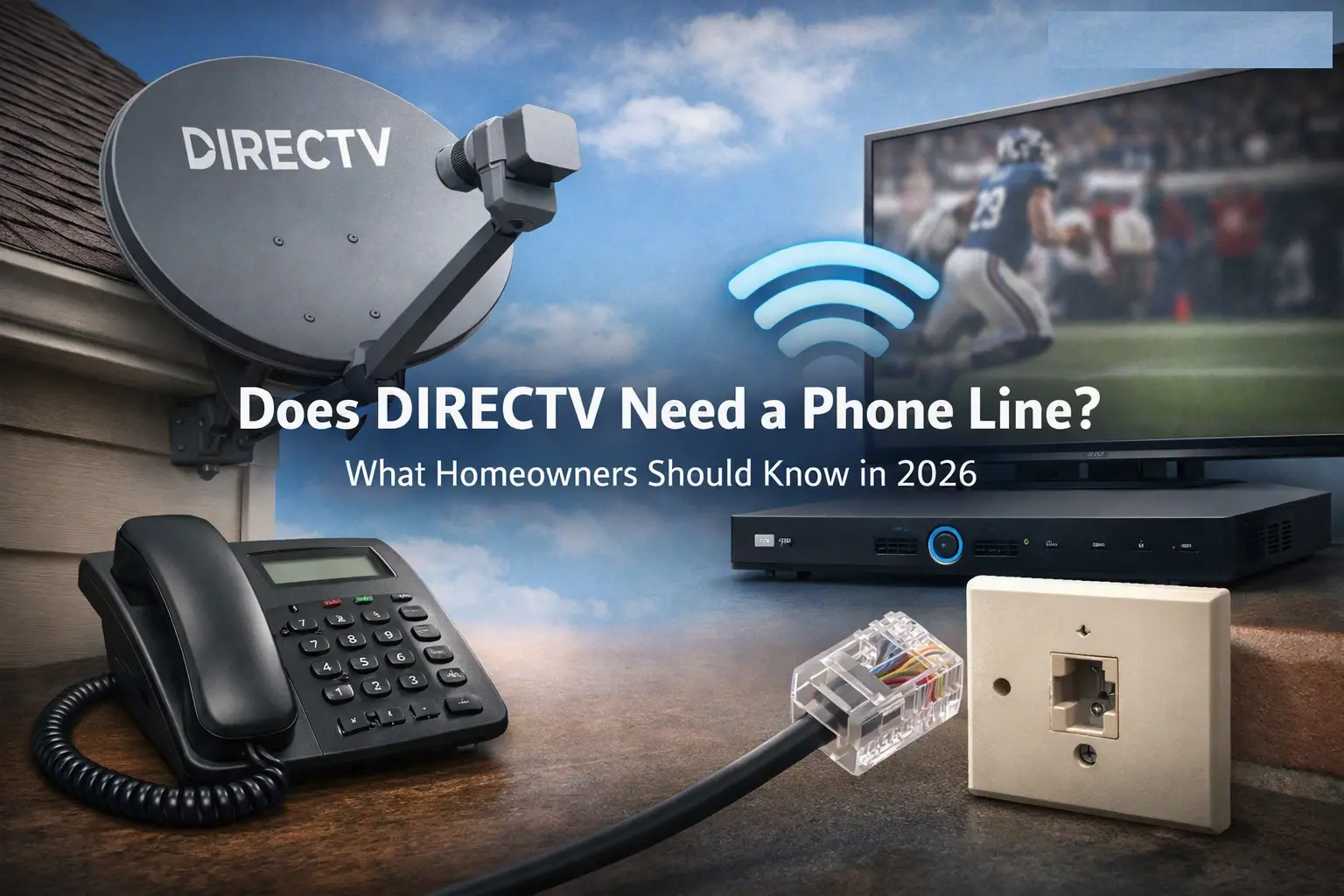
Cord-cutters and new satellite TV customers frequently ask the same question before signing up for service: does DIRECTV need a phone line to work? It's a reasonable question, especially since older satellite and cable equipment often did rely on landline connections for basic functionality. The short answer is no — but the fuller answer involves understanding what phone lines used to do for DIRECTV receivers, what has replaced that function, and where confusion persists among installers and customer service reps.
This article breaks down the current state of DIRECTV's connectivity requirements, the technical history behind the phone-line myth, and what actually matters for a smooth installation today.
Quick Answer
DIRECTV does not require a phone line for standard satellite TV service. Modern receivers, including the Genie HD DVR and Genie 2 (HS17), don't even include a phone jack. A phone line was historically used to transmit pay-per-view orders and software updates, but that function has been fully replaced by internet connectivity, which is optional rather than mandatory for basic viewing.
Key Findings
No phone line requirement: DIRECTV satellite service operates entirely through the satellite dish; a landline has not been a technical requirement for years.
No phone jacks on current hardware: Genie HD DVR, Genie 2, and Genie Mini/Gemini client devices are built without phone line ports.
Internet is optional, not mandatory: An internet connection unlocks On Demand, streaming apps, and remote-ordered pay-per-view, but core satellite programming works without it.
Installers sometimes still ask about landlines: Confusion persists because installation techs occasionally reference outdated requirements or promotional bonuses tied to internet hookups.
DIRECTV Stream is different: DIRECTV's internet-delivered streaming service requires a broadband connection by design, since it isn't satellite-based at all.
Requirement | Phone Line | Internet Connection |
|---|---|---|
Basic satellite programming | Not required | Not required |
On Demand/streaming apps | Not applicable | Required |
Remote-ordered pay-per-view | Formerly used | Now handles this function |
Whole-home DVR viewing | Not applicable | Recommended for full features |
DIRECTV Stream (non-satellite) | Not applicable | Required |
Why Phone Lines Were Once Part of Satellite TV
In the early years of DIRECTV, receivers had limited onboard connectivity options. A telephone line served as the primary channel for the receiver to "call home" — reporting pay-per-view purchases to DIRECTV's billing system and, for early DVR models, downloading updated program guide data. Without that connection, functions like ordering a boxing match or a new movie release through the remote simply didn't work reliably.
This wasn't unique to DIRECTV. Early satellite and even some cable set-top boxes across the industry used phone lines the same way, since broadband internet wasn't yet a standard household utility.
What Changed
As home broadband adoption grew through the 2000s and 2010s, DIRECTV shifted its receivers toward IP-based connectivity. Ethernet ports, and later Wi—Fi—capable models, took over the tasks that phone lines used to handle: reporting purchases, pushing software and guide updates, and eventually enabling entirely new features like On Demand libraries and streaming apps such as Pandora or the Weather Channel widget.
By the time the HR44, HR54, and Genie 2 (HS17) receivers became standard equipment, phone jacks had been dropped from the hardware entirely. Newer Genie Mini and Gemini client devices likewise have no phone connectivity option.
Where the Confusion Comes From
A few recurring scenarios keep the phone-line question alive:
Legacy equipment. Customers with older receivers (HR2x series and earlier) may still have a phone jack on the back of the box, even though it isn't required for basic operation.
Installer habits. Some installation technicians ask about phone or internet availability out of routine, or because internet connections are tied to installer incentive programs — not because the service depends on it.
Caller ID features. A small number of receivers can still use a connected phone line for Caller ID display on the TV screen, which is a legacy feature unrelated to core service delivery.
Confusing satellite DIRECTV with DIRECTV Stream. DIRECTV's internet-streaming product is a fundamentally different delivery method and does require a broadband connection, since there's no satellite dish involved.
What You Actually Need for DIRECTV Satellite Service
A satellite dish with a clear line of sight to the southern sky
A compatible receiver (Genie HD DVR, Genie 2, or client devices)
Standard electrical power
Optional: A broadband internet connection (2 Mbps or higher recommended) for On Demand, TV apps, and SignalSaver features
No landline, DSL phone service, or VoIP line is part of that list.
Research Insights
Looking at how the pay-TV industry has evolved, the disappearance of phone-line dependency reflects a broader infrastructure shift rather than a DIRECTV-specific decision. According to FCC broadband deployment data, wired and fixed wireless broadband availability has expanded substantially over the past decade, making internet-based "calling home" far more practical than the phone-tethered systems of the early 2000s.
As landline subscriptions have declined nationally — a trend documented in multiple federal communications surveys — pay-TV providers have had a strong incentive to re-engineer receiver communication over IP connections that most households already use for other purposes.
From a consumer standpoint, this shift also reduced installation friction. Requiring a landline meant DIRECTV was effectively asking customers to maintain a second, often unused, utility subscription just to unlock full receiver functionality. Moving that function to optional internet connectivity removed a real barrier for households that had already cut the cord on home phone service, while still preserving core satellite programming for households with no internet at all — a segment that remains meaningful in rural coverage areas where DIRECTV's satellite footprint is often the primary or only multichannel TV option.
Consumer Impact
For most households, the practical impact of this shift is straightforward: you can order and activate DIRECTV without a landline, and you won't lose access to your channel lineup if you don't have one. The main trade-off is functional rather than technical — without an internet connection, you lose access to On Demand libraries, app-based content, and remote-ordered pay-per-view, and you'll need to order PPV events by phone or online instead.
Households in areas with limited broadband access, including many rural regions where satellite TV remains popular, benefit directly from this arrangement, since it means full core programming is available regardless of internet availability.
Future Outlook
As DIRECTV continues to expand its internet-connected feature set — including 4K content, expanded On Demand libraries, and app integrations — the gap in experience between connected and non-connected households is likely to widen, even though core satellite programming will remain accessible either way. Phone-line dependency, meanwhile, is expected to remain a legacy footnote rather than a returning requirement, consistent with the broader industry move away from landline-based device communication.
Frequently Asked Questions
Does DIRECTV require a landline to activate service?
No. DIRECTV satellite service can be installed and activated without a landline. Activation and billing are handled through your account and satellite connection, not a phone line.
Do current DIRECTV receivers have a phone jack?
No. The Genie HD DVR, Genie 2 (HS17), and current Genie Mini/Gemini client devices do not include phone line ports. Only some older, legacy receiver models had this feature.
Can I order pay-per-view without a phone line or internet?
Yes, but only by phone or by logging into your account online. Ordering PPV directly through your remote requires an internet connection since phone-line ordering is no longer standard on current hardware.
Is internet required for DIRECTV to work at all?
No. Internet connectivity is optional for satellite service and only affects extra features like On Demand, streaming apps, and remote PPV ordering. Basic live TV works through the satellite connection alone.
Is DIRECTV Stream the same as needing internet for satellite DIRECTV?
No. DIRECTV Stream is a separate, internet-only streaming product that does require broadband by design. Traditional satellite DIRECTV does not depend on internet for core programming.
Why did an installer ask if I have a phone line?
Some installers ask out of habit or to confirm internet availability for optional features. It doesn't indicate that a phone line is required for the installation to proceed.
Can a VoIP or cell-based line replace a traditional landline for older receivers?
For older receivers that do use a phone jack (such as for Caller ID display), a genuine landline connection generally works best, since some VoIP services aren't compatible with the older modem hardware inside legacy receivers.
Conclusion
The idea that DIRECTV needs a phone line is a holdover from the service's early years, when landlines were the only practical way for receivers to communicate purchase and update data back to DIRECTV. That requirement has been fully replaced by internet connectivity, which itself remains optional for core satellite programming. Anyone considering DIRECTV today — with or without a home phone line — can expect full access to their channel lineup, with internet access simply unlocking additional On Demand and app-based features.
Readers comparing satellite providers or researching installation requirements can find further equipment breakdowns and provider comparisons on sattvforme.com. For specific questions about equipment compatibility or current installation requirements, readers may also contact (855) 213-2250.