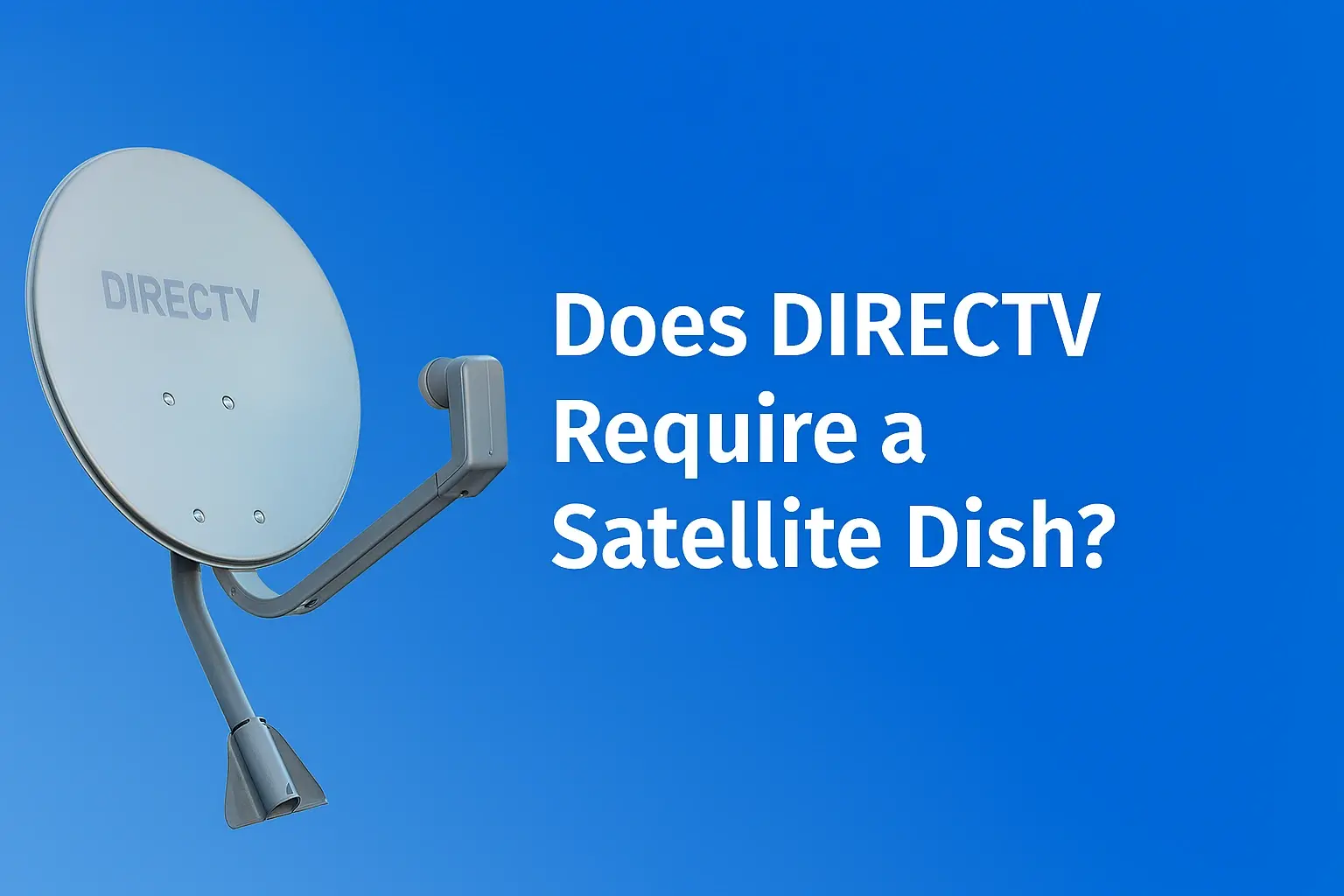
No. DIRECTV requires a satellite dish only if you choose DIRECTV via Satellite. DIRECTV also sells a dish-free option called DIRECTV via Internet, which delivers the service through your home internet connection using a DIRECTV streaming device (Gemini). DIRECTV describes the internet option as needing no satellite dish, only high-speed internet, with a recommended minimum speed of 8 Mbps. Satellite remains the better choice if your home has slow or unreliable internet.
Key Findings
Setup | Dish required? | Internet required? | Installation | DVR |
|---|---|---|---|---|
DIRECTV via Satellite | Yes | No (optional, adds features) | Professional | Up to 200 HD hours on the device |
DIRECTV via Internet | No | Yes (8 Mbps recommended minimum) | Self-install | Unlimited cloud DVR |
DIRECTV app on a compatible device | No | Yes | None (download the app) | Cloud-based |
DIRECTV via Internet works with a third-party internet provider and is self-installed. It suits high-density housing, while satellite suits areas with slow internet speeds.
It works with any internet service provider, so you are not tied to a specific broadband company.
Satellite-only DIRECTV delivers live TV and DVR recording without any internet connection.
The trade-off is channel count. DIRECTV lists higher channel totals on satellite than on internet in every package tier (details below).
How sattvforme Can Help You Choose
The right setup depends on your address, your internet speed, and whether you rent or own. sattvforme helps households check DIRECTV availability and compare packages for their ZIP code. A specialist can confirm three things before you commit:
Whether DIRECTV via Satellite can be installed at your address (clear southern sky view, landlord or HOA permission).
Whether your home internet is strong enough to carry DIRECTV via Internet.
Which package includes your local channels and regional sports networks, since availability varies by ZIP code.
The Three Ways to Watch DIRECTV
1. DIRECTV via Satellite (dish required)
This is the traditional setup. A physical dish installed at your home communicates with satellites in orbit to pull down your channel lineup. A technician installs the dish and receiver, and the service works without home internet.
Strengths:
It works in places with weak or no broadband.
It carries the largest channel counts.
DIRECTV SignalSaver lets satellite customers keep watching through a weak or lost satellite signal when their receiver is connected to the internet.
Limitations:
It requires a dish, a clear line of sight, and professional installation.
Heavy rain or snow can affect the signal.
Renters and condo residents often cannot install one.
2. DIRECTV via Internet (no dish)
DIRECTV via Internet is designed for customers who want the traditional DIRECTV channel experience without a dish, which makes it appealing to renters, condo residents, and anyone denied dish installation by a landlord or HOA. It uses the same Gemini device you may see advertised for streaming, and setup is plug-and-play.
Strengths:
No dish, no roof work, no technician visit.
Unlimited cloud-based recording, with recorded content that doesn’t expire for 9 months.
You can stream on up to 3 devices at once through the DIRECTV app.
Limitations:
It depends on your home internet. If your connection drops, so does your TV.
Fewer channels than satellite in the same package.
A community expert on DIRECTV’s forum notes that it requires the DIRECTV streaming box and a 24-month agreement, with fees similar to satellite. Confirm current terms before ordering, since that post is about two years old.
3. The DIRECTV app on your own device
If your smart TV supports the DIRECTV app or you have a compatible streaming device, you can use DIRECTV without DIRECTV’s own box. This option is aimed at people who want flexibility rather than a satellite-style package.
Channel Counts: What You Give Up Without a Dish
A reseller of DIRECTV’s packages lists the following. Treat the figures as approximate, since lineups change:
Package tier (as listed) | Via Satellite | Via Internet |
|---|---|---|
Entry tier | 165+ channels | 90+ channels |
Mid tier | 200+ channels | 125+ channels |
Top tier | 270+ channels | 160+ channels |
The reseller’s lineup lists specialty sports networks such as Big Ten Network, MLB Network and NBA TV in the mid tier, with in-market regional sports networks and local channels included where available. Regional sports deserve a specific check.
DIRECTV’s own partner page says regional sports networks are available with the CHOICE package or higher, that availability varies by ZIP code and package, and that high-speed internet is required without satellite. If a local team’s network is the reason you want DIRECTV, confirm it for your ZIP code before choosing a no-dish plan.
Research Insights
The dish question is really an internet question. DIRECTV used to be defined by the dish. Today the deciding factor is your broadband. DIRECTV’s recommended 8 Mbps minimum is modest, and a streaming-based setup works well for most homes that already have decent internet. The households that still need a dish are those with weak connections, plus rural homes where satellite is the more dependable carrier.
Housing type predicts the best fit. Dish rules vary by landlord and HOA. If you rent or live in multifamily housing, the dish-free option is usually the practical one. If you own a single-family home with a clear sky view and mediocre internet, satellite usually serves you better.
DVR behavior differs more than most buyers expect. Satellite offers up to 200 HD hours of on-device recording that does not expire, while the internet option offers unlimited cloud recording. Heavy recorders who want capacity and remote access lean toward internet delivery. Those who want recordings stored on their own hardware lean toward satellite.
The market backdrop explains why DIRECTV offers both. Traditional pay-TV keeps shrinking. Leichtman Research data shows about 34.4% of U.S. households still subscribed to traditional pay-TV in late 2025, and Pew’s 2025 survey found 36% of U.S. adults still pay for cable or satellite.
DIRECTV, which includes satellite, DIRECTV Stream, and U-verse, ended 2023 with 11.3 million subscribers, down from 25.47 million in 2015. Offering a no-dish option widens the audience to renters and cord-cutting households who would never accept a dish. These figures come from secondary sources summarizing the Leichtman and Pew data, so check them against the originals before publishing.
Frequently Asked Questions
Can I get DIRECTV without a satellite dish?
Yes. DIRECTV via Internet delivers the service over your home internet with the Gemini device, so no dish or technician is needed. You need high-speed internet, with 8 Mbps recommended, and it works with any internet service provider.
Does DIRECTV work without internet?
DIRECTV via Satellite does. Channels arrive from the satellite through the dish, so live TV and DVR work without home internet. Connecting the receiver adds on-demand content, app features, and remote recording, but it is optional for basic viewing.
What internet speed do I need for DIRECTV via Internet?
DIRECTV recommends at least 8 Mbps. Most current home internet plans meet that, but a shared household streaming on several devices benefits from more speed and a stable Wi-Fi signal.
Is DIRECTV via Internet the same as DIRECTV Stream?
They use similar hardware, but they are not identical. DIRECTV via Internet mirrors the satellite lineup more closely and typically involves an agreement, while DIRECTV Stream is positioned as a more flexible streaming service. Confirm current package names and terms at signup.
Do I need a dish if I live in an apartment?
Not necessarily. DIRECTV via Internet is designed for renters, condo residents, and anyone whose landlord or HOA won’t allow a dish. You will need working home internet, and some channels and regional sports networks vary by ZIP code.
Do I get fewer channels without a dish?
Typically yes. DIRECTV’s packages list higher channel counts on satellite than on internet, for example, 270+ versus 160+ in a top tier. Local channels and regional sports are available in many areas on both, but check your ZIP code.
Can I record shows without a dish?
Yes. DIRECTV via Internet includes unlimited cloud DVR, and recordings don’t expire for 9 months. Satellite customers record to the receiver instead, with up to 200 HD hours.
Conclusion
DIRECTV does not require a satellite dish. A dish is needed only for DIRECTV via Satellite, which wins on channel count and works without home internet. DIRECTV via Internet removes the dish, offers cloud DVR and suits renters and condo residents with reliable broadband.
Ready to find the right DIRECTV setup for your address? Visit sattvforme.com or call (855) 213-2250 to check availability, confirm your local channels and regional sports networks, and order the plan that fits your home.