-
Posted on: 08 Apr 2026
-
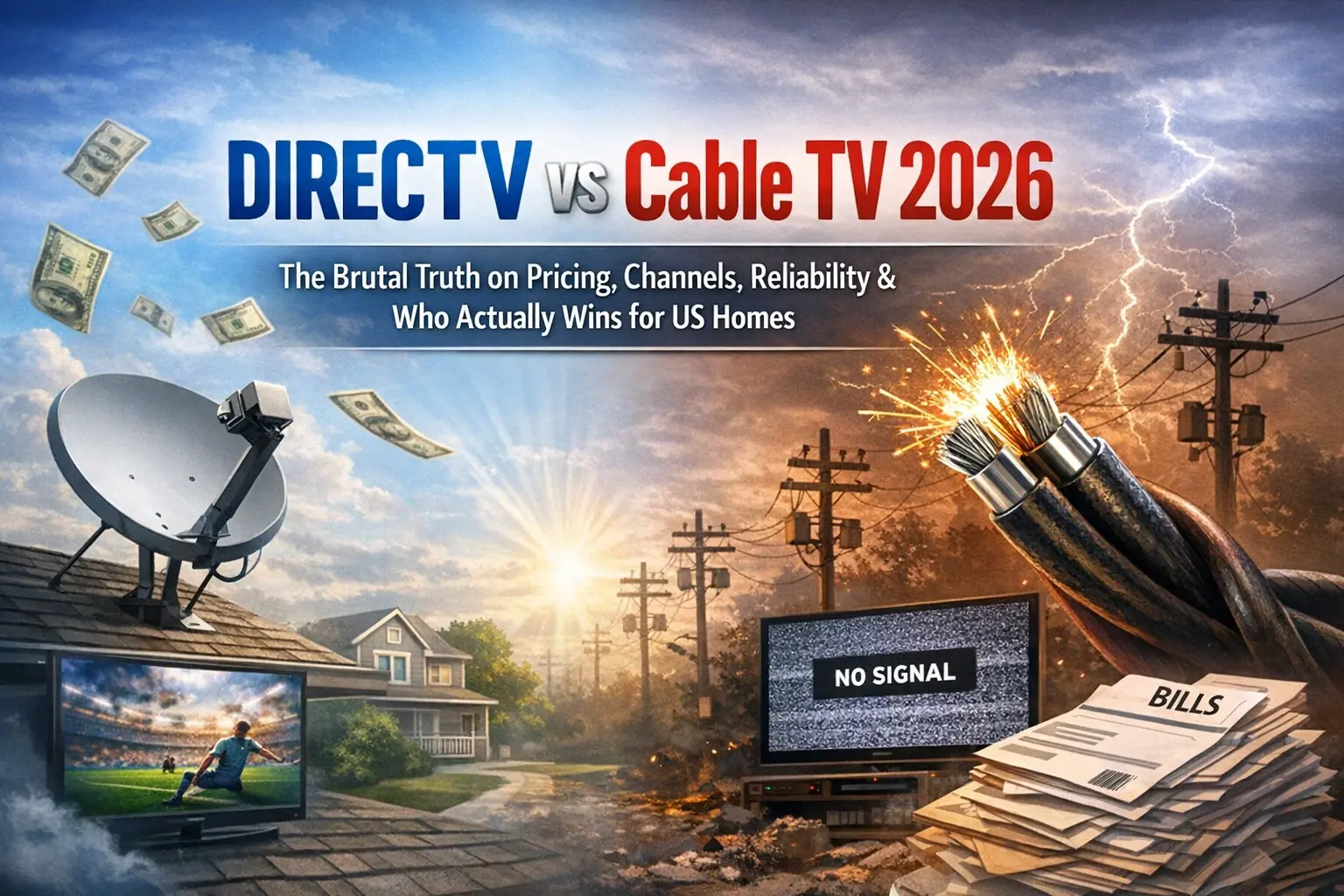
In 2026, American households still spend hundreds on live TV each year, even as streaming grows. If you're deciding between DIRECTV (satellite) and traditional cable TV (Xfinity, Spectrum, Optimum, Cox, etc.), you're not alone. Both deliver hundreds of live channels, local stations, sports, and on-demand content—but they differ significantly in cost, availability, reliability, and long-term value.
This head-to-head comparison uses 2026 real-world data on pricing, channel counts, customer satisfaction, and performance to help you choose. Whether you live in a rural area, suburb, or city, here's what actually matters for your wallet and viewing experience.
DIRECTV vs Cable TV: Pricing and Packages: Promos vs. Long-Term Costs
DIRECTV (Satellite) offers four main packages with a 2-year price lock for new customers (24-month agreement required, with early termination fees of about $20 per remaining month). Prices exclude taxes, fees, and regional sports network (RSN) charges (up to $19.99/mo).
- Entertainment: $89.99/mo. for 24 months (regular ~$99.99+ with fees) — 175+ channels
- Choice: $94.99/mo. for 24 months — 215+ channels (adds more sports like MLB Network, NBA TV)
- Ultimate: $124.99/mo. for 24 months — 270+ channels
- Premier: $169.99/mo. for 24 months — 350+ channels (includes HBO Max, SHOWTIME, STARZ, Cinemax)
Expect hidden fees: TV access fee (~$10/mo.), advanced receiver service (~$15/mo.), activation (~$49.95), and RSN fees. After 24 months, prices typically rise 30–40%. Bundling with AT&T internet can save more.
Cable TV (e.g., Xfinity, Spectrum) starts cheaper on promos but varies wildly by ZIP code and often lasts only 12 months before hikes. No nationwide standard, but typical ranges:
- Entry-level: $55–$80/mo. (fewer channels)
- Mid-tier (e.g., Xfinity TV Premium): ~$125/mo. for 185+ channels
Cable often has no-contract or month-to-month options (higher price) or shorter 12-month promos. Bundling TV + internet + phone frequently drops the effective TV cost significantly. Broadcast TV fees ($10–$43/mo.) and RSN fees apply here, too.
Verdict on cost: Cable wins for short-term savings and flexibility in urban areas. DIRECTV's 2-year lock provides more predictable pricing, but total cost after promo can exceed cable. Check your ZIP for exact quotes—cable promos are hyper-local.
Channel Lineup and Content
DIRECTV satellite generally wins on quantity and variety, especially sports and premium channels: 165–340+ live channels depending on package. It carries nearly all top-watched networks and excels with regional sports networks (RSNs), NFL Sunday Ticket options, and add-ons like ESPN Unlimited.
Cable providers like Xfinity top out around 185+ channels in premium tiers and include all major top-35 networks. However, some cable lineups feel "bloated" with lesser-used channels, while DIRECTV offers more targeted sports and international options.
Both include locals (ABC, CBS, NBC, FOX) where available, plus on-demand libraries (40,000–65,000 titles). DIRECTV edges out for movie buffs with the Premier package premiums included for the first few months.
Real-world tip: Sports fans (especially regional MLB, NBA, NHL) lean toward DIRECTV. General entertainment households find cable sufficient.
Availability and Installation
- DIRECTV Satellite: Available to 99% of US households—ideal for rural and suburban areas without cable infrastructure. Requires a clear southern sky view for the dish. Professional installation is standard (sometimes free with promo).
- Cable TV: Limited to areas with coaxial/fiber infrastructure—strong in cities and suburbs but spotty or nonexistent in rural zones. Self-install or pro install options; faster setup if wiring already exists.
Winner: DIRECTV for nationwide reach, especially if moving or in remote locations.
Reliability and Signal Quality
This is where cable shines. Cable uses wired infrastructure, making it far less susceptible to weather outages (rain, snow, wind). Satellite signals can suffer "rain fade" during heavy storms.
Both offer HD/4K in higher tiers, but cable generally provides more consistent picture quality and fewer interruptions. DIRECTV has improved with modern dishes, but cable remains more dependable for daily viewing.
Equipment, DVR, and Features
- DIRECTV: Genie DVR (included or low fee) offers up to 450 hours of storage and records up to 7 shows simultaneously. Whole-home DVR is seamless; the app allows streaming.
- Cable (e.g., Xfinity X1): Cloud DVR (20–300 hours, extra fees for upgrades) records up to 6 shows. Excellent mobile app and voice control, but storage is often lower without upgrades.
Both support multi-device streaming (3+ streams) and on-demand. DIRECTV feels more "traditional cable-like" with physical boxes; cable leans toward modern interfaces.
Customer Satisfaction and Service
According to the J.D. Power 2025 U.S. Television Service Provider Satisfaction Study, cable/satellite overall scored lower than streamers:
- Cable segment average: 531/1000
- Verizon Fios (fiber cable): 577 (highest)
- Spectrum: 536
- Xfinity: 533
- DIRECTV: 515 (below average)
Cable often wins on ease of bundling and local support, but both have complaints about price hikes and billing. DIRECTV's 2-year commitment can frustrate users wanting flexibility.
Bundling with Internet and Phone
Cable providers dominate here—easy triple-play bundles (TV + high-speed internet + phone) with big discounts. DIRECTV partners with AT&T or allows streaming add-ons, but satellite doesn't include internet. If you need fast, reliable internet, cable bundling often saves $20–$50/mo. overall.
Pros and Cons Summary
DIRECTV Pros: More channels, superior sports/RSNs, nationwide availability, strong DVR, 2-year price lock. DIRECTV Cons: Weather issues, 2-year contract, higher long-term cost, lower satisfaction scores.
Cable TV Pros: Cheaper promos, better reliability, flexible contracts, strong bundling, urban convenience. Cable TV Cons: Limited availability, price hikes after promo, fewer channels in many plans, variable quality by provider.
Who Should Choose What in 2026?
- Choose DIRECTV if: You live in a rural/suburban area with limited cable options, are a heavy sports fan, want maximum channels and DVR, or value the 2-year price guarantee.
- Choose Cable TV if: You live in a wired urban/suburban area, prioritize reliability and no weather disruptions, want easy internet bundling, or prefer shorter commitments and lower entry pricing.
- Consider alternatives: Many households now mix OTA antenna + streaming (YouTube TV, Hulu + Live TV) for big savings, but if you want full traditional live TV without hassle, stick to these two.
Final Recommendation
There's no universal winner—DIRECTV excels for reach and content depth, while cable TV wins on reliability, flexibility, and urban value. Enter your ZIP code on both providers' sites for personalized quotes, as local availability and promos make the biggest difference.
Ready to cut the confusion? Compare your exact address today and lock in the best deal for your household. Live TV doesn't have to break the bank in 2026—choose smart based on your location and viewing habits.
Call on (855) 212-8877 to get the best deals on New TV Connection.