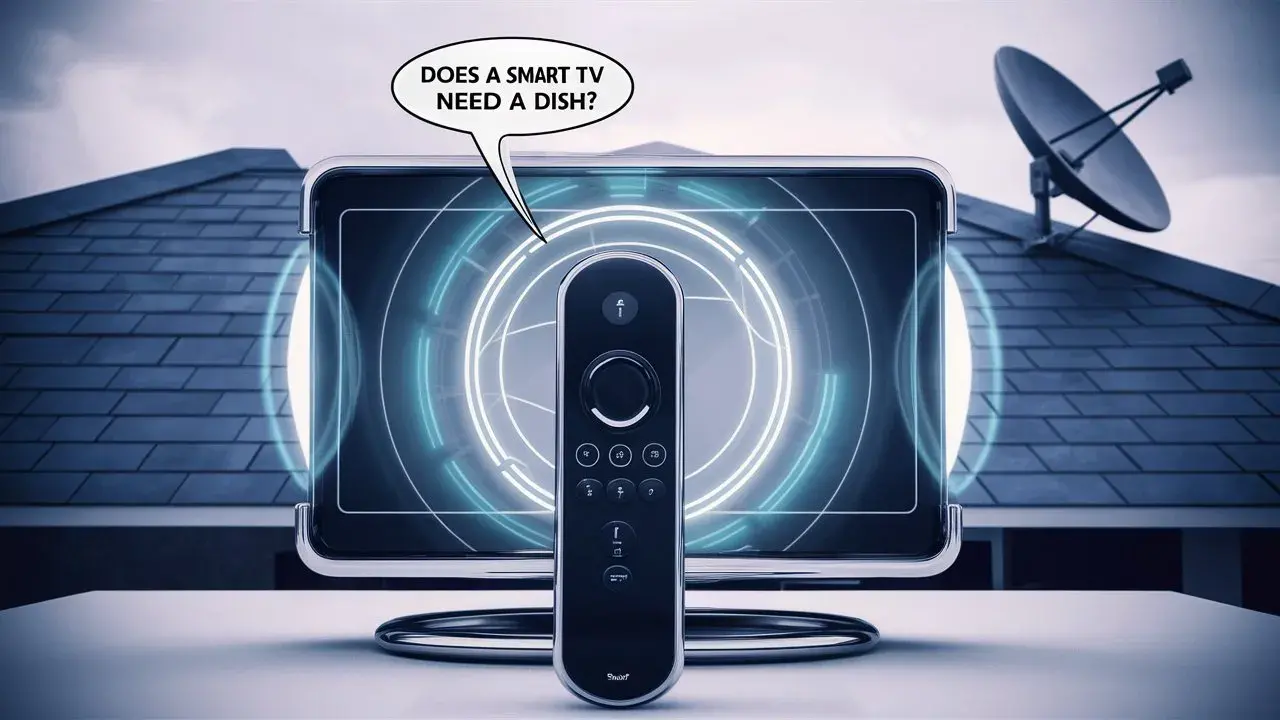
The question of whether a smart TV requires a satellite dish is a common one for those transitioning to modern home entertainment. The short answer is: generally, no, a smart TV does not inherently need a satellite dish to function, as its primary connectivity is through the internet.
What Exactly is a Smart TV?
A smart TV, at its core, is a television set that integrates internet connectivity and interactive features. Unlike traditional televisions that solely receive broadcast signals, smart TVs are essentially computers with a display. They run on operating systems, much like smartphones or tablets, allowing them to download and run applications (apps). These apps are the gateway to a vast array of content, including streaming services, social media platforms, web browsers, and even games. The "smart" aspect refers to this ability to connect to the internet and perform functions beyond basic television reception. By 2025-26, the vast majority of new television sets sold are smart TVs, making them the standard for modern home entertainment. The processing power and user interface of smart TVs have advanced significantly, offering seamless navigation and high-definition streaming capabilities.
Key Features of Modern Smart TVs
Modern smart TVs boast a range of features that enhance the viewing experience. These include:
- Built-in Wi-Fi and Ethernet Ports: Essential for connecting to your home network.
- Operating Systems: Such as Android TV, webOS (LG), Tizen (Samsung), Roku TV, and Fire TV, each offering a unique interface and app store.
- App Stores: Providing access to popular streaming services like Netflix, Hulu, Disney+, Amazon Prime Video, YouTube, and many more.
- Web Browsers: Allowing you to surf the internet directly on your TV screen.
- Voice Control: Integration with virtual assistants like Google Assistant, Amazon Alexa, or Bixby for hands-free operation.
- Screen Mirroring/Casting: The ability to display content from your smartphone, tablet, or laptop onto the TV.
- Smart Home Integration: Controlling other smart home devices directly from your TV.
These features collectively transform the television from a passive viewing device into an interactive entertainment hub. The processing power in 2025-26 models allows for faster app loading times and smoother multitasking between different applications.
How Smart TVs Connect to Content
The primary method by which smart TVs access content is through an internet connection. This connection can be established in two main ways: via Wi-Fi, wirelessly connecting to your home router, or via an Ethernet cable, providing a wired connection for potentially more stable performance. Once connected to the internet, smart TVs can access a world of digital content. This includes on-demand streaming services, live TV streaming apps, news feeds, social media, and more. The user navigates through a graphical interface, selecting apps and then the specific content they wish to watch. This model has largely supplanted traditional broadcast and cable television for many households, driven by convenience, flexibility, and a wider selection of niche content.
Streaming Services and Apps
The ecosystem of streaming services is vast and continues to grow. Popular platforms offer a diverse range of movies, TV shows, documentaries, and original content. By 2025-26, many households subscribe to multiple streaming services, curating their entertainment from various sources. Examples include:
- Subscription Video on Demand (SVOD): Netflix, Amazon Prime Video, Disney+, HBO Max, Apple TV+, Paramount+, Peacock.
- Advertising-supported Video on Demand (AVOD): Pluto TV, Tubi, Freevee (formerly IMDb TV).
- Live TV Streaming Services: YouTube TV, Hulu + Live TV, Sling TV, FuboTV, DirecTV Stream. These services often offer a package of live channels, mimicking traditional cable but delivered over the internet.
- Specialty Apps: Including fitness apps, educational content providers, gaming platforms, and music streaming services.
The ability to download and use these apps directly on the smart TV is a defining characteristic, eliminating the need for external streaming devices for many users, although external devices can still offer access to a wider range of apps or specific features.
Internet Protocols and Data Delivery
Smart TVs utilize standard internet protocols to fetch and display content. When you select a show on Netflix, for instance, your TV sends a request to Netflix's servers. The content is then streamed to your device in packets of data, reassembled, and displayed on your screen. The quality of the stream (e.g., HD, 4K) depends on the internet speed and bandwidth available. For a smooth 4K streaming experience in 2025-26, a minimum internet speed of 25 Mbps is generally recommended, though higher speeds provide a more buffer-free and consistent experience. Technologies like adaptive bitrate streaming automatically adjust the video quality based on your internet connection to prevent interruptions.
The Role of a Satellite Dish
A satellite dish is a piece of equipment designed to receive broadcast signals transmitted from orbiting satellites. These signals are typically used for television services, most commonly satellite television providers like DirecTV or Dish Network (in the US), or Sky in other regions. The dish, when properly aligned with a specific satellite, captures these signals and directs them to a receiver (often a set-top box) which then decodes them into viewable channels. The primary function of a satellite dish is to provide access to a curated package of television channels, often including a broad selection of national and international networks, premium movie channels, and sports packages.
How Satellite TV Works
The process of satellite television involves several key components:
- Broadcast Center: Content providers (TV networks) send their signals to a teleport.
- Uplink: The teleport transmits the signal upwards to a geostationary satellite.
- Satellite: The satellite receives the signal, amplifies it, and re-transmits it back down to Earth over a wide geographic area.
- Satellite Dish: A dish antenna on the subscriber's home receives the signal from the satellite.
- LNB (Low-Noise Block downconverter): Mounted on the dish, it converts the high-frequency satellite signal to a lower frequency that can be transmitted through cables.
- Coaxial Cable: Carries the signal from the LNB to the satellite receiver.
- Satellite Receiver/Set-Top Box: Decodes the signal, allowing the TV to display the channels. This box is often paired with a smart card for subscription management.
Historically, satellite TV was a primary method for accessing a wide range of channels, especially in areas where cable TV was not available or offered limited options. It provided a way to receive hundreds of channels, often with superior picture quality in its prime compared to early digital terrestrial broadcasts.
Satellite vs. Terrestrial Broadcasts
It's important to distinguish satellite TV from terrestrial (over-the-air) broadcasts. Terrestrial broadcasts are received using an antenna (like a rabbit-ears or a rooftop antenna) and are limited to local channels available within a specific geographic range. Satellite broadcasts, on the other hand, are received from space and can cover entire continents, offering a much wider selection of channels, including national and international networks. While both are forms of broadcast television, their delivery mechanisms and channel offerings are distinct.
Smart TV vs. Satellite Dish: A Comparison
The fundamental difference lies in their primary function and connectivity. A smart TV is an internet-connected device that accesses content through apps and online services. A satellite dish is a receiver for broadcast signals, typically part of a subscription-based television service. While they can coexist, they serve different primary purposes in delivering content to your screen.
| Feature | Smart TV (Primary Function) | Satellite Dish (Primary Function) |
|---|---|---|
| Content Source | Internet (Streaming Services, Apps, Web) | Orbital Satellites (Broadcast TV Channels) |
| Connectivity Requirement | Internet Connection (Wi-Fi or Ethernet) | Clear line of sight to satellite, LNB, receiver box |
| Content Variety | Vast and on-demand (movies, series, live TV apps, user-generated content) | Curated channel packages (live broadcast networks, premium channels) |
| Subscription Model | Individual streaming service subscriptions, internet service | Monthly/annual subscription to a satellite TV provider |
| Installation | Plug-and-play with internet; no external hardware for basic function | Requires professional installation or precise DIY setup of dish and cabling |
| Flexibility | High; choose what to watch, when to watch; switch services easily | Lower; bound by provider's channel lineup and schedule |
| Cost Structure | Monthly fees for internet and streaming services; hardware cost for TV | Monthly subscription fees, equipment rental/purchase fees |
| Offline Viewing | Limited (downloads on some apps) | None |
Primary Content Delivery Mechanism
The smart TV's primary mechanism is the internet. It leverages broadband connections to stream content from servers located all over the world. This allows for an enormous library of content that is constantly updated. In contrast, a satellite dish is designed to capture signals broadcast from a fixed point in space. The content is predetermined by the satellite provider's channel offerings and broadcast schedules. The signal is essentially a direct line from the satellite to your home.
User Experience and Control
With a smart TV, the user has a high degree of control. They can browse, search, and select content from a multitude of sources. The interface is typically intuitive, allowing for easy navigation through apps and menus. This user-centric experience is a major draw for many. Satellite TV, while offering a wide array of channels, typically presents them in a linear fashion. While modern satellite receivers offer some on-demand features and DVR capabilities, the core experience is still channel-based and scheduled. The user's control is primarily limited to selecting which channel to watch from the available lineup.
Internet Connectivity Options for Smart TVs
For a smart TV to function as intended, a reliable internet connection is paramount. Fortunately, there are several ways to connect your smart TV to the internet, catering to different household setups and preferences.
Wi-Fi Connection
This is the most common and convenient method. Most smart TVs come with built-in Wi-Fi capabilities. You simply need to select your home Wi-Fi network from the list of available networks on your TV and enter your Wi-Fi password.
- Pros: Wireless, easy setup, no extra cables needed.
- Cons: Signal strength can be affected by distance from the router, obstructions (walls, furniture), and interference from other devices. Performance can be less stable than a wired connection for high-bandwidth activities like 4K streaming.
In 2025-26, Wi-Fi 6 and Wi-Fi 6E are becoming more prevalent, offering faster speeds and better performance in crowded wireless environments. Ensure your router supports these standards for optimal results.
Ethernet (Wired) Connection
For a more stable and often faster connection, you can connect your smart TV directly to your router using an Ethernet cable. This is done by plugging one end of the cable into the Ethernet port on the back of your TV and the other end into an available LAN port on your router.
- Pros: Generally more stable and faster than Wi-Fi, less prone to interference, ideal for high-bandwidth streaming (4K, 8K).
- Cons: Requires running a physical cable from the router to the TV, which might be inconvenient depending on your room layout.
This is the recommended method for the best streaming experience, especially if your router is not in the same room as your TV or if you experience Wi-Fi dropouts.
Mobile Hotspot and Tethering
In situations where a traditional home internet connection is unavailable or unreliable, you can use your smartphone's mobile hotspot feature. This turns your phone into a Wi-Fi router, allowing your smart TV to connect to the internet through your cellular data plan.
- Pros: Provides internet access in areas without home broadband, useful for temporary setups.
- Cons: Consumes significant mobile data, can be expensive depending on your data plan, performance can be variable and dependent on cellular signal strength, may drain your phone's battery quickly.
This is generally not recommended as a primary long-term solution due to data caps and potential throttling by mobile carriers.
Mesh Wi-Fi Systems
If you have a large home or experience Wi-Fi dead spots, a mesh Wi-Fi system can significantly improve coverage. These systems use multiple nodes placed around your home to create a single, seamless Wi-Fi network.
- Pros: Excellent coverage throughout the home, consistent speeds, easy to set up and manage.
- Cons: Can be more expensive than a single router.
Many mesh systems offer dedicated Ethernet ports on their nodes, allowing you to connect your smart TV via a wired connection even if it's far from the main router.
Smart TV vs. Satellite Dish: When to Use Which
The decision of whether to rely solely on your smart TV's internet capabilities or to supplement it with a satellite dish depends on your specific viewing habits, location, and preferences.
Scenario 1: Internet-Only Viewing (No Dish Needed)
This is the most common scenario for smart TV owners in 2025-26. If you have a stable and sufficiently fast internet connection (e.g., 25 Mbps or higher for 4K streaming), you likely do not need a satellite dish.
- You primarily watch: Netflix, Hulu, Disney+, YouTube, Amazon Prime Video, and other on-demand streaming services.
- You subscribe to: Live TV streaming services like YouTube TV, Sling TV, or Hulu + Live TV for your channel needs.
- You value: Flexibility to choose content and watch on your own schedule.
- You want to avoid: Additional monthly bills for satellite TV, installation complexities, and long-term contracts.
In this case, your smart TV, connected to the internet, is all you need. You can access a vast library of content through various apps. This approach offers the most modern and flexible entertainment experience.
Scenario 2: Supplementing with a Dish
There are specific situations where a satellite dish might still be a valuable addition, even with a smart TV.
- Limited or Unreliable Internet: If your internet connection is slow, inconsistent, or has strict data caps, a satellite dish can provide access to a wide range of live TV channels without heavily impacting your internet usage. This is particularly relevant in rural areas where high-speed internet is scarce.
- Specific Channel Preferences: Some niche channels or premium sports packages might only be available through a satellite provider. If these are essential to your viewing, a dish might be necessary.
- Bundling Deals: Occasionally, satellite providers offer attractive bundles that include internet, phone, and TV services, which might be cost-effective for some households.
- Preference for Traditional TV Experience: Some users simply prefer the familiar interface and channel surfing experience of traditional broadcast television, which satellite provides.
In this scenario, the smart TV's internet capabilities are used for streaming apps and on-demand content, while the satellite dish provides access to a linear stream of live television channels. The smart TV can still be used to access these satellite channels via a connected receiver box, or the satellite provider's own smart TV app might offer integration.
Scenario 3: Using a Dish with a Non-Smart TV (or Smart TV's Basic Functionality)
If you have a non-smart TV or prefer not to use your smart TV's internet features extensively, a satellite dish connected to a receiver box is a complete solution for accessing broadcast channels. The receiver box will output a signal that the TV can display, regardless of whether it's a smart TV or a traditional one. In this case, the "smart" features of the TV are not utilized for content delivery.
When Might You Still Want a Dish with a Smart TV?
While the trend is moving towards internet-based content delivery, there are still compelling reasons why someone might opt for a satellite dish alongside their smart TV. These reasons often boil down to limitations in internet infrastructure, specific content needs, or personal preference.
Rural Internet Limitations
In many rural and remote areas, high-speed broadband internet is either unavailable or prohibitively expensive. For residents in these locations, satellite TV often remains the most viable option for accessing a wide array of television channels. Even if a smart TV is present, its streaming capabilities would be severely hampered by slow or capped internet. A satellite dish, in this context, provides a robust and often more affordable solution for primary television viewing. The smart TV can still be used for its other functions, like playing games or browsing photos, but its streaming potential is limited. According to 2025-26 data from the FCC and various telecommunications reports, approximately 15-20% of US households still face significant broadband limitations, particularly in non-urban areas.
Desire for Specific Channels or Packages
Certain television channels, particularly specialized sports leagues (e.g., specific international soccer leagues, NFL RedZone), premium movie channels (e.g., HBO, Showtime), or niche international programming, might only be available through traditional satellite or cable providers. While some of these channels are gradually making their content available via standalone streaming apps or through live TV streaming services, this is not universally true. For dedicated fans of these specific offerings, a satellite dish remains the most direct route to access them. For example, some college sports conference networks might exclusively broadcast through satellite packages.
Data Caps and Bandwidth Concerns
Many internet service providers (ISPs) impose data caps, limiting the amount of data a household can use each month. Streaming high-definition video, especially 4K content, consumes a significant amount of data. For a family that streams extensively, exceeding these data caps can result in expensive overage charges or throttled speeds. In such cases, using a satellite dish for live TV channels can significantly reduce internet data consumption, freeing up bandwidth for other online activities like browsing, gaming, or working from home. A typical hour of 4K streaming can consume up to 7GB of data, while HD streaming uses around 3GB per hour. For a household that watches 20 hours of 4K content per week, this can easily exceed a 1TB monthly data cap.
Bundling and Cost-Effectiveness
In some regions, satellite TV providers may offer attractive bundled packages that include internet, landline phone service, and television. For certain households, these bundles can be more cost-effective than subscribing to separate services from different providers. While the trend is towards unbundling, some providers still leverage these packages to retain customers. If the combined cost of a bundled satellite package is significantly lower than separate internet and streaming subscriptions, it might be a rational choice, even with a smart TV.
Preference for Linear TV and Simplicity
Despite the rise of on-demand streaming, many viewers still enjoy the traditional linear television experience – flipping through channels, discovering content serendipitously, and following scheduled programming. For these individuals, a satellite dish provides access to hundreds of channels in a familiar format. While smart TVs offer app-based access to live TV streaming, the interface and channel lineup can still feel different from a traditional cable or satellite box. The simplicity of a single remote controlling a satellite receiver and TV can also be appealing.
Setting Up Your Smart TV Without a Dish
Setting up a smart TV to function without a satellite dish is straightforward and relies entirely on your internet connection. The process generally involves these steps:
Step 1: Connect to Your Internet Network
This is the most crucial step.
- Power on your smart TV.
- Navigate to the network settings. This is usually found in the main settings menu, often labeled "Network," "Internet," or "Wi-Fi."
- Select your connection type:
- Wi-Fi: Choose "Wi-Fi" or "Wireless." Your TV will scan for available networks. Select your home Wi-Fi network name (SSID) from the list. You will be prompted to enter your Wi-Fi password.
- Ethernet: Choose "Ethernet" or "Wired." Connect one end of an Ethernet cable to your router and the other end to the Ethernet port on your TV. The TV should automatically detect the connection.
- Confirm connection: The TV will indicate if the connection is successful. You may be prompted to perform a network test.
Step 2: Sign in to Your TV Account (If Prompted)
Some smart TV operating systems (like Samsung's Tizen or LG's webOS) may require you to create or sign in to a manufacturer-specific account. This account is used for accessing the TV's app store and other services. Follow the on-screen prompts to complete this.
Step 3: Download and Install Applications
Once connected to the internet, you can access your TV's app store.
- Navigate to the app store: This is usually a prominent icon on the home screen, often labeled "App Store," "LG Content Store," "Samsung Apps," "Google Play Store" (for Android TV), or similar.
- Browse or search for apps: Look for your preferred streaming services (Netflix, Hulu, Disney+, Amazon Prime Video, YouTube, etc.) and live TV streaming apps (YouTube TV, Sling TV, etc.).
- Install the apps: Select the app and choose "Install" or "Download."
Step 4: Sign in to Your Streaming Services
After installing an app, open it. You will need to sign in with your existing account credentials for each streaming service. If you don't have an account, you will typically be prompted to create one, often via a web browser on another device or directly on the TV.
Step 5: Start Watching
With your apps installed and logged in, you can now select any app and begin streaming content. For live TV streaming services, you'll see a guide similar to traditional TV, allowing you to select channels and watch live broadcasts.
Troubleshooting Common Issues
- No internet connection: Double-check your Wi-Fi password or Ethernet cable connection. Restart your router and modem.
- Slow streaming: Ensure your internet speed meets the recommended requirements for the content you're watching. Consider using an Ethernet connection or a mesh Wi-Fi system.
- App not loading/crashing: Try uninstalling and reinstalling the app. Ensure your TV's firmware is up to date.
- Picture quality issues: Verify your internet speed and connection stability. Adjust streaming quality settings within the app if available.
By following these steps, you can fully utilize your smart TV's capabilities without the need for a satellite dish, enjoying a vast and flexible entertainment experience.
Pros and Cons of Dishless Smart TV Viewing
Embracing a dishless smart TV setup offers a modern approach to home entertainment, but like any technological shift, it comes with its own set of advantages and disadvantages. Understanding these can help you make an informed decision about your viewing strategy.
Advantages of Dishless Viewing
- Cost Savings: Eliminating satellite TV subscriptions can lead to significant monthly savings. While streaming services have their own costs, they are often more flexible and can be subscribed to on a month-to-month basis, allowing you to switch services as desired. In 2025-26, the average monthly cost for a comprehensive satellite package can range from $80-$150+, whereas a combination of popular streaming services might cost $40-$70.
- Flexibility and Choice: The internet offers an unparalleled breadth of content. You can choose exactly what you want to watch, when you want to watch it, without being tied to a provider's schedule or channel lineup. You can easily switch between services, discover new content, and cancel subscriptions without penalty.
- No Long-Term Contracts: Most streaming services operate on a month-to-month basis, offering freedom from the lengthy, often restrictive contracts associated with satellite TV providers.
- Simplicity and Aesthetics: A dishless setup means no unsightly dish on your roof or balcony, no additional cables running into your home, and often a cleaner entertainment center with fewer boxes.
- On-Demand Content: The core of smart TV viewing is on-demand access. You can binge-watch entire seasons of shows, watch movies whenever you please, and access a vast library of content at your fingertips.
- Access to Niche Content: The internet hosts content for every interest imaginable, from independent films and documentaries to specialized educational programs and international content that might not be available on traditional broadcast channels.
- Cord-Cutting Trend: This aligns with the broader "cord-cutting" movement, where consumers are moving away from traditional cable and satellite subscriptions in favor of more flexible and cost-effective internet-based alternatives.
Disadvantages of Dishless Viewing
- Internet Dependency: The biggest drawback is the absolute reliance on a stable and fast internet connection. If your internet goes down, your TV viewing stops. This can be a significant issue in areas with poor internet infrastructure or during outages.
- Potential for Higher Internet Costs: If your internet usage for streaming significantly increases, you might need to upgrade your internet plan, potentially increasing your overall monthly bills. Data caps can also be a concern.
- Managing Multiple Subscriptions: Keeping track of various streaming service subscriptions, passwords, and billing cycles can become complex and time-consuming.
- Channel Lineup Fragmentation: While live TV streaming services offer channel packages, they may not perfectly replicate the channel lineup of a satellite provider. Some specific channels or sports broadcasts might be missing.
- No Guaranteed Picture Quality: While 4K streaming is common, the actual picture quality can fluctuate based on internet speed and congestion, unlike satellite which often provides a more consistent signal quality once locked on.
- Initial Setup Complexity for Some: While generally user-friendly, some users might find navigating different apps, signing in, and managing settings on a smart TV more complex than simply using a traditional TV remote.
- Lack of Local Channel Guarantees: While most live TV streaming services offer local channels, their availability can sometimes vary by region or be subject to carriage disputes between the provider and the local affiliate.
Future Trends in TV Viewing
The landscape of television consumption is in constant flux, driven by technological advancements and evolving consumer preferences. As we look towards the latter half of the 2020s and beyond, several key trends are shaping how we access and experience entertainment on our screens. The shift away from traditional broadcast methods towards internet-based delivery is set to accelerate, making the question of "Does a smart TV need a dish?" increasingly relevant.
Continued Growth of OTT Services
Over-The-Top (OTT) streaming services, encompassing SVOD, AVOD, and live TV streaming, will continue to dominate. We can expect further consolidation in the market, with major players acquiring smaller ones or launching new, specialized services. Bundling of streaming services will likely become more common, mimicking the model of traditional pay-TV packages but with more flexibility. By 2026, it's projected that over 80% of households in developed nations will rely primarily on streaming for their entertainment needs.
Advancements in Streaming Technology
As internet infrastructure improves globally, streaming technology will evolve to support higher resolutions (8K and beyond), more immersive audio formats (like Dolby Atmos), and enhanced interactivity. Personalized content recommendations will become even more sophisticated, powered by AI and machine learning, making it easier for viewers to discover content tailored to their tastes. Technologies like cloud gaming integrated directly into smart TVs will also become more mainstream, blurring the lines between entertainment and gaming platforms.
Integration of AI and Personalization
Artificial intelligence will play an increasingly vital role. AI will power smarter search functions, more accurate content recommendations, and even dynamic ad insertion that is less intrusive and more relevant to the individual viewer. Voice control will become even more integrated and intuitive, allowing for complex commands and seamless interaction with the TV and other connected devices.
The Role of Broadband Infrastructure
The future of dishless viewing is inextricably linked to the availability and quality of broadband internet. Investments in fiber optic networks, 5G home internet, and other high-speed solutions will be critical in ensuring that more households can reliably access high-quality streaming content. Government initiatives and private sector competition will continue to drive expansion, though the digital divide will remain a challenge in some regions.
Hybrid Models and Legacy Systems
While the trend is clear, satellite and terrestrial broadcasting will likely not disappear entirely in the near future. They will continue to serve specific niches, such as rural areas with limited internet, or provide a fallback for essential local news broadcasts. Hybrid models, where smart TVs can access both internet streaming and broadcast signals through a single interface, will also become more sophisticated. For many, the transition will be gradual, with a mix of streaming and traditional services for some time.
Conclusion
In conclusion, the modern smart TV is designed to be an internet-connected device, and therefore, it does not inherently need a satellite dish to function. Its primary mode of content delivery is through broadband internet, accessing a vast array of streaming services and applications. For most users with reliable internet access, a satellite dish is an optional addition, not a requirement.
However, a satellite dish can still be a valuable component for specific scenarios, such as in areas with poor internet infrastructure, for those who require access to exclusive channel packages not available online, or to manage internet data consumption. The decision hinges on your individual circumstances, internet reliability, content preferences, and budget. By understanding the capabilities of your smart TV and the options available, you can create an entertainment setup that best suits your needs in 2025-26 and beyond.