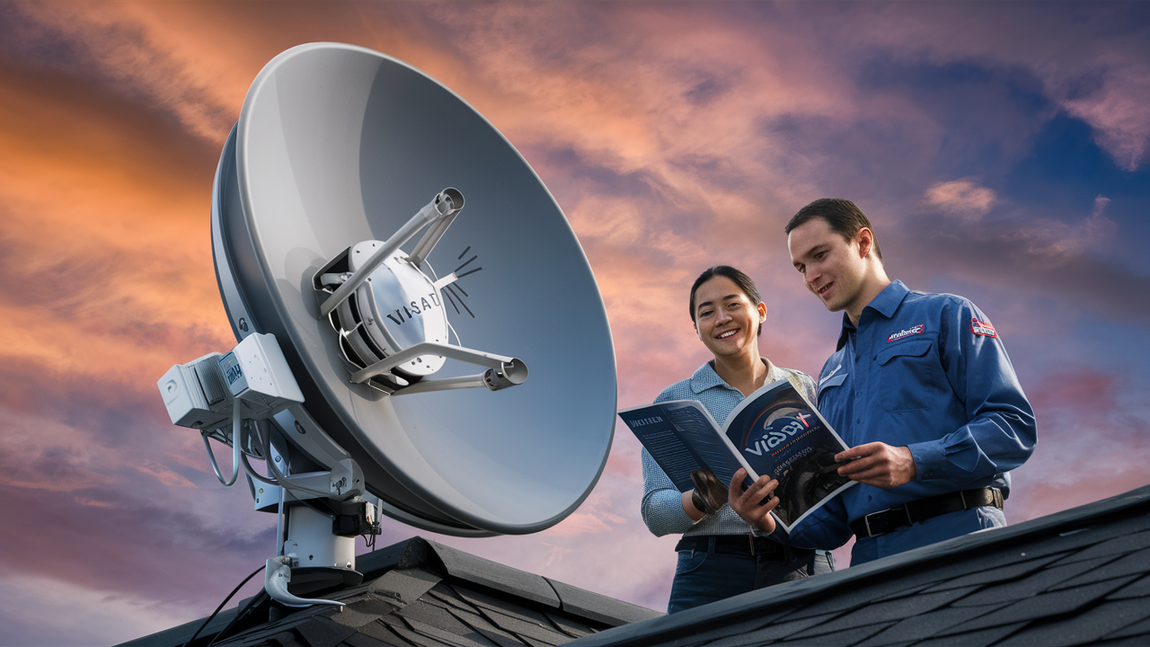
Yes, Viasat absolutely requires a satellite dish to provide internet service. This blog post breaks down why, what's involved, and what alternatives exist if a dish isn't feasible for you. We'll cover everything from installation to performance and costs, ensuring you have all the information needed.
What is Viasat Internet?
Viasat is a prominent provider of satellite internet services, primarily serving rural and underserved areas where traditional broadband options like cable or fiber are unavailable. They utilize a network of geostationary satellites orbiting the Earth to transmit data to and from customer premises. This technology allows them to offer internet access to virtually any location with a clear view of the sky. Viasat's service is designed to bridge the digital divide, providing essential connectivity for homes and businesses that might otherwise be left behind. Their offerings typically include various internet plans with different speed tiers and data allowances, catering to a range of user needs.
Does Viasat Require a Satellite Dish? The Definitive Answer
To answer the core question directly and unequivocally: Yes, Viasat requires a satellite dish. There is no Viasat internet service that operates without this crucial piece of equipment. The satellite dish is the indispensable link that connects your home or business to Viasat's satellite network. It acts as both a transmitter and a receiver, sending and receiving data signals to and from the orbiting satellite. Without a properly installed and aligned satellite dish, Viasat's internet service simply cannot function. This is a fundamental characteristic of all satellite internet technologies, not just Viasat. The dish is the gateway through which your internet traffic travels to and from space, enabling you to browse the web, stream content, and communicate online.
Why the Dish is Non-Negotiable
The necessity of the satellite dish stems from the very nature of how satellite internet operates. Unlike terrestrial broadband, which uses physical cables laid underground or overhead, satellite internet relies on the vast distances between the Earth and orbiting satellites. The dish is specifically engineered to focus and capture the faint radio signals from the satellite, which are traveling at the speed of light across thousands of miles. It then converts these signals into data that your modem and router can understand. Conversely, it transmits your outgoing data back to the satellite. Any alternative technology that Viasat might offer would fundamentally change its service model, moving away from its core satellite infrastructure.
Misconceptions and Clarifications
It's important to address potential confusion. Some users might wonder if Viasat offers alternatives like fixed wireless or DSL. Viasat's primary business is satellite internet. While they may have expanded into other communication technologies in different sectors (like aviation or defense), their residential and small business internet service is exclusively satellite-based. Therefore, if you are considering Viasat for your home or office internet, you must be prepared for the installation of a satellite dish. There are no Viasat plans that bypass this requirement. Any service advertised as "Viasat" without a dish is likely a misunderstanding or pertains to a different product line not related to their core internet offering.
How Satellite Internet Works (and Why a Dish is Crucial)
Understanding the mechanics of satellite internet illuminates why the dish is so vital. The process involves a sophisticated interplay between your home equipment, a satellite in geostationary orbit, and ground stations. This system is designed to overcome geographical limitations, but it inherently relies on line-of-sight communication with the satellite.
The Journey of Your Data
When you request information from the internet (e.g., loading a webpage), your request travels from your computer, through your modem and router, to the Viasat satellite dish. The dish transmits this request as a radio signal upwards to the Viasat satellite. The satellite then relays this signal down to a ground station, often referred to as a teleport or gateway. This ground station is connected to the terrestrial internet backbone. It receives your request, processes it, and retrieves the requested information. The information then travels back up to the satellite, which beams it down to your Viasat satellite dish. Finally, the dish sends the data to your modem and router, which deliver it to your device. This entire round trip, while seemingly complex, happens remarkably quickly, though latency is an inherent characteristic of satellite communication due to the vast distances involved.
Key Components of the Satellite Internet Ecosystem
- Your Viasat Satellite Dish: This is the primary interface between your home and the satellite. It's a parabolic antenna designed to concentrate incoming signals and broadcast outgoing signals with precision. Its alignment is critical for optimal performance.
- Viasat Satellite: A geostationary satellite orbits the Earth at an altitude of approximately 22,000 miles. This altitude ensures that the satellite appears stationary from the perspective of a ground observer, simplifying tracking for the dish.
- Ground Station (Gateway): These facilities connect the satellite network to the global internet. They act as the bridge, routing traffic between the satellite and the wider internet infrastructure.
- Modem and Router: These devices within your home convert the signals received by the dish into a format your devices can use and vice-versa.
The Role of the Dish in Signal Integrity
The satellite dish's parabolic shape is not accidental. It's designed to capture and focus weak signals from the satellite. Imagine trying to hear a whisper from across a football field; you'd cup your hand behind your ear to amplify the sound. The dish does something similar for radio waves. It collects incoming signals over a wide area and directs them to a central point, the LNB (Low-Noise Block downconverter), which amplifies and converts them. Similarly, it concentrates the outgoing signal from your modem and beams it precisely towards the satellite. Without this focused transmission and reception, the signals would be too weak to be useful, or they would be lost in the noise of the atmosphere.
Factors Affecting Dish Performance
- Clear Line of Sight: The dish needs an unobstructed view of the southern sky (in the Northern Hemisphere) where the Viasat satellites are located. Trees, buildings, or other obstructions can block or weaken the signal, leading to intermittent service or complete outages.
- Precise Alignment: The dish must be aimed with extreme accuracy at the satellite. Even minor misalignments can significantly degrade performance. This is why professional installation is standard.
- Weather Conditions: Heavy rain, snow, or thick clouds can attenuate (weaken) satellite signals, a phenomenon known as "rain fade." Viasat's advanced technology and satellite placement aim to mitigate this, but extreme weather can still impact service.
In essence, the satellite dish is the physical manifestation of the connection to the Viasat network. It's the hardware that makes the entire satellite internet concept viable for end-users.
The Viasat Dish Installation Process
Given that a satellite dish is a mandatory component of Viasat service, understanding the installation process is crucial for potential subscribers. Viasat typically handles this through professional, certified technicians to ensure optimal performance and reliability. This isn't a DIY setup; it's a specialized installation that requires specific tools, knowledge, and adherence to safety protocols.
Pre-Installation Site Survey
Before the technician arrives, it's beneficial to consider potential locations for the dish. The primary requirement is a clear, unobstructed view of the southern sky. Viasat technicians will conduct a thorough site survey upon arrival to identify the best mounting location. This usually involves:
- Assessing roof access and structural integrity.
- Checking for obstructions like trees, chimneys, or adjacent buildings.
- Determining the optimal direction and elevation for the dish.
- Identifying the best path for running the cable from the dish to the location of your modem.
While you can identify potential spots, the final decision rests with the technician to ensure the best possible signal acquisition.
The Installation Day
On the scheduled installation day, the Viasat technician will arrive with all necessary equipment, including the satellite dish, mounting hardware, LNB, modem, and cabling. The process generally involves the following steps:
- Mounting the Dish: The technician will securely attach a mounting pole to a stable surface, typically the roof or a side wall of your home. The satellite dish is then affixed to this pole.
- Aligning the Dish: This is the most critical step. Using specialized equipment, the technician will precisely aim the dish at the Viasat satellite. This alignment is crucial for signal strength and stability.
- Running the Cable: A coaxial cable will be run from the LNB on the dish to the interior of your home, where the Viasat modem will be located. The technician will aim to run this cable discreetly and safely.
- Connecting the Modem: The cable is connected to the Viasat modem, which then connects to your router (or acts as a router itself, depending on the model).
- System Activation and Testing: Once everything is connected, the technician will activate your service and perform thorough tests to ensure optimal internet speeds and signal quality. They will also guide you on basic usage and troubleshooting.
What to Expect Regarding Time and Cost
A standard Viasat installation typically takes between 2 to 4 hours, depending on the complexity of the site and the technician's assessment. Viasat often includes the installation of the satellite dish and standard equipment as part of their service agreement, meaning there might be no upfront cost for the installation itself. However, it's crucial to review your specific plan details, as some promotional offers might have different terms. Early termination fees can also apply if you cancel your service before the end of your contract term, which often covers the cost of the equipment and installation.
Post-Installation Considerations
After the technician leaves, it's your responsibility to ensure the dish remains unobstructed and that no new obstructions (like rapidly growing trees) appear. While Viasat dishes are designed to be durable, significant damage or misalignment due to external factors might require a service call. For any issues related to your Viasat service, contacting their customer support is the recommended course of action.
Understanding Viasat Plans and Equipment
When considering Viasat, it's important to understand the structure of their service plans and the equipment provided. The satellite dish is just one part of the overall package that enables your internet connection.
Viasat Service Plans in 2025-26
Viasat offers a range of plans tailored to different usage needs. These plans are typically differentiated by:
- Download and Upload Speeds: These determine how quickly you can receive and send data. Speeds are often advertised in Mbps (Megabits per second). For example, plans might range from 12 Mbps to 100 Mbps download speeds.
- Data Allowances: Satellite internet, like many other forms, has data caps. These are measured in Gigabytes (GB) per month. Plans might offer a certain amount of "unlimited" data, but often with a "priority" or "premium" data threshold. Once this threshold is met, speeds may be deprioritized during periods of network congestion.
- Contract Length: Viasat plans often come with a 24-month contract.
Example Plan Structure (Illustrative for 2025-26):
| Plan Name | Download Speed (Up to) | Upload Speed (Up to) | Priority Data Allowance | Price (Est. Monthly) |
|---|---|---|---|---|
| Viasat Basic | 25 Mbps | 3 Mbps | 50 GB | $70 |
| Viasat Standard | 50 Mbps | 5 Mbps | 100 GB | $90 |
| Viasat Premium | 100 Mbps | 10 Mbps | 150 GB | $120 |
Note: Prices and data allowances are illustrative and subject to change based on location and promotional offers. Always verify current details with Viasat.
The Viasat Equipment Suite
The equipment provided by Viasat is essential for their service to function. This includes:
- The Satellite Dish: As established, this is the primary external component. It's typically a 3-foot diameter dish.
- LNB (Low-Noise Block downconverter): This unit is mounted on the dish arm and receives the signals from the satellite, amplifying and converting them to a frequency the modem can process.
- Viasat Modem: This is the indoor device that connects to the LNB via coaxial cable. It demodulates the satellite signal into data your router can use. Viasat modems often have built-in Wi-Fi capabilities, acting as a combined modem and router.
- Power Supply Unit: This powers the LNB and the modem.
Equipment Ownership and Leases
Typically, Viasat provides the satellite dish, LNB, and modem as part of their service agreement. Customers usually lease this equipment from Viasat, and it is included in the monthly service fee. This means you don't purchase the equipment outright. If you terminate your service, the equipment must be returned to Viasat. The lease arrangement covers maintenance and replacement of faulty equipment under normal use conditions.
Understanding Data Usage
For satellite internet users, managing data consumption is key. Viasat plans often include a "priority data" allowance. This means that up to a certain amount of data, your speeds are prioritized. Once you exceed this allowance, your speeds may be reduced, especially during peak network times. It's important to monitor your data usage through Viasat's online portal or app to avoid unexpected slowdowns. Activities like streaming high-definition video, downloading large files, and online gaming consume significant amounts of data.
Viasat Performance Considerations
While Viasat provides a vital service to many, understanding its performance characteristics is crucial for setting realistic expectations. Satellite internet has inherent limitations that differentiate it from terrestrial broadband options.
Speed and Latency
Speeds: Viasat offers competitive download speeds for satellite internet, with newer plans reaching up to 100 Mbps. However, these are advertised "up to" speeds, and actual speeds can vary based on network congestion, satellite load, weather conditions, and your specific location. Upload speeds are generally lower than download speeds.
Latency: This is the time it takes for data to travel from your device to the server and back. Due to the immense distance the signal travels (up to the satellite and back down), satellite internet inherently has higher latency compared to cable or fiber. Viasat's latency can range from 500 milliseconds to over 1000 milliseconds (1 second). This higher latency can impact real-time applications such as:
- Online Gaming: Fast-paced multiplayer games that require quick reaction times can be challenging due to the delay.
- Video Conferencing: While possible, there might be noticeable lag or choppiness in conversations.
- VoIP Calls: Similar to video conferencing, call quality can be affected by latency.
For activities like web browsing, email, and streaming standard-definition video, the latency is often less noticeable.
Reliability and Weather Impact
Viasat's service is generally reliable, especially in areas where other options are scarce. However, as mentioned, severe weather conditions like heavy rain, snowstorms, or dense fog can temporarily degrade or interrupt the signal. This phenomenon is known as "rain fade." Viasat employs advanced technologies to mitigate these effects, but complete signal loss during extreme weather events is a possibility.
Data Caps and Throttling
Most Viasat plans come with a data allowance. While some plans might offer "unlimited" data, it's common for there to be a threshold for "priority" or "premium" data. Once this limit is reached, your speeds may be significantly reduced, especially during peak hours, until the next billing cycle. This is a critical factor for heavy internet users. Understanding your typical data consumption is vital when choosing a plan.
Comparison with Other Broadband Types (2025-26 Perspective)
To put Viasat's performance into context, consider these comparisons:
| Broadband Type | Typical Download Speed | Typical Upload Speed | Typical Latency | Data Caps | Availability |
|---|---|---|---|---|---|
| Fiber Optic | 100 Mbps - 1 Gbps+ | 100 Mbps - 1 Gbps+ | 5-20 ms | Often unlimited | Urban/Suburban |
| Cable | 50 Mbps - 500 Mbps | 10 Mbps - 50 Mbps | 10-50 ms | Varies, often 1-2 TB | Urban/Suburban |
| DSL | 5 Mbps - 100 Mbps | 1 Mbps - 20 Mbps | 20-100 ms | Varies, often unlimited | Widespread, but speeds vary |
| Viasat Satellite | 25 Mbps - 100 Mbps | 3 Mbps - 10 Mbps | 500-1000+ ms | 50 GB - 150 GB (priority) | Widespread (clear sky required) |
| 5G Home Internet | 100 Mbps - 1 Gbps | 20 Mbps - 100 Mbps | 20-50 ms | Often unlimited | Urban/Suburban (coverage dependent) |
This table highlights that Viasat excels in availability but lags in latency and often has more restrictive data policies compared to terrestrial options. However, for many rural users, it's the only viable option for high-speed internet.
Alternatives to Viasat if a Dish Isn't an Option
While Viasat is a leading satellite internet provider, the requirement for a satellite dish can be a barrier for some. Whether due to homeowner association rules, building restrictions, aesthetic concerns, or simply a preference for non-satellite solutions, there are alternatives to consider. These often depend heavily on your geographic location and the availability of other technologies.
Fixed Wireless Internet
Fixed wireless internet uses radio signals to connect a fixed location (like your home) to a provider's tower. It's a strong contender for rural and suburban areas where Viasat operates.
- How it Works: A small antenna is installed on your home, pointing towards a nearby tower. This antenna receives the internet signal wirelessly.
- Pros: Generally lower latency than satellite, often no data caps, and can offer good speeds.
- Cons: Requires a clear line of sight to the provider's tower, and availability is limited to specific geographic areas.
- Providers to Look For: Check local and regional providers specializing in fixed wireless. Companies like Rise Broadband, Starry (in select areas), and numerous smaller regional players exist.
5G Home Internet
With the expansion of 5G cellular networks, home internet services are becoming increasingly available. These services use cellular technology to deliver internet to a modem/router in your home.
- How it Works: Utilizes 5G cellular signals. You receive a modem/router that connects to the 5G network.
- Pros: Potentially very high speeds, lower latency than satellite, and often no data caps.
- Cons: Availability is still growing and often concentrated in urban and suburban areas. Performance can vary based on signal strength and network congestion.
- Providers: Major carriers like Verizon (5G Home Internet), T-Mobile (5G Home Internet), and AT&T offer these services.
DSL Internet
Digital Subscriber Line (DSL) internet uses existing telephone lines to provide internet access.
- How it Works: Connects your home to the local telephone exchange via copper wires.
- Pros: Widely available in many areas, often more affordable than satellite, and generally has lower latency than satellite.
- Cons: Speeds are significantly lower than cable, fiber, or even some fixed wireless options, and performance degrades with distance from the telephone exchange.
- Providers: Often offered by major telecommunication companies like AT&T, Verizon (in some regions), CenturyLink, and Windstream.
Mobile Hotspots and Satellite Phones (Limited Use Cases)
While not a primary home internet solution, mobile hotspots (using cellular data plans) or satellite phones with data capabilities can provide a temporary or extremely limited internet connection.
- Pros: Portable, can work in areas with cellular coverage. Satellite phones work where no other service is available.
- Cons: Very limited data allowances, high costs, and slow speeds for typical internet use. Not suitable for streaming or heavy browsing.
Comparing Alternatives to Viasat
When evaluating alternatives, consider the following:
- Availability: This is the primary hurdle. Use online tools from providers to check what's actually available at your specific address.
- Speed and Performance: Match the speeds and latency to your needs (e.g., gaming vs. email).
- Data Limits: Understand if the plan has caps and what happens if you exceed them.
- Cost: Compare monthly fees, equipment costs, and installation charges.
- Contract Terms: Look for long-term commitments and early termination fees.
If a satellite dish is truly not an option, exploring these alternatives is essential. However, for many in remote locations, Viasat (or a similar satellite provider) remains the most practical, and sometimes only, choice for obtaining broadband internet.
Comparing Satellite Providers in 2025-26
While Viasat is a major player, it's not the only satellite internet provider. HughesNet is its primary competitor in the traditional geostationary satellite internet market. Understanding the differences can help you make an informed decision, especially since both require a satellite dish.
Viasat vs. HughesNet: A Head-to-Head Look
Both Viasat and HughesNet operate using geostationary satellites, meaning they share similar characteristics regarding latency and reliance on a satellite dish. However, there are key distinctions:
Speed and Data
- Viasat: Generally offers higher download speeds, with top-tier plans reaching up to 100 Mbps. Their data plans often provide larger priority data allowances.
- HughesNet: Historically offered lower speeds, with plans typically topping out around 25-50 Mbps. Their data allowances have also been more restrictive, often featuring a hard data cap or very low priority data thresholds.
Equipment and Installation
- Both providers typically lease equipment (dish, modem) and include professional installation.
- Installation processes are similar, requiring a clear view of the sky.
Pricing and Contracts
- Pricing structures are competitive but can vary significantly based on promotions, location, and plan features.
- Both typically require a 24-month contract. Early termination fees are common.
Latency and Weather Impact
- Both are subject to high latency (500-1000+ ms) due to the distance to geostationary satellites.
- Both can experience signal degradation during severe weather ("rain fade").
Key Differentiators (2025-26 Outlook)
- Viasat's Speed Advantage: Viasat has consistently pushed for higher speeds with its newer satellite technology (like Viasat-3 generation satellites, though widespread deployment and impact on consumer plans vary). This often makes it the preferred choice for users needing more bandwidth.
- HughesNet's Simplicity: HughesNet often positions itself as a simpler, more straightforward option, though this can come at the cost of speed and data.
- Data Policies: Viasat's larger priority data allowances can be more forgiving for users who stream or download moderately.
Emerging Satellite Technologies (e.g., Starlink)
It's important to note the emergence of Low Earth Orbit (LEO) satellite internet services like Starlink (SpaceX). These operate differently:
- LEO Satellites: Orbit much closer to Earth (hundreds of miles vs. 22,000 miles), drastically reducing latency.
- User Terminal: Requires a different type of phased-array antenna, often referred to as a "dish," but it's technologically distinct from traditional geostationary dishes.
- Performance: Offers significantly lower latency (20-50 ms) and competitive speeds, making it suitable for gaming and real-time applications.
- Availability: Rollout is ongoing, and availability can be capacity-limited in certain areas.
While Starlink is a satellite service, its performance profile is vastly different from Viasat and HughesNet. If Starlink is available in your area, it often represents a significant upgrade in terms of latency and real-time application performance, even though it still requires a satellite terminal.
Choosing the Right Satellite Provider
When comparing Viasat, HughesNet, and potentially Starlink, consider:
- Availability at your address: This is the absolute first step.
- Your primary internet activities: If you game or need real-time communication, lower latency (like Starlink) is crucial. If you primarily browse and stream, Viasat's higher speeds might be sufficient.
- Data needs: Estimate your monthly data usage.
- Budget: Compare the total monthly cost, including any equipment lease fees.
- Contract flexibility: Understand the terms and penalties.
For users who cannot use Starlink or other LEO services due to availability or cost, Viasat generally offers a more robust speed and data package compared to traditional HughesNet, making it a strong contender for those who need satellite internet and a dish is not an impediment.
Is Viasat Right for You? A Final Checklist
Deciding if Viasat is the best internet solution for your needs hinges on a few key factors, primarily revolving around its satellite-based nature and the mandatory satellite dish. By running through this checklist, you can gain clarity on whether Viasat aligns with your requirements and circumstances.
Key Considerations for Viasat Service:
- Is traditional broadband (cable, fiber, DSL) unavailable at your location? If yes, Viasat is a strong candidate. If no, explore those options first for potentially better performance and lower latency.
- Do you have a clear, unobstructed view of the southern sky? This is non-negotiable for Viasat. If your view is blocked by trees, buildings, or other obstructions, Viasat service may not be feasible or reliable.
- Are you comfortable with the installation of a satellite dish on your property? This includes potential aesthetic considerations and ensuring no HOA or building restrictions prevent it.
- Do you understand and accept the inherent latency of satellite internet? For activities like online gaming or real-time video conferencing, the high latency (500-1000+ ms) can be a significant drawback.
- Can you manage your data consumption within the plan's priority data allowance? Heavy internet users will need to be mindful of data caps to avoid speed reductions.
- Are you prepared for a potential 24-month contract? Viasat typically requires a long-term commitment.
- Is Viasat's pricing within your budget? Compare their plans and any associated fees with available alternatives.
When Viasat Shines:
- Rural and Remote Locations: Viasat is designed to serve areas where other internet options are non-existent.
- Need for Consistent Broadband: When the alternative is dial-up or no internet, Viasat provides a significant upgrade in speed and capability.
- Moderate Internet Usage: For browsing, email, social media, and standard-definition streaming, Viasat can be a perfectly adequate solution.
- Primary Internet Source: If you don't have other options, Viasat is likely your best bet for a reliable broadband connection.
When to Look Elsewhere:
- You have access to fiber or high-speed cable internet. These terrestrial options will almost always offer superior performance.
- You are a serious online gamer or rely heavily on real-time applications. The latency of satellite internet will likely be frustrating.
- You have very high data consumption habits and cannot stay within priority data limits.
- You cannot install a satellite dish due to restrictions or physical limitations.
Ultimately, the question "Does Viasat require a satellite dish?" is answered with a definitive yes. If that requirement is met and the other considerations align with your needs, Viasat can be a valuable internet service provider, especially in areas underserved by traditional broadband infrastructure. Always confirm the latest plan details, speeds, and availability directly with Viasat for your specific location.
In conclusion, Viasat internet service is intrinsically tied to the use of a satellite dish. This technology is fundamental to how Viasat delivers broadband to homes and businesses, particularly in rural and underserved regions. While this requirement might pose challenges for some, for many, it represents the only viable path to high-speed internet access. Understanding the installation process, plan details, and performance characteristics, especially the impact of latency and data allowances, is crucial for a successful Viasat experience. If a satellite dish is not an option, exploring alternatives like fixed wireless or 5G home internet is recommended. However, for those who can accommodate the dish and its associated requirements, Viasat remains a critical provider bridging the digital divide.