-
Posted on: 07 Jan 2026
-
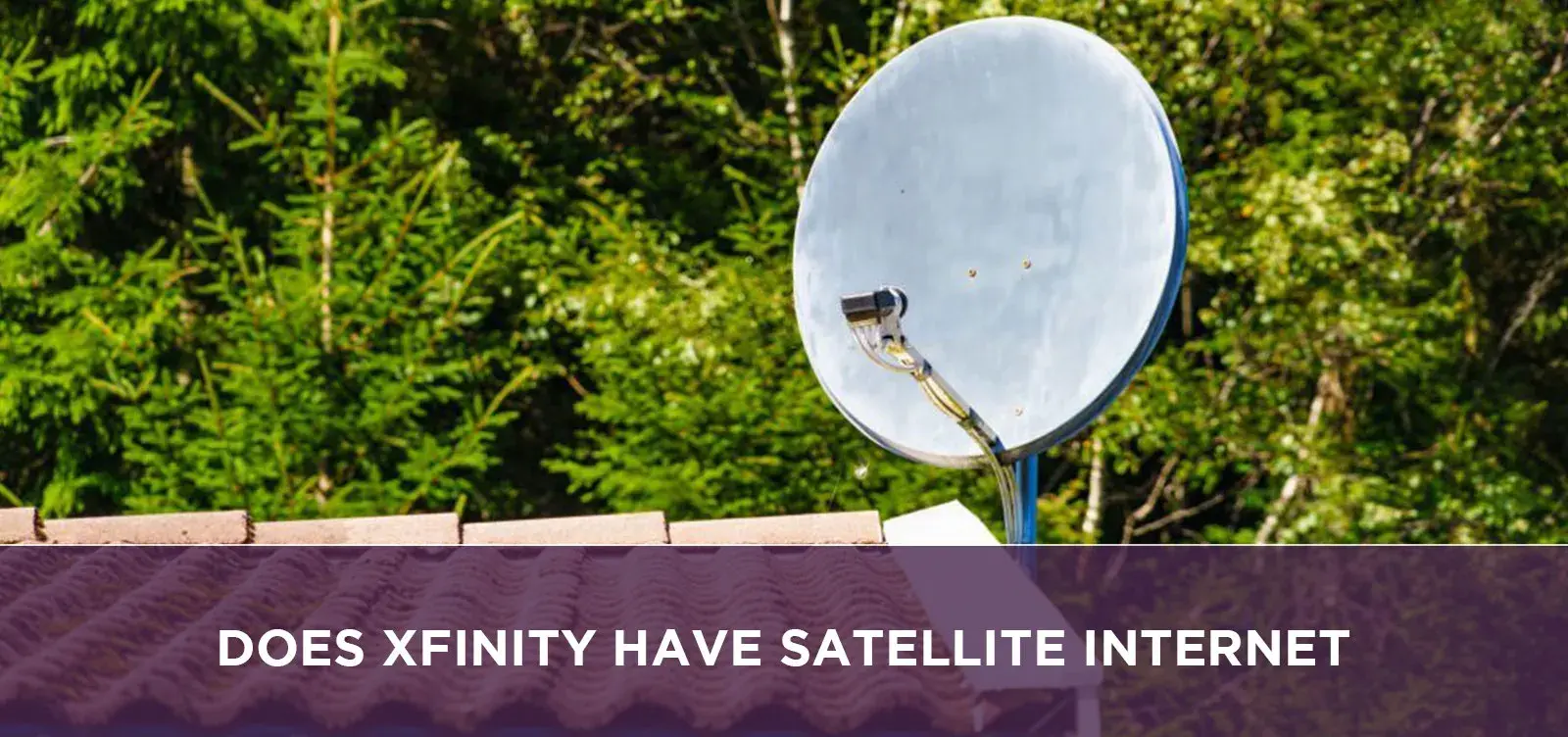
Xfinity, a prominent name in internet service, primarily offers cable and fiber optic connections. If you're wondering whether Xfinity provides satellite internet, the answer is no. This guide clarifies Xfinity's offerings and explores alternatives for satellite broadband, ensuring you find the best solution for your connectivity needs.
Understanding Xfinity's Core Services
When exploring internet service providers, Xfinity is a name that frequently surfaces, especially in urban and suburban areas across the United States. Known for its comprehensive cable television packages, home phone services, and robust internet solutions, Xfinity has established itself as a major player in the telecommunications industry. However, its service footprint is largely defined by its underlying infrastructure, which is primarily based on coaxial cable networks. This specialization leads to a common question among those in less connected regions: "Does Xfinity have satellite internet?" The straightforward answer is no, Xfinity does not offer satellite internet services.
Why Xfinity Doesn't Offer Satellite Internet
Xfinity, operated by Comcast, has built its business model around a vast network of coaxial cable lines. This infrastructure is ideal for delivering high-speed internet, television, and voice services to densely populated areas. The company's investment and operational focus have historically been on expanding and optimizing this cable network. Satellite internet, on the other hand, relies on a completely different technological paradigm: orbiting satellites that transmit data signals to and from ground-based dishes. Developing and managing a satellite internet service would require a fundamentally different set of expertise, infrastructure, and capital investment, diverging significantly from Xfinity's established strengths and strategic direction. Therefore, Xfinity has chosen to concentrate its resources on enhancing its cable and, where available, fiber optic offerings, rather than venturing into the satellite internet market.
Xfinity's Actual Internet Offerings
While satellite internet is not part of Xfinity's portfolio, the company provides a range of reliable and high-speed internet solutions that cater to various user needs. These services are primarily delivered through two main technologies: cable and fiber optics. Understanding these offerings is crucial for anyone considering Xfinity for their home or business connectivity.
Cable Internet: The Xfinity Backbone
Cable internet is Xfinity's most widespread service. It utilizes the same coaxial cable network that delivers cable television. This technology is well-established and capable of providing significant download speeds, making it a popular choice for many households. Cable internet works by transmitting data signals through underground or aerial cables. The speed and reliability of cable internet can be affected by the number of users in a neighborhood sharing the same network segment, a phenomenon known as "network congestion." However, Xfinity has made substantial investments in upgrading its cable infrastructure, often referred to as "next-generation" or "DOCSIS 3.1" technology, to mitigate these issues and deliver more consistent performance.
For many users, Xfinity's cable internet offers a compelling balance of speed, affordability, and availability. It's generally faster and more reliable than older DSL technologies and often more accessible than fiber optic services, especially in areas where fiber deployment is still in its early stages. The speeds offered can range from basic plans suitable for email and web browsing to high-speed tiers capable of supporting multiple devices, streaming high-definition content, online gaming, and large file downloads. The availability of these plans is extensive across Xfinity's service areas.
Fiber Optic Internet: The Future of Speed
In select markets, Xfinity is also deploying fiber optic internet services. Fiber optic technology uses thin strands of glass or plastic to transmit data as pulses of light, offering unparalleled speed and reliability. Unlike cable internet, which shares bandwidth, fiber optic connections typically provide dedicated bandwidth to each customer, meaning performance is less susceptible to neighborhood congestion. Fiber optic internet is symmetrical, meaning upload and download speeds are often the same, which is a significant advantage for activities like video conferencing, uploading large files, and live streaming.
While fiber optic internet is the gold standard for speed and performance, its availability is more limited than cable. Xfinity is gradually expanding its fiber footprint, but it's not yet a ubiquitous offering. For users who can access it, Xfinity's fiber internet represents the pinnacle of home broadband technology, capable of supporting the most demanding internet uses and future-proofing a household's connectivity needs. The transition to fiber is a key part of Xfinity's long-term strategy to deliver the fastest and most reliable internet experiences possible.
Xfinity Internet Packages and Speeds (2025-26)
As of 2025-26, Xfinity offers a tiered structure of internet packages designed to meet diverse consumer needs. These packages are characterized by varying download and upload speeds, data allowances (though many plans now offer unlimited data), and bundled services. It's important to note that exact speeds and package names can vary by region and are subject to change.
Here's a general overview of what users can expect from Xfinity's internet plans in the 2025-26 period:
Package Tier (Example) Download Speeds (Up to) Upload Speeds (Up to) Typical Use Cases Data Cap (Common) Connect / Performance Starter 100-300 Mbps 10-20 Mbps Basic browsing, email, social media, streaming on 1-2 devices. 1.2 TB (often unlimited with modem rental or promotional offers) Performance / Speed 300-500 Mbps 10-30 Mbps Multiple device usage, HD streaming, online gaming, video calls. 1.2 TB (often unlimited) Extreme / Gigabit 500 Mbps - 1 Gbps 20-40 Mbps (Cable) / 500 Mbps - 1 Gbps (Fiber) Heavy multi-device use, 4K streaming, intense online gaming, large file transfers, smart home integration. 1.2 TB (often unlimited) Gigabit Pro (Fiber) 1-2 Gbps 1-2 Gbps Professional use, multiple 4K streams, VR gaming, extremely large file uploads/downloads, supporting many connected devices. Unlimited It is crucial for consumers to check Xfinity's official website or contact customer service for the most accurate and up-to-date information regarding package availability, speeds, pricing, and data policies in their specific location. Many Xfinity plans now include unlimited data, especially those that are fiber-based or higher-tier cable plans, or when using an Xfinity-provided modem. However, older or basic cable plans might still adhere to a data cap, typically around 1.2 terabytes (TB) per month, with overage charges applying if exceeded, though options to purchase unlimited data are usually available.
Satellite Internet: What It Is and How It Works
Satellite internet is a type of broadband connection that beams data to and from your home via satellites orbiting the Earth. It's a technology that has been around for decades, but it has seen significant advancements, particularly with the introduction of new constellations of satellites offering higher speeds and lower latency. For individuals and businesses located in areas where traditional wired internet services like cable or fiber are unavailable or unreliable, satellite internet often serves as the primary, and sometimes only, option for high-speed connectivity.
How Satellite Internet Works
The process of satellite internet involves several key components:
- Ground Station: Your internet service provider (ISP) operates a network of large satellite dishes at ground stations. These dishes act as gateways, connecting the satellite network to the wider internet.
- Satellite: Data is transmitted from the ground station up to a satellite in geostationary orbit (GEO) or, increasingly, a constellation of low-Earth orbit (LEO) satellites. GEO satellites orbit at approximately 22,000 miles above the Earth, while LEO satellites orbit much closer, around 300-1,200 miles.
- Customer Dish: A smaller satellite dish is installed at your home or business. This dish is precisely aimed at the satellite.
- Modem: A satellite modem connects your home network to the satellite dish.
When you send a request (e.g., clicking a link), the signal travels from your computer, through your modem and satellite dish, up to the satellite, and then down to the ground station. The ground station then sends your request to the internet. The response travels back from the internet to the ground station, up to the satellite, and finally down to your satellite dish and modem, appearing on your computer. The distance the signal must travel, especially with GEO satellites, is the primary reason for latency.
Pros and Cons of Satellite Internet
Satellite internet offers unique advantages, particularly for underserved areas, but also comes with distinct drawbacks that users must consider.
Pros Cons Wide Availability: Can be installed almost anywhere with a clear view of the sky, making it ideal for rural and remote locations where other services are unavailable. Latency: Signals travel long distances, resulting in higher latency (delay) compared to terrestrial internet. This can impact real-time applications like online gaming and VoIP calls. GEO satellite latency is typically 500-700ms, while LEO can be as low as 20-40ms. Increasing Speeds: Newer satellite technologies (especially LEO) offer significantly improved download and upload speeds, with some plans rivaling entry-level cable or DSL. Data Caps: Many satellite plans come with strict monthly data allowances. Exceeding these caps can lead to reduced speeds or expensive overage charges. However, newer LEO providers are offering more generous or unlimited data options. Independent of Terrestrial Infrastructure: Not affected by local cable cuts or power outages that might impact wired services. Weather Sensitivity: Heavy rain, snow, or storms can sometimes interfere with satellite signals, causing temporary disruptions. Bundling Options: Some providers offer bundles with TV services. Installation Costs: Initial equipment and installation can be expensive, though many providers offer subsidies or rental options. New Technologies: Emerging LEO satellite constellations are dramatically improving the satellite internet experience. Contract Requirements: Many plans require long-term contracts (e.g., 24 months). Leading Satellite Internet Providers (2025-26)
The satellite internet landscape is evolving rapidly, with new players and technologies emerging. As of 2025-26, the primary providers continue to be Viasat and HughesNet, which utilize GEO satellites, and the rapidly expanding Starlink (SpaceX), which uses a LEO constellation.
- Starlink (SpaceX): This is arguably the most significant development in satellite internet in recent years. Starlink uses a massive constellation of LEO satellites, offering much lower latency and significantly higher speeds compared to traditional GEO satellite services. Starlink is ideal for rural users needing faster speeds and more responsive connections for activities like video conferencing and gaming. Speeds can range from 50-200 Mbps download and 10-20 Mbps upload, with latency often below 50ms. Data is typically unlimited, though speeds may be deprioritized during peak network congestion. Availability is expanding rapidly but can still be limited by capacity in some areas.
- Viasat: Viasat offers satellite internet primarily through GEO satellites. They have made strides in increasing speeds and data allowances. Viasat plans often come with a fixed data allowance, after which speeds may be significantly reduced. Download speeds can vary widely, often ranging from 25-100 Mbps, with higher speeds available in certain plans or regions. Latency remains a challenge due to the distance of GEO satellites, typically in the 500-700ms range. Viasat is a solid option for basic internet needs in areas with no other alternatives.
- HughesNet: Similar to Viasat, HughesNet uses GEO satellites and is a long-standing provider of satellite internet. They offer various plans with different download speeds and data caps. HughesNet plans typically provide download speeds of up to 25-100 Mbps, with latency similar to Viasat. They also often have data allowances, with options for bonus data during off-peak hours. HughesNet is generally considered a more budget-friendly option for basic internet tasks.
When comparing these providers, it's essential to look beyond just advertised speeds. Consider the actual data allowance, latency for your specific needs, contract terms, equipment costs, and customer reviews in your area. For instance, while Starlink offers a superior experience in terms of speed and latency, it may also come with a higher upfront equipment cost and monthly fee compared to Viasat or HughesNet.
When Satellite Internet is Your Only Option
For many Americans, especially those residing in rural or remote areas, the choice of internet service provider is severely limited. In such scenarios, satellite internet often emerges not just as an option, but as the sole viable solution for accessing broadband speeds. Xfinity's cable and fiber services are concentrated in more densely populated regions, leaving vast swathes of the country without access. If you find yourself in such a situation, understanding how to navigate the world of satellite internet is paramount.
Identifying Rural Areas Lacking Traditional Broadband
The first step is to confirm that traditional broadband is indeed unavailable. This involves checking availability maps from major ISPs like Xfinity, Verizon (FiOS/DSL), AT&T (Fiber/DSL), and local cable companies. Websites like BroadbandNow.com, HighSpeedInternet.com, and the FCC's broadband map can provide aggregated data on what services are offered in your specific address. If these searches yield no results for cable, fiber, or even reliable DSL, then satellite internet becomes the primary consideration.
Rural areas are typically characterized by lower population density, making the economic investment for ISPs to lay extensive cable or fiber infrastructure less appealing. This is why satellite internet, which requires less ground infrastructure and can cover vast geographic areas from orbit, fills this critical gap. The lack of competition in these areas can sometimes lead to higher prices and fewer service options for consumers, underscoring the importance of careful research.
Evaluating Satellite Options for Your Needs
Once it's established that satellite is your best bet, the evaluation process begins. The key providers to consider are Starlink, Viasat, and HughesNet. Each has its strengths and weaknesses:
- For the Best Performance (if available and affordable): Starlink is the clear leader. Its LEO technology provides significantly lower latency, making it suitable for more demanding applications like video conferencing, online gaming, and responsive web browsing. Its higher speeds are also a major advantage. However, Starlink's availability can be capacity-limited in some regions, and its upfront equipment cost is typically higher.
- For Basic Connectivity and Budget-Conscious Users: Viasat and HughesNet offer more traditional GEO satellite services. These are suitable for essential internet tasks like email, web browsing, and standard-definition streaming. If your primary need is simply to get online and you have strict budget constraints, these might be the more accessible options. However, be acutely aware of their data caps and the higher latency which will affect real-time activities.
When evaluating, consider the following:
- Advertised vs. Actual Speeds: Speeds can fluctuate based on network congestion, time of day, and your specific plan.
- Data Allowances: Understand the monthly data cap and what happens if you exceed it. Some plans offer "priority data" versus "standard data," where standard data speeds are reduced after a certain threshold.
- Latency: If you plan on gaming, frequent video calls, or other real-time applications, low latency is crucial. Starlink is the only satellite option offering genuinely low latency.
- Contract Length and Early Termination Fees: Most satellite providers require long-term contracts. Understand these terms thoroughly.
- Equipment Costs: Factor in the price of the satellite dish and modem, whether it's an upfront purchase or a monthly rental fee.
- Customer Reviews: Look for reviews from users in your geographic area to get a realistic picture of performance and customer service.
Understanding Data Caps and Latency in Satellite
These two factors are the most significant differentiators and potential frustrations with satellite internet, especially for users accustomed to wired connections.
Data Caps: Traditional GEO satellite plans (Viasat, HughesNet) often impose strict monthly data limits, typically ranging from 10 GB to 100 GB for standard data. Once this allowance is used, speeds can be drastically reduced (e.g., to 1-3 Mbps) for the remainder of the billing cycle, or you may incur hefty overage charges. Some providers offer "bonus data" or "priority data" that allows for higher speeds during off-peak hours or up to a certain threshold. Starlink, while technically offering unlimited data, may deprioritize speeds for users who consume exceptionally large amounts of data during peak network times, though this is less common and less severe than the hard caps of GEO services.
Latency: Latency, or ping, is the time it takes for a data packet to travel from your device to a server and back. With GEO satellites orbiting 22,000 miles away, this round trip can take 500-700 milliseconds (ms). This high latency makes real-time online activities challenging. Online gaming becomes laggy, video calls can experience delays and choppy audio/video, and even simple web page loading can feel sluggish. Starlink's LEO satellites, orbiting much closer (300-1,200 miles), reduce latency to 20-40 ms, making it comparable to terrestrial broadband and suitable for most online activities.
When choosing a satellite plan, carefully assess your household's typical internet usage. If you're a heavy streamer, gamer, or work from home with frequent video calls, Starlink is likely the only satellite option that will provide a satisfactory experience. For lighter users who primarily browse the web and check email, Viasat or HughesNet might suffice, provided you can manage within their data caps.
Choosing the Right Internet Service for You
Deciding on the best internet service requires a clear understanding of your needs, your location's available options, and the trade-offs involved with each technology. Since Xfinity does not offer satellite internet, the decision for those in areas without Xfinity coverage often boils down to evaluating satellite providers or exploring other less common alternatives if available.
Comparing Xfinity's Offerings vs. Satellite Internet
The comparison between Xfinity's services and satellite internet is stark, primarily due to the underlying technology and intended service areas.
Feature Xfinity (Cable/Fiber) Satellite Internet (Starlink, Viasat, HughesNet) Availability Primarily urban and suburban areas. Limited in rural regions. Wide availability, including rural and remote locations. Speeds Generally higher download speeds (up to 1-2 Gbps), symmetrical speeds with fiber. Variable: Starlink offers 50-200+ Mbps download, 10-20 Mbps upload. Viasat/HughesNet typically 25-100 Mbps download, slower uploads. Latency Low (typically 10-30 ms). Excellent for real-time applications. High for GEO (500-700 ms), Low for LEO (20-40 ms). Data Caps Often unlimited, especially for fiber and higher tiers. Some cable plans have 1.2 TB caps with unlimited options. Common for GEO (Viasat/HughesNet), with potential for speed reduction or overages. Starlink typically unlimited but can have deprioritization. Reliability High, but can be affected by local network congestion. Can be affected by severe weather. GEO is generally stable; LEO is improving. Cost Competitive, with various tiers. Higher speeds cost more. Can be higher, especially for Starlink's equipment. GEO plans might be cheaper monthly but have data limitations. Key Factors to Consider When Choosing
When making your final decision, weigh these critical factors:
- Your Location: This is the most significant determinant. If Xfinity is available and offers speeds that meet your needs, it's likely the superior choice over satellite due to lower latency and often more consistent performance. If Xfinity is not an option, then satellite becomes the primary focus.
- Your Internet Usage Habits:
- Light Users (email, basic browsing): Most satellite plans (even GEO) can suffice.
- Moderate Users (streaming HD, social media, occasional video calls): Starlink or higher-tier Xfinity plans are recommended. GEO satellite plans with generous data allowances might work if managed carefully.
- Heavy Users (4K streaming, online gaming, large file transfers, multiple users): Xfinity's higher-tier plans or fiber are ideal. Starlink is the only satellite option that can reasonably support these activities.
- Budget: Compare the total cost of ownership, including monthly fees, equipment costs (purchase or rental), installation fees, and potential overage charges. Starlink's upfront hardware cost is a notable factor.
- Contract Commitments: Be aware of contract lengths and early termination fees for all providers.
- Future Needs: Consider how your internet needs might evolve. Investing in a service that can accommodate future demands is often a wise choice.
For users in areas where Xfinity is available, it generally provides a more robust and responsive internet experience than satellite. However, for those in rural or remote locations, satellite internet, particularly Starlink, represents a significant leap forward in connectivity, transforming what was once impossible into a viable reality. Always verify availability and specific plan details directly with the provider for your exact address.
Final Thoughts on Xfinity and Satellite Connectivity
In summary, Xfinity, a leading provider of cable and fiber internet services, does not offer satellite internet. Their business model and infrastructure are built around terrestrial cable networks, focusing on delivering high-speed, low-latency connections to homes and businesses in more populated areas. For consumers seeking internet service, understanding this distinction is crucial. If you are in an area served by Xfinity, their cable and fiber options generally provide a superior internet experience in terms of speed, latency, and data allowances compared to satellite internet. However, for those residing in rural or remote locations where Xfinity's services are unavailable, satellite internet, particularly newer LEO-based services like Starlink, has become a viable and increasingly capable alternative. While traditional GEO satellite providers like Viasat and HughesNet offer basic connectivity, they come with significant limitations in latency and data caps. Therefore, if Xfinity is an option, it is typically the preferred choice. If not, a thorough evaluation of satellite providers, prioritizing Starlink for its performance advantages, is essential to secure reliable broadband access.