-
Posted on: 07 Jan 2026
-
Transforming a discarded satellite dish into a powerful terrestrial antenna is a surprisingly achievable DIY project. This guide will walk you through the process, revealing how to repurpose this common household item for enhanced over-the-air (OTA) TV reception, offering a cost-effective and environmentally friendly alternative to purchasing new antennas. Discover the steps to unlock free, high-definition broadcast channels in 2025 and beyond.
What is a Satellite Dish and Why Convert It?
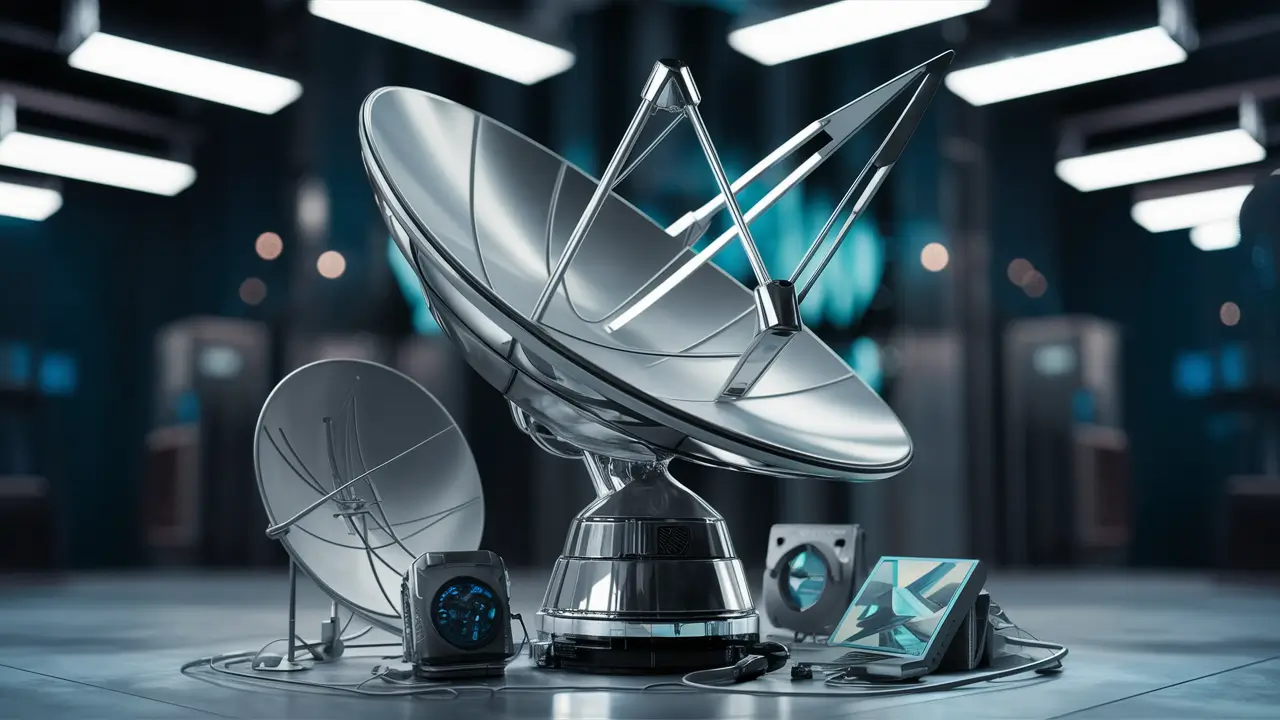
A satellite dish, typically a parabolic reflector, is designed to receive weak signals from geostationary satellites. Its curved shape focuses these signals onto a central point called the feedhorn. The primary purpose of a satellite dish is to capture signals for satellite television or internet services. However, the fundamental principle of signal amplification and focusing can be cleverly repurposed for terrestrial broadcast reception.
The allure of converting a satellite dish into an antenna lies in several compelling factors for the modern consumer in 2025. Firstly, it's an economically savvy move. Satellite dishes are often discarded or replaced when users switch providers or upgrade equipment, making them readily available and often free. Instead of contributing to e-waste, you're giving this technology a second life. Secondly, the inherent design of a satellite dish, with its large reflective surface, makes it an exceptionally efficient signal collector. When modified correctly, it can outperform many commercially available terrestrial antennas, especially in areas with weak or distant broadcast signals. This means better reception, more channels, and a more stable viewing experience for free over-the-air (OTA) television. In an era where streaming costs continue to rise, reclaiming free broadcast channels is an increasingly attractive proposition.
Understanding Antenna Principles for Conversion
To successfully convert a satellite dish, a basic understanding of how antennas work is crucial. An antenna is essentially a transducer that converts electromagnetic waves into electrical signals (during reception) or vice versa (during transmission). For OTA TV, we are concerned with reception.
Terrestrial broadcast signals are electromagnetic waves that travel through the air. Antennas are designed to capture these waves. The effectiveness of an antenna depends on several factors, including its size, shape, material, and orientation relative to the broadcast towers. For OTA TV in 2025, broadcast signals are primarily in the VHF (Very High Frequency) and UHF (Ultra High Frequency) bands. Different antenna designs are optimized for different frequency ranges. For instance, Yagi-Uda antennas, common for terrestrial reception, have a series of elements (driven element, reflectors, directors) that resonate at specific frequencies, enhancing reception in a particular direction.
A satellite dish, with its parabolic shape, acts as a highly efficient reflector. It concentrates incoming radio waves onto a focal point. In its original configuration, this focal point houses the feedhorn, which contains the LNB (Low-Noise Block downconverter) to amplify and convert the satellite signals to a lower frequency for transmission to the receiver. For our conversion, we'll be replacing the LNB and feedhorn assembly with a terrestrial antenna element or a specialized feedhorn designed for OTA frequencies. The parabolic dish then acts as a massive signal booster, focusing weak terrestrial signals onto this new element, much like it focuses satellite signals.
The key is to ensure that the replacement element is tuned to the frequencies used by local TV broadcasters. While a satellite dish is inherently broadband due to its reflective properties, the efficiency of capturing specific terrestrial frequencies relies on the design of the component placed at its focal point. The larger the dish, the more signal it can collect, making it particularly effective for distant or low-power broadcasts. This is a significant advantage over smaller, commercially produced OTA antennas.
Materials and Tools Needed for Conversion
Gathering the right materials and tools is essential for a smooth and successful conversion. Here’s a comprehensive list for your 2025 project:
Essential Materials:
- Discarded Satellite Dish: Any size will work, but larger dishes generally offer better gain. Ensure it's in decent condition, with no major rust or damage to the reflector surface.
- Terrestrial Antenna Element or Feedhorn: This is the most critical component. Options include:
- DIY Dipole or Loop Antenna: Made from conductive wire (e.g., copper wire).
- Commercial UHF/VHF Antenna Element: Some enthusiasts use specific elements from existing terrestrial antennas.
- Specialized Satellite-to-Terrestrial Feedhorn: These are designed to fit the LNB arm and capture OTA signals.
- Mounting Hardware:
- L-bracket or custom bracket: To attach the new antenna element to the dish's LNB arm.
- Bolts, nuts, and washers: For securing the bracket and element.
- Screwdriver set: For disassembly and reassembly.
- Coaxial Cable: RG6 cable is standard for TV reception. You'll need enough to run from the antenna to your TV. Ensure it has F-connectors on both ends.
- F-connector crimper or compression tool: For attaching connectors to the coaxial cable.
- Weatherproofing materials: Electrical tape, silicone sealant, or heat-shrink tubing to protect connections from the elements.
- Optional: Signal Amplifier/Booster: If you are in a very weak signal area, a powered amplifier can help boost the signal before it reaches your TV. Ensure it's compatible with OTA frequencies.
- Optional: Grounding Wire and Rod: For lightning protection and safety.
Essential Tools:
- Wrench set or adjustable wrench: For tightening bolts and nuts.
- Drill and drill bits: If you need to create mounting holes.
- Wire cutters/strippers: For preparing wires.
- Measuring tape: For precise placement of the antenna element.
- Compass: To help aim the dish.
- Level: To ensure the mounting pole is vertical.
- Ladder: For safe access to the installation location.
- Safety glasses and gloves: For personal protection.
The choice of antenna element is crucial. For 2025, with the continued transition to digital broadcasting, selecting an element optimized for UHF frequencies, which carry most digital TV channels, is paramount. Some DIY enthusiasts report success using a simple dipole or a folded dipole antenna element placed at the focal point of the dish. Others opt for more sophisticated commercial elements designed for this purpose.
Step-by-Step Conversion Guide
This section provides a detailed walkthrough of how to convert your satellite dish into a functional OTA antenna. Follow these steps carefully for optimal results in 2025.
Step 1: Disassembly and Cleaning
Begin by safely disassembling the satellite dish. You'll need to remove the LNB and its associated arm. Be careful not to damage the parabolic reflector itself. Use your wrench set to loosen the bolts holding the LNB arm in place. Once removed, thoroughly clean the reflector surface. Use mild soap and water, and a soft cloth to remove any dirt, grime, or oxidation. A clean surface ensures maximum signal reflection. For any stubborn spots, a gentle abrasive cleaner might be used sparingly, but avoid scratching the surface. Ensure the dish is completely dry before proceeding.
Inspect the dish for any structural damage. Minor dents can sometimes be smoothed out, but significant warping can affect its reflective properties. If the dish is mounted on a pole, ensure the pole is stable and secure. You may need to adjust its angle or orientation later.
Step 2: Choosing Your Feedhorn Replacement
This is where the conversion truly takes shape. You need to decide what will replace the original LNB/feedhorn assembly at the dish's focal point. The focal point is the precise spot where all reflected signals converge. For a satellite dish, this is typically a few inches in front of the dish's center.
Option A: DIY Dipole or Loop Antenna
A simple dipole antenna can be constructed from copper wire. The length of the dipole elements is critical and depends on the frequencies you want to receive. For UHF (470-806 MHz), which carries most digital TV signals in 2025, a half-wave dipole for the center of this range (around 600 MHz) would have elements approximately 6 inches long each. A folded dipole can offer slightly better impedance matching. You'll need to create a mounting bracket to hold these elements precisely at the focal point.
Option B: Commercial Terrestrial Antenna Element
You can salvage a driven element from a commercial terrestrial antenna or purchase a specialized element designed for this purpose. These are often designed for specific frequency bands (e.g., UHF) and come with mounting hardware. This is often the simplest and most reliable option.
Option C: Specialized Satellite-to-Terrestrial Feedhorn
These are commercially available products specifically designed to fit into the LNB mounting mechanism of a satellite dish and contain an antenna element tuned for OTA frequencies. They are generally the easiest to install but can be more expensive than DIY solutions.
Finding the Focal Point:
The focal length of a parabolic dish is a critical measurement. It's the distance from the center of the dish to the focal point. You can often find this information online by searching for the dish model number. If not, a common approximation is about 0.3 to 0.4 times the diameter of the dish. For example, a 24-inch dish might have a focal length of around 7-9 inches. You can also find it by holding a light source at various points in front of the dish and observing where the reflected light converges most intensely.
Step 3: Mounting the New Feedhorn
Once you've chosen your antenna element and located the focal point, you need to mount it securely. This usually involves fabricating or adapting a bracket. Many satellite dish LNB arms have a standard mounting clamp. If you're using a commercial element or a specialized feedhorn, it might have its own mounting mechanism that can attach to the existing arm. If you're building a DIY element, you'll likely need an L-bracket or a custom-made piece of metal to attach the element to the LNB arm, ensuring it's positioned precisely at the focal point.
Use your drill to create any necessary holes in the bracket or the LNB arm. Secure the bracket and the antenna element using bolts, nuts, and washers. Ensure everything is firmly attached and won't move in the wind. The antenna element should be centered and perpendicular to the dish's surface at the focal point. For a dipole, ensure the two elements are oriented correctly (usually horizontally or vertically, depending on polarization of broadcast signals).
Polarization Consideration: Terrestrial TV signals can be horizontally or vertically polarized. In most regions, UHF digital channels are primarily horizontally polarized. If you're using a dipole, orient it horizontally. If you're unsure, you might need to experiment with orientation after installation.
Step 4: Connecting the Coaxial Cable
Now, connect your coaxial cable to the new antenna element. Most terrestrial antenna elements have a coaxial connector (usually an F-connector). If you're using a DIY element, you'll need to solder or otherwise attach a suitable connector to your wire. Ensure a good electrical connection.
Run the RG6 coaxial cable from the antenna element down the LNB arm and along the dish mount. Use zip ties or electrical tape to secure the cable neatly, preventing it from flapping in the wind. At the end of the cable, use your crimping or compression tool to attach an F-connector. This connector will then plug into the back of your TV or digital converter box.
Weatherproofing: It's crucial to weatherproof all outdoor connections. Wrap the F-connector and any exposed wire connections with electrical tape, followed by a layer of silicone sealant or heat-shrink tubing. This prevents moisture from corroding the connections and degrading signal quality.
Step 5: Aiming and Testing
This is a critical step for achieving optimal reception. The satellite dish, now acting as a highly directional antenna, needs to be aimed precisely at the broadcast towers. You can find the location of your local TV towers using online tools like FCC's DTV Maps or similar services in your region. These tools will provide the direction (azimuth) and distance to the towers.
Use a compass to get an initial bearing. Mount the dish on its pole, ensuring the pole is vertical using a level. Aim the dish in the general direction of the broadcast towers. Once connected to your TV, perform a channel scan. You may need to make small adjustments to the dish's aim (both horizontally and vertically) and rescan channels repeatedly to find the sweet spot for maximum signal strength and the most channels.
Fine-tuning: Many TVs have a signal strength meter in their menu. Use this to guide your aiming. Slowly move the dish in small increments, rescan, and observe the signal meter. Aim for the highest possible signal strength for the channels you want to receive. For multiple broadcast towers in different directions, you might need to compromise on aiming or consider a rotor system (though this adds complexity and cost).
Advanced Modifications and Optimizations
For those seeking to push the performance of their converted satellite dish antenna even further in 2025, several advanced modifications can be considered:
Adding a Preamplifier
If you live far from broadcast towers or have significant signal obstructions, a preamplifier (often called a mast amplifier) can make a substantial difference. This device is installed as close to the antenna element as possible, ideally on the LNB arm, to boost the weak signals before they travel down the coaxial cable. This minimizes signal loss over the cable run. Ensure the amplifier is designed for the VHF/UHF frequency range used by OTA TV and is compatible with your TV's tuner. Many modern amplifiers are broadband and suitable for this purpose.
Using a Rotor System
If broadcast towers are located in different directions, a motorized antenna rotor can allow you to remotely aim the dish. This significantly expands the number of channels you can receive. Rotor systems vary in complexity, from simple manual positioners to fully automated systems controlled via remote or smartphone apps. Installation requires careful integration with the dish's mounting pole and wiring.
Combining Elements
Some advanced users experiment with combining multiple antenna elements or even multiple converted dishes to capture signals from different directions or to increase overall gain. This is a complex undertaking and requires careful impedance matching and signal combining techniques to avoid signal degradation.
Filtering for 4G/LTE Interference
In 2025, the 700 MHz band, previously used for TV broadcasting, is now heavily utilized by 4G/LTE mobile services. This can cause interference, particularly for channels in the lower UHF band. Installing an LTE filter on your coaxial cable can help mitigate this interference, improving reception quality for affected channels. These filters are typically installed near the TV or converter box.
Improving Mounting Stability
A wobbly antenna will result in fluctuating signal strength and lost channels. For optimal performance, ensure the mounting pole is extremely stable. Using guy wires to support the pole, especially for taller installations, is highly recommended. A solid mounting system is crucial for maintaining the precise aim needed for digital TV reception.
Performance Expectations and Comparison (2025-26 Outlook)
The performance of a converted satellite dish antenna can be remarkably impressive, especially when compared to standard commercial antennas. In 2025, with the ongoing digital transition and the increasing availability of HD broadcasts, a well-executed conversion can provide excellent reception for free OTA channels.
Gain and Signal Strength: The primary advantage of using a satellite dish as a reflector is its inherent gain. The large surface area concentrates signals effectively, meaning a converted dish can often achieve higher signal-to-noise ratios than smaller, dedicated OTA antennas. This is particularly beneficial for receiving channels from distant transmitters or those with lower broadcast power. Many DIY conversions report capturing channels that were previously inaccessible with their old antennas.
Frequency Range: The effectiveness across the entire VHF and UHF spectrum depends heavily on the chosen feedhorn replacement. A well-designed UHF element will perform excellently for digital TV. If you need to capture VHF channels (which are less common for digital TV but still exist for some broadcasters), you might need a more complex feedhorn design or a combination of elements. However, for most digital OTA viewing in 2025, focusing on UHF is usually sufficient.
Comparison with Commercial Antennas (2025 Data):
Feature Converted Satellite Dish Antenna Typical Commercial OTA Antenna (Indoor/Outdoor) Cost Very Low (primarily materials for feedhorn/mounting) Moderate to High ($30 - $200+) Signal Gain High (especially for UHF) Moderate (varies by design and size) Reception Range Excellent for distant signals Good to Very Good, but often limited by size Durability Can be very durable if properly weatherproofed Varies greatly by manufacturer and materials DIY Effort Moderate to High (requires some technical skill) Low to Moderate (plug-and-play options available) Aesthetics Can be bulky and industrial-looking Ranges from discreet indoor antennas to more streamlined outdoor models Channel Reception (UHF) Excellent Good to Excellent Channel Reception (VHF) Depends on feedhorn design; can be weaker without specific elements Good to Excellent for VHF-optimized models Environmental Factors: Performance can be affected by weather (heavy rain or snow can attenuate signals) and line-of-sight obstructions (trees, buildings). A higher mounting location generally improves reception.
Future-Proofing: With the ongoing spectrum re-allocations in 2025 and beyond, it's important to note that broadcast frequencies can change. However, the parabolic dish's reflective nature is frequency-agnostic. The limiting factor will always be the feedhorn element. If future broadcasts shift frequencies significantly, you may need to replace the feedhorn element.
In summary, a converted satellite dish offers a powerful, cost-effective solution for OTA reception in 2025, often outperforming many standard antennas, especially in challenging signal environments. Its main drawback is the DIY effort and potentially less appealing aesthetics compared to some commercial options.
Safety Considerations
Working with tools, ladders, and potentially elevated structures requires strict adherence to safety protocols. In 2025, safety remains paramount for any DIY project.
Ladder Safety: Always ensure your ladder is on stable, level ground. Maintain three points of contact when climbing. Never overreach. If possible, have someone spot you. Ensure the ladder is rated for your weight and the tools you're carrying.
Electrical Safety: While you are not directly working with mains electricity, the coaxial cable carries radio frequency signals. If your antenna is installed very high, consider the risk of lightning strikes. Proper grounding of the antenna mast is crucial. Run a heavy-gauge copper wire from the mast base to a grounding rod driven into the earth. This helps dissipate lightning energy safely.
Working at Heights: If installing the antenna on a roof or elevated mast, extreme caution is advised. If you are not comfortable working at heights, hire a professional installer or have a capable assistant. Always wear safety harnesses if working on a roof.
Tool Safety: Wear safety glasses to protect your eyes from debris when drilling, cutting, or disassembling. Wear gloves to protect your hands from sharp edges and potential rust. Ensure power tools are used correctly and safely.
Dish Stability: Ensure the dish and its mounting are extremely secure. A falling dish or mast can cause serious injury or property damage. Check all bolts and connections regularly, especially after strong winds.
Environmental Hazards: Be aware of your surroundings. Avoid working during thunderstorms or high winds. If you encounter any hazardous materials (e.g., old insulation, lead paint), take appropriate precautions or consult professionals.
Prioritizing safety will ensure your project is successful and you can enjoy your newly acquired channels without incident.
Troubleshooting Common Issues
Even with careful planning, you might encounter issues. Here are common problems and their solutions for your converted antenna in 2025:
No Channels Found
- Aiming: The most common cause. Re-aim the dish precisely towards the broadcast towers. Use an online tool to confirm tower locations and directions.
- Connections: Check all F-connector connections. Ensure they are tight and properly seated on both the antenna element and the TV/converter box.
- Cable Damage: Inspect the coaxial cable for any kinks, cuts, or damage. Replace if necessary.
- Antenna Element Placement: Verify the antenna element is at the exact focal point of the dish. Even a slight misalignment can drastically reduce signal reception.
- TV Tuner Issues: Try scanning for channels on a different TV or converter box to rule out a tuner problem.
- Broadcast Tower Outage: Occasionally, local towers may be offline for maintenance. Check with your local broadcasters or online forums.
Pixelation or Freezing Picture
- Weak Signal: The signal is too weak to maintain a stable lock. Try fine-tuning the dish's aim for a stronger signal. Consider adding a preamplifier if you are in a fringe reception area.
- Interference: Other electronic devices (Wi-Fi routers, microwaves, LED lights) can cause interference. Try moving potential sources of interference away from the antenna or TV. An LTE filter might be necessary if interference is suspected from cellular signals.
- Cable Issues: A damaged coaxial cable or loose connectors can cause intermittent signal loss.
- Dish Alignment Drift: Wind or temperature changes might have slightly shifted the dish's aim. Re-align.
Some Channels Work, Others Don't
- Directional Sensitivity: The dish is highly directional. If towers are in different directions, you may be optimized for one group but not another. You might need to compromise aim or consider a rotor.
- Frequency Bands: Some channels might be in the VHF band, while your antenna element is optimized for UHF. If VHF reception is poor, you might need a more complex feedhorn or a separate VHF antenna.
- Signal Strength Variation: Different channels broadcast at different power levels and from slightly different locations, leading to varying signal strengths.
No Power to Preamplifier (if used)
- Power Injector: Ensure the power injector is plugged in and functioning. Check its connection to the coaxial cable.
- Coaxial Cable Integrity: The power needs to travel down the coaxial cable. Any breaks or poor connections will prevent the amplifier from receiving power.
When troubleshooting, make one change at a time and then rescan channels to isolate the problem. Patience and systematic testing are key to resolving any issues with your DIY antenna.
Conclusion: Unlocking Free TV
Converting a satellite dish into a terrestrial antenna is a rewarding project that offers significant benefits in 2025. You've learned how to leverage the powerful signal-gathering capabilities of a parabolic reflector, repurpose discarded materials, and potentially save considerable money on subscription services. The process, while requiring some effort and technical understanding, is well within reach for most DIY enthusiasts.
By carefully following the steps outlined—from understanding antenna principles and gathering the right materials to precise mounting, aiming, and troubleshooting—you can unlock a world of free, high-definition broadcast television. The current 2025-26 outlook for OTA broadcasting remains strong, with more channels offering HD content than ever before. This converted antenna stands as a testament to ingenuity and sustainability, proving that effective technology doesn't always require a hefty price tag or contribute to landfill waste. Embrace this opportunity to gain more control over your entertainment and enjoy crystal-clear, free-to-air programming.