-
Posted on: 07 Jan 2026
-
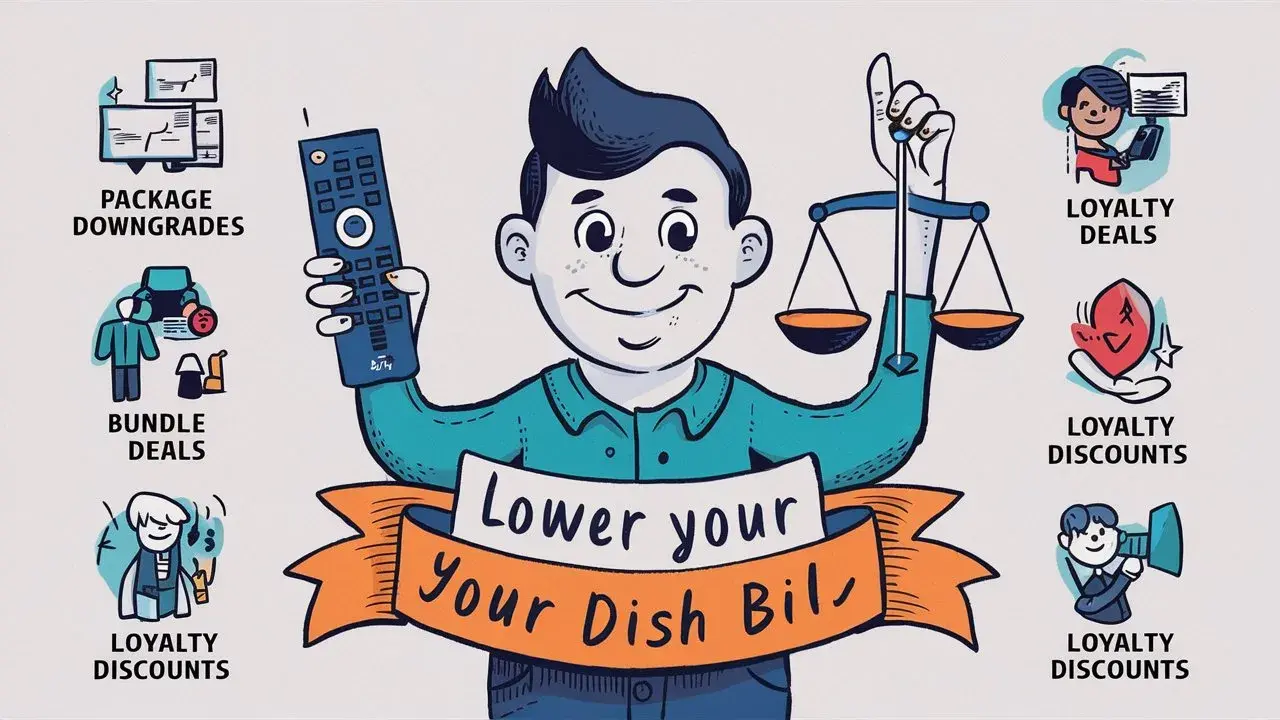
Struggling with your monthly DISH Network bill? You're not alone. Many subscribers seek ways to reduce their satellite TV expenses without sacrificing their favorite channels. This guide provides actionable strategies and insights to help you significantly lower your DISH bill in 2025-26.
Understanding Your Current DISH Bill
Before you can effectively lower your DISH bill, it's crucial to understand where your money is going. A typical DISH Network statement can seem complex, with various fees, taxes, and charges. Breaking it down is the first step toward identifying potential savings.
Common Charges on Your DISH Bill
Your monthly statement is usually comprised of several key components:
- Base Package Price: This is the core cost of your chosen channel lineup. Prices vary significantly based on the tier of service (e.g., America's Top 120, America's Top 200, America's Everything Plus).
- Add-on Packages: These include premium channels (like HBO, Showtime, Cinemax), sports packages (like NFL RedZone, MLB Network), or international channel packs.
- Equipment Rental Fees: If you're renting receivers or DVRs from DISH, these are recurring charges.
- Installation and Activation Fees: While often one-time charges, sometimes these can be spread out or reapplied.
- Taxes and Surcharges: These are government-mandated taxes and local franchise fees. They are often non-negotiable but can vary by location.
- Regional Sports Fees: Many providers pass on the cost of regional sports networks, which can fluctuate.
- Other Fees: This might include late fees, service call fees, or other miscellaneous charges.
Identifying Areas for Savings
Once you have your bill in front of you, take a close look at each line item. Ask yourself:
- Do I still watch all the channels in my base package? Many subscribers pay for channels they rarely, if ever, tune into.
- Are there add-on packages I no longer use or need? Premium channels are often the first to be cut when looking for savings.
- How much am I paying for equipment rental? Owning your equipment, if possible, can save money long-term.
- Are there any recurring fees that seem unusually high or unexplained?
For instance, a common scenario is paying $10-$15 per month for a premium channel like HBO Max, which might only be watched for a few months out of the year. Identifying these non-essential or underutilized services is key to negotiating a lower bill.
Understanding DISH's Pricing Structure (2025-26)
DISH, like most pay-TV providers, often uses introductory pricing for new customers or for specific promotional periods. After these periods end, the price typically reverts to the standard rate, which can be substantially higher. Being aware of when your promotional pricing expires is crucial for proactive negotiation. According to industry reports in early 2025, the average monthly cost for a mid-tier satellite TV package in the US hovers around $100-$120, with premium channels and fees pushing this figure higher. DISH's own pricing for their popular "America's Top 200" package, after promotional periods, can easily reach $110-$130 before taxes and fees.
The Art of Negotiating with DISH
Negotiating with a service provider like DISH can feel daunting, but it's one of the most effective ways to get your bill lowered. The key is preparation and a clear understanding of your goals.
When to Negotiate
The best times to negotiate are:
- When your promotional period is ending: This is your prime opportunity. DISH wants to retain you as a customer and is often willing to offer new deals to prevent you from leaving.
- When you receive a competitor's offer: If another provider (cable or streaming) offers you a comparable package for less, use this as leverage.
- If your bill has recently increased without explanation: A price hike is a valid reason to call and inquire about potential adjustments.
- If you are considering switching providers: Even if you haven't decided, threatening to leave can prompt DISH to offer retention deals.
How to Prepare for Your Call
Before you dial DISH customer service, gather the following:
- Your Account Information: Have your account number and PIN ready.
- Your Current Bill: Understand all the charges and what you're currently paying.
- Your Desired Outcome: Know what you want your bill to be or what specific services you'd like to adjust.
- Competitor Offers (if any): Have details of any lower prices or packages from other providers.
- Your Viewing Habits: Be ready to explain which channels you actually watch and which you don't.
Step-by-Step Negotiation Guide
- Call DISH Customer Service: Dial the number on your bill. You may need to navigate an automated system to reach the retention or customer service department.
- State Your Purpose Clearly: "Hello, I'm calling because my promotional pricing is ending soon, and I'm concerned about the upcoming increase in my bill. I'm looking for ways to lower my monthly cost."
- Be Polite but Firm: A respectful tone goes a long way. Explain your situation calmly.
- Highlight Your Loyalty: Mention how long you've been a customer. "I've been a loyal DISH customer for X years, and I'd like to continue my service, but the current rates are becoming difficult to manage."
- Mention Competitor Offers (if applicable): "I've received an offer from [Competitor Name] for a similar package at a lower price of $[X] per month. I'd prefer to stay with DISH if you can match or beat that."
- Ask for Specific Discounts or Promotions: "Are there any current promotions or discounts available for long-term customers like myself?" or "Can you offer me a new promotional rate for the next 12 months?"
- Discuss Package Adjustments: If price matching isn't possible, pivot to package changes. "If I can't get a better price, I'd like to explore downgrading my package to something more affordable. What options do I have that still include [Your Must-Have Channels]?"
- Inquire About Equipment Fees: "Are there any ways to reduce my equipment rental fees? Perhaps a one-time purchase option or a different equipment tier?"
- Escalate if Necessary: If the representative you're speaking with can't offer a satisfactory solution, politely ask to speak with a supervisor or a manager. "I understand your limitations, but I'm hoping a supervisor might have more flexibility."
- Confirm Everything in Writing: Once you agree on a new rate or package, ask for confirmation of the changes and the new pricing to be sent to you via email or mail.
Sample Negotiation Script Snippet
You: "Hi, my name is [Your Name], and my account number is [Your Account Number]. I'm calling today because my current promotional discount is expiring next month, and my bill is set to increase significantly. I've been a DISH customer for five years, and I really enjoy your service, but the projected new price of $[X] is more than I can afford. I've seen offers from competitors for around $[Y]. Is there anything you can do to help me keep my bill lower?"
DISH Rep: "Let me see what I can find for you. I see your current package includes..."
You: "Yes, that's correct. However, I primarily watch channels like [Channel A] and [Channel B]. If there are options to reduce the cost by adjusting the package slightly, I'm open to that. Or, if you have any new customer-equivalent promotions for loyal customers, I'd be very interested."
Optimizing Your DISH Package
Your channel lineup is the primary driver of your DISH bill. By carefully selecting the channels you truly want and need, you can significantly reduce your monthly expenses.
Analyzing Your Viewing Habits
This is the most critical step in package optimization. For a week or two, keep a log of what you watch. Note the channel and the time.
- Identify Must-Have Channels: Which channels are non-negotiable for you and your household?
- Identify Rarely Watched Channels: Which channels are in your current package but you rarely, if ever, tune into?
- Identify "Nice-to-Have" Channels: Channels you enjoy but could live without if it meant significant savings.
For example, if your log shows you watch ESPN and the local news channels daily, but you only flip to the movie channels once a month, those movie channels are prime candidates for removal.
DISH Package Tiers and Their Costs (Illustrative 2025-26 Estimates)
DISH offers several package tiers. Understanding their general content and price points can help you choose the right one. Note that these are estimates and actual pricing can vary based on promotions and location.
Package Name Estimated Monthly Price (Post-Promo) Key Features America's Top 120 $90 - $100 120+ channels, including popular national networks, sports, and news. America's Top 200 $105 - $115 200+ channels, adding more entertainment, sports, and movie channels. America's Top 250 $115 - $125 250+ channels, includes most premium movie channels and specialized sports. America's Everything Plus $140 - $150+ Over 300 channels, including all premium channels and international options. Note: These are illustrative prices for 2025-26 and do not include taxes, fees, or equipment rentals. Always verify current pricing with DISH.
Downgrading Your Package
If you're currently on a higher-tier package, downgrading can lead to immediate savings. For instance, moving from America's Top 250 to America's Top 200 could save you $10-$20 per month. If you find you're missing a specific channel, you can often add it back as a standalone package for less than the cost of upgrading the entire tier.
Example: Let's say you have America's Top 250 ($120/month) but rarely watch HBO and Showtime, which are included. You might only use AMC and TNT regularly. If you downgrade to America's Top 200 ($110/month) and then add AMC as a separate channel if it's not included, you might save $5-$10 per month. If you find AMC is not available as an add-on, you might need to explore specific sports or movie packages.
Removing Add-On Packages
Premium channels like HBO, Showtime, Starz, and Cinemax can add $15-$50+ to your monthly bill. Sports packages, such as the NFL RedZone channel or MLB Extra Innings, also come with significant costs, often $50-$100+ per season or month. If you don't use them regularly, removing them is a straightforward way to cut costs.
Consider alternatives for premium content. Many streaming services offer these channels individually or as part of bundles at competitive prices, sometimes even cheaper than DISH's add-on prices. For example, a standalone HBO Max subscription might cost around $15.99/month, comparable to DISH's add-on, but offers more flexibility.
Evaluating Equipment Needs
DISH charges a monthly fee for each receiver and DVR you rent. These fees can add up, especially if you have multiple TVs in your home. In 2025, typical equipment rental fees range from $5 to $15 per month per device.
Owning Your Equipment: While DISH's standard installation often includes leased equipment, you may have the option to purchase compatible satellite receivers and DVRs outright. This is a significant upfront cost but can lead to substantial savings over the life of your service. Research compatible models and their prices at electronics retailers. Ensure they meet DISH's technical specifications before purchasing.
Reducing the Number of Receivers: Do you really need a DVR in every bedroom? If not, consider downgrading the equipment in less-used rooms to a basic receiver or removing it altogether.
Leveraging Promotions and Discounts
DISH frequently offers promotions and discounts to attract new customers and retain existing ones. Knowing what's available and how to ask for it can lead to significant savings.
Current Promotions for 2025-26
While specific promotions change, common offers include:
- Price Guarantees: Many DISH packages come with a 12-month or 24-month price guarantee, locking in a specific rate for that period. This is crucial for budget predictability.
- Free Premium Channels: For a limited time (e.g., 3-6 months), DISH might offer free access to certain premium channels like HBO or Showtime.
- Free Equipment Upgrades: Sometimes, you can get a free DVR upgrade or additional receiver.
- Bundled Discounts: DISH may partner with internet or mobile providers to offer bundled discounts.
- Loyalty Discounts: While not always advertised, long-term customers can sometimes negotiate for loyalty-based discounts.
Always check the official DISH website or ask a representative about the latest deals. Be aware that these often apply to new subscribers, but a strong negotiation can sometimes extend them or offer similar benefits to existing customers.
Government and Specific Group Discounts
DISH may offer specific discounts for:
- Seniors: Some providers offer discounts for customers over a certain age. Inquire if DISH has a senior discount program.
- Military/Veterans: Discounts are sometimes available for active military personnel and veterans.
- Low-Income Programs: While less common for satellite TV, it's worth asking if any state or federal programs are compatible with DISH services.
These discounts, if available, are typically modest (e.g., $5-$10 per month) but can contribute to overall savings.
The Power of Bundling
While DISH is primarily known for satellite TV, they sometimes offer bundled packages that include internet services. If DISH offers internet in your area, compare their bundled price to your current internet provider's cost. Sometimes, bundling can lead to savings, but always do the math to ensure it's genuinely cheaper than separate services.
Example: If your current internet costs $70/month and DISH offers a bundle with your TV package and internet for $120/month, you're saving $20. However, if your internet provider offers a similar speed for $50/month, the bundle might not be the best deal.
Proactive Renewal and Retention Offers
Don't wait until your promotional period ends. A few months before it expires, start researching your options and prepare to call DISH. By proactively reaching out, you position yourself as a customer who is evaluating their options, which often triggers better retention offers than if you wait until the last minute or after the price increase has already hit.
Exploring Alternative Solutions
If negotiating and optimizing your DISH package still doesn't meet your savings goals, or if you're looking for more flexibility, consider alternative ways to access your favorite content.
Streaming Services
The rise of streaming services has provided a viable alternative to traditional cable and satellite TV. Many offer a la carte channels or bundles that can be more cost-effective.
- Live TV Streaming Services: Platforms like YouTube TV, Hulu + Live TV, Sling TV, and FuboTV offer live channels, including local networks, sports, and entertainment, often at competitive prices.
- On-Demand Streaming Services: Netflix, Max, Disney+, Amazon Prime Video, Apple TV+, etc., offer vast libraries of movies and TV shows.
Cost Comparison (Illustrative 2025-26):
Service Estimated Monthly Price Key Features Sling TV (Orange + Blue) $55 - $65 Customizable packages, includes many popular channels. YouTube TV $70 - $75 Unlimited cloud DVR, includes local channels and many sports networks. Hulu + Live TV $75 - $85 Includes Hulu's on-demand library and live TV. FuboTV $80 - $90+ Sports-focused, extensive channel lineup. Netflix (Standard) $15.49 On-demand movies and TV shows. Max $15.99 HBO content, Warner Bros. movies, Discovery+. Note: Prices are estimates for 2025-26 and subject to change. Many services offer free trials.
Pros of Streaming: Flexibility, no long-term contracts, often cheaper, access to on-demand content, ability to pause and rewind live TV.
Cons of Streaming: Requires reliable high-speed internet, potential for buffering, some local channels might not be available in all areas, channel lineups can change.
Cutting the Cord Entirely
For some, the most effective way to lower costs is to eliminate pay-TV altogether. This involves relying on:
- Over-the-Air (OTA) Antennas: For free, unencrypted local broadcast channels (ABC, CBS, NBC, FOX, PBS, etc.). Modern antennas can pick up dozens of channels in HD.
- Streaming Services: As mentioned above, for entertainment, news, and sports.
- Free Streaming Apps: Services like Pluto TV, Tubi, and The Roku Channel offer free, ad-supported movies and TV shows.
This approach requires a shift in viewing habits but can lead to substantial monthly savings, potentially reducing your entertainment bill by $100 or more.
Evaluating Your Internet Needs
If you transition to streaming, ensure your internet service is robust enough to handle multiple streams simultaneously. Consider upgrading your internet plan if necessary, but compare the total cost of streaming + upgraded internet versus your current DISH bill.
Long-Term Strategies for Bill Savings
Saving money on your DISH bill isn't a one-time event; it's an ongoing process. Implementing long-term strategies ensures sustained savings.
Regularly Review Your Bill and Usage
Make it a habit to review your DISH bill every few months, even if you're not in a promotional period. Check for unexpected price increases or charges you don't recognize. Also, periodically reassess your viewing habits. Your needs might change, and your package should reflect that.
Set Calendar Reminders for Promotions
If you accept a new promotional rate or package, set a reminder on your calendar a month or two before it expires. This allows you ample time to research, prepare, and call DISH to negotiate your next deal.
Maintain a Relationship with Customer Service
Being a polite and consistent customer can sometimes work in your favor. When you call for legitimate issues, being courteous might lead to a more helpful response. If you've been a long-term, problem-free customer, highlight that when negotiating.
Consider Equipment Ownership
As mentioned earlier, if the upfront cost is manageable, purchasing your own compatible satellite equipment can eliminate recurring rental fees, saving you $100-$200+ per year.
Stay Informed About Industry Changes
The pay-TV landscape is constantly evolving. New streaming services emerge, existing ones change their pricing and offerings, and satellite providers like DISH adjust their packages and promotions. Staying informed through tech news sites and consumer reports can help you make better decisions about your entertainment services.
Be Prepared to Switch
Ultimately, your strongest negotiating tool is your willingness to leave. If DISH cannot offer you a price or package that meets your needs, be prepared to explore alternatives. Sometimes, the threat of cancellation is enough to secure a better deal, but if not, switching to a competitor or a streaming-based solution might be the best financial decision.
Example of Long-Term Savings Strategy
Imagine you're paying $120/month for DISH with a 12-month promotion. Your promotion ends, and the bill jumps to $150. You call DISH, negotiate down to $130 for another year, and remove a $20 premium channel add-on you rarely watch. After 12 months, your bill is $130. You notice your internet bill has also increased. You research live TV streaming services and find Sling TV + Netflix costs $90/month total. You then cancel DISH and switch, saving $40 per month ($480 per year). This proactive, cyclical approach ensures you're always getting the best value.
Conclusion
Lowering your DISH bill in 2025-26 is achievable through a combination of understanding your current service, strategic negotiation, careful package optimization, and exploring alternative entertainment solutions. By taking the time to analyze your viewing habits, prepare for calls to customer service, and leverage available promotions, you can significantly reduce your monthly expenses. Remember that the pay-TV market is competitive, and providers like DISH are motivated to retain loyal customers. Don't hesitate to advocate for yourself, explore package downgrades, remove unused add-ons, and consider the long-term benefits of owning your equipment or switching to streaming services if they offer a better value proposition. Regularly reviewing your bills and setting reminders for expiring promotions will ensure you maintain these savings over time, keeping your entertainment budget in check.
How can I get my DISH bill lowered?
Research, Compare & Choose With Confidence
Last updated: June 25, 2026