-
Posted on: 07 Jan 2026
-
Introduction: Your DIRECTV Installation Guide
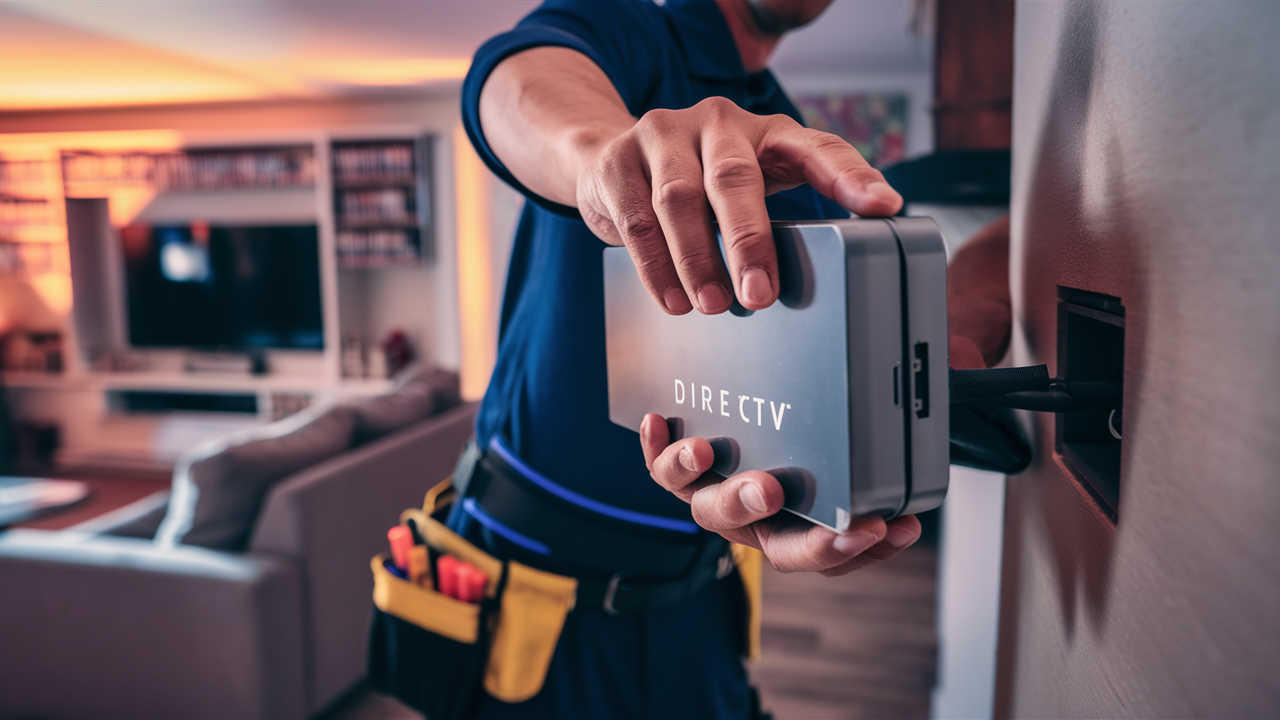
Installing a new DIRECTV box might seem daunting, but with this comprehensive guide, you'll be enjoying your favorite channels in no time. We break down the entire process, from unboxing to activating your new receiver, ensuring a smooth and successful setup. This guide is designed to empower you with all the knowledge needed for a DIY installation, saving you time and potential service fees.
Getting Started: What You Need
Before you begin the physical installation of your new DIRECTV box, it's crucial to have everything in place. This preparatory phase ensures a streamlined process and minimizes the chances of encountering unexpected roadblocks. Think of it as gathering your ingredients before cooking a complex meal – the more organized you are upfront, the better the final outcome.
Unboxing Your New DIRECTV Receiver
Upon receiving your new DIRECTV equipment, carefully unbox it. Typically, you'll find the receiver itself, a power cord, an HDMI cable (or other video output cable depending on the model), a remote control with batteries, and an Ethernet cable if your model requires a wired internet connection. Some kits might also include a satellite dish connection cable, though this is usually pre-installed or handled by a professional installer for dish-based systems. Always check the contents against the packing list provided.
Essential Tools and Equipment
While many DIRECTV installations are designed for user-friendliness, having a few basic tools can be helpful. For a standard receiver setup that connects to an existing satellite dish or cable outlet, you might need:
- A Phillips head screwdriver (for securing cables or mounting if necessary).
- A flathead screwdriver (less common, but can be useful for some older connectors).
- Wire strippers and crimpers (only if you are extending or repairing coaxial cables, which is rarely needed for a new box installation).
- A level (if you plan to mount the box or ensure it sits flush).
- A measuring tape (useful for planning placement).
- A stable surface for the receiver.
- Your Wi-Fi password or an Ethernet connection.
For installations involving a new satellite dish or significant wiring, professional installation is highly recommended and often required by DIRECTV. This guide primarily focuses on replacing an existing receiver or setting up a new one in a location with pre-existing satellite or cable infrastructure.
Understanding Your DIRECTV Account Information
Before you plug anything in, ensure you have your DIRECTV account number and potentially a temporary activation code. This information is vital for the activation process, which usually occurs after the physical setup is complete. You can usually find your account number on previous bills or by logging into your DIRECTV online account. If you're unsure, contacting DIRECTV customer service is the best first step.
Choosing the Right Location
The placement of your DIRECTV receiver is important for both signal reception (if applicable to your model) and user convenience.
- Ventilation: Ensure the box has adequate airflow. Avoid placing it in enclosed cabinets or directly on top of other heat-generating electronics. Overheating can lead to performance issues and shorten the lifespan of the device.
- Proximity to TV: The receiver should be close enough to your television to connect easily with an HDMI cable.
- Power Outlet: It needs to be near a working electrical outlet.
- Signal Strength (for dish systems): If you have a satellite dish, the receiver needs to be able to receive a clear signal. This usually means placing it in a location where the satellite dish has a clear line of sight to the southern sky (in the Northern Hemisphere). For Genie clients, the main Genie receiver often needs to be centrally located if it's acting as a server for other clients.
- Internet Connection: If your receiver uses Wi-Fi or Ethernet for On Demand and streaming features, ensure it's within range of your router or has an Ethernet port nearby.
Understanding Your DIRECTV Receiver Options
DIRECTV offers a range of receiver models, each with different capabilities and features. Understanding these can help you appreciate what you have and how to best utilize it. While the installation process is largely similar, knowing your model can inform troubleshooting and feature utilization. As of 2025-2026, the primary models you'll encounter are the Genie and Genie Mini clients, often powered by a main Genie server.
The Genie System
The DIRECTV Genie is the cornerstone of their modern entertainment system. It's a sophisticated receiver that allows you to record multiple shows simultaneously, store a significant amount of content, and stream live TV and On Demand content to multiple rooms via Genie Mini clients.
- Genie (HR44, HR54, HS17 models): These are the primary servers. They connect directly to the satellite dish and manage recordings and access to live channels. The HS17 model is the latest, often referred to as the Genie 2, which is a server-only unit and does not have a front panel display or physical buttons.
- Genie Mini (C41, C51, C61 models): These are client devices that connect to the main Genie server. They don't have their own tuners or storage but act as extensions of the main Genie, allowing you to watch and control TV in different rooms. They require a connection back to the main Genie, either via coaxial cable or, in some cases, wirelessly.
Older Receiver Models
While DIRECTV is phasing out older technology, you might still encounter models like the H25 or older DVRs. These typically connect directly to the satellite dish and operate independently, meaning each room with an H25 would need its own coaxial cable run and potentially its own subscription package for full functionality. The installation of these is similar in principle but may involve different connection types.
Comparison of Receiver Capabilities (2025-2026)
Here’s a simplified comparison of what you can expect from modern DIRECTV systems:
Feature Genie (Server) Genie Mini (Client) Older Standalone Receivers (e.g., H25) Simultaneous Recordings Up to 5 (Genie 1 models), Up to 7 (Genie 2 HS17) N/A (uses server's tuners) Typically 1 or 2 Storage Capacity High DVR capacity (varies by model) N/A (uses server's storage) Lower DVR capacity On Demand/Streaming Apps Yes Yes (via server) Yes (requires internet connection) Whole-Home Viewing Yes (as server) Yes (as client) No Requires Internet Connection Recommended for full features Recommended for full features Recommended for full features Satellite Dish Connection Direct Connects to Genie Server Direct Step-by-Step Installation Guide
This section provides a detailed, step-by-step guide for installing a new DIRECTV receiver, focusing on the common scenario of connecting a Genie or Genie Mini to an existing satellite dish setup.
Step 1: Power Down and Disconnect Old Equipment
If you are replacing an old receiver, the first step is to safely disconnect it.
- Unplug the Power: Locate the power cord for your old receiver and unplug it from the wall outlet.
- Disconnect Cables: Carefully disconnect all cables attached to the back of the old receiver. This typically includes:
- The coaxial cable(s) from the satellite dish (usually labeled "SAT" or "IN").
- The HDMI cable connecting to your TV.
- The Ethernet cable (if used for internet).
- Any audio cables (optical, RCA).
- Remove Old Receiver: Gently slide or lift the old receiver from its location.
Step 2: Connect the New DIRECTV Receiver
Now, it's time to connect your new receiver. The process will vary slightly depending on whether it's a main Genie server or a Genie Mini client.
Connecting a Main Genie Receiver (e.g., HR54, HS17)
- Position the Receiver: Place the new Genie receiver in its designated location, ensuring adequate ventilation and proximity to your TV and power outlet.
- Connect Satellite Cable: Connect the coaxial cable(s) from your satellite dish to the "SAT 1 IN" and "SAT 2 IN" ports on the back of the receiver. If you only have one cable, connect it to "SAT 1 IN". Ensure the connection is snug but don't overtighten.
- Connect to TV: Use the provided HDMI cable to connect the "HDMI OUT" port on the receiver to an available HDMI input port on your television. Note which HDMI input you use (e.g., HDMI 1, HDMI 2).
- Connect to Internet (Optional but Recommended):
- Wired (Ethernet): Connect one end of the Ethernet cable to the "ETHERNET" port on the receiver and the other end to an available LAN port on your router.
- Wireless (Wi-Fi): This connection is typically set up during the on-screen activation process. Ensure your Wi-Fi network name (SSID) and password are ready.
- Connect Power: Plug the receiver's power cord into the back of the unit and then into a wall outlet.
Connecting a Genie Mini Client (e.g., C41, C51, C61)
- Position the Client: Place the Genie Mini in its desired location. These are much smaller and generate less heat than the main Genie.
- Connect to TV: Use an HDMI cable to connect the "HDMI OUT" port on the Genie Mini to an available HDMI input on your television.
- Connect to Genie Server: This is the crucial step for clients.
- Coaxial Cable: If your home has existing coaxial wiring designed for DIRECTV (often labeled "SWM" or similar), connect a coaxial cable from the wall outlet to the "SAT IN" port on the Genie Mini. This cable should be connected to the SWM splitter that the main Genie is connected to.
- Wireless Connection (for some models/setups): Some Genie Minis can connect wirelessly to the main Genie. This setup is usually initiated during the on-screen activation. Ensure the Mini is within a reasonable range of the main Genie.
- Connect Power: Plug the Genie Mini's power adapter into the unit and then into a wall outlet.
Step 3: Power On and Initial Setup
Once all physical connections are made, it's time to bring your system to life.
- Turn on TV: Power on your television.
- Select Correct Input: Using your TV remote, select the HDMI input that you connected the DIRECTV receiver to (e.g., HDMI 1).
- Power On Receiver: Turn on your DIRECTV receiver. You should see a startup screen or logo appear on your TV. The receiver may take several minutes to boot up, especially on the first power-on.
- Follow On-Screen Prompts: The DIRECTV receiver will guide you through the initial setup process. This typically includes:
- Language Selection: Choose your preferred language.
- Dish Alignment Check (for main Genie): The system will check for a satellite signal. If this is a new installation or you suspect issues, it might guide you through a basic alignment check or prompt you to call for professional assistance if no signal is detected.
- Network Setup: If you chose a wired connection, it should detect it automatically. For Wi-Fi, you'll be prompted to select your network from a list and enter your password.
- Receiver Model Confirmation: The system may ask you to confirm the model of your receiver.
Step 4: Activation
This is the final and most critical step to start receiving DIRECTV programming.
- Automatic Activation: In many cases, once the receiver has successfully connected to DIRECTV's servers (via satellite signal and/or internet), it will automatically begin the activation process. You will see progress indicators on your TV screen. This can take anywhere from 15 minutes to over an hour.
- Manual Activation (if needed): If the automatic activation fails or stalls, you may need to activate your receiver manually.
- Online: Visit the DIRECTV website and log in to your account. Navigate to the "Activate Receiver" or "Manage Equipment" section and follow the prompts. You will likely need your account number and the Receiver ID (found on the receiver itself or on a sticker on the box).
- Phone: Call DIRECTV customer service. Have your account number and Receiver ID ready. They can guide you through the activation process over the phone.
- Confirmation: Once activated, your receiver will download the latest program guide and software updates. You should then be able to tune into channels.
Step 5: Remote Control Setup
Your DIRECTV remote control needs to be paired with both the receiver and your TV for full functionality (controlling volume, power, etc.).
- Pairing with Receiver: Most DIRECTV remotes will automatically pair with the receiver during the initial setup. If not, consult your remote's manual or the on-screen prompts.
- Pairing with TV: To control your TV's power and volume, you'll need to program the remote.
- Press and hold the “SELECT” button and the “ENTER” button simultaneously for about 3 seconds until the red light at the top of the remote blinks twice.
- Press the “TV” button.
- Enter the 5-digit manufacturer code for your TV brand (e.g., Samsung: 386, Sony: 1756, LG: 3017). If you don't know your TV's code, you can find a comprehensive list on the DIRECTV website or use the remote's search function.
- Point the remote at your TV and press “POWER”. If the TV turns off, press “ENTER”. If it doesn't turn off, try another code.
- To control volume, press and hold “SELECT” and “MUTE” for about 3 seconds until the red light blinks twice. Then press “VOL UP”. Press “ENTER”.
Troubleshooting Common Installation Issues
Even with careful planning, you might encounter issues during installation. Here are some common problems and their solutions.
No Satellite Signal (Error Code 771)
This is one of the most frequent error messages. It indicates that the receiver is not receiving a signal from the satellite dish.
- Check Connections: Ensure the coaxial cable(s) are securely connected to both the receiver and the wall outlet.
- Inspect Cables: Look for any visible damage, kinks, or cuts in the coaxial cable.
- Obstructions: Verify that there are no new obstructions (trees, buildings, new construction) blocking the line of sight between the satellite dish and the southern sky.
- Dish Alignment: The satellite dish may have shifted. If you have a Genie system, the receiver might prompt you to run a diagnostic. If you suspect misalignment, it's best to contact DIRECTV for professional adjustment.
- Weather: Heavy rain, snow, or storms can temporarily disrupt satellite signals. The signal should return once the weather clears.
- SWM Filter: If you have a Single Wire Multiswitch (SWM) system, ensure the SWM filter is properly installed and functioning.
No Internet Connection
If your receiver can't connect to the internet, you'll miss out on On Demand, streaming apps, and software updates.
- Check Router: Ensure your home router is powered on and functioning correctly. Try restarting your router.
- Wired Connection: If using Ethernet, ensure the cable is securely plugged into both the receiver and the router. Try a different Ethernet cable or router port.
- Wireless Connection: Double-check your Wi-Fi network name (SSID) and password. Ensure the receiver is within range of your Wi-Fi signal. You can try moving the receiver closer to the router temporarily to test.
- DIRECTV Network Settings: Access the network settings on your DIRECTV receiver (usually found in the Settings or Network menu) and try to reconfigure the connection.
TV Display Issues (No Picture, Wrong Resolution, Black Screen)
Problems with how the video is displayed on your TV.
- HDMI Cable: Ensure the HDMI cable is securely plugged into both the receiver and the TV. Try a different HDMI cable.
- Correct Input: Verify that your TV is set to the correct HDMI input source.
- Receiver Restart: Power cycle the DIRECTV receiver by unplugging it from the power outlet for 30 seconds, then plugging it back in.
- TV Resolution: Sometimes, the receiver might output a resolution that your TV doesn't support. This can often be resolved during the on-screen setup or by accessing the receiver's display settings.
Remote Not Working
If your remote isn't controlling the receiver or TV.
- Batteries: Replace the batteries in the remote.
- Pairing: Re-pair the remote with the receiver and your TV using the steps outlined in Step 5.
- Obstructions: Ensure there's a clear line of sight between the remote and the receiver (for infrared remotes).
- Reset Remote: Some remotes have a reset procedure; check your remote's manual.
Genie Mini Not Connecting to Main Genie
This is specific to Genie systems.
- Coaxial Connection: Ensure the coaxial cable connecting the Genie Mini to the SWM splitter (which the main Genie is also connected to) is secure and undamaged.
- Power Cycle: Power cycle both the main Genie and the Genie Mini. Unplug them, wait 30 seconds, and plug them back in, starting with the main Genie.
- Network Settings: Check the network settings on the main Genie to ensure it's broadcasting correctly.
- Wireless Pairing (if applicable): If using a wireless connection, ensure the devices are within range and attempt to re-pair them through the receiver's settings.
Advanced Setup and Features
Once your DIRECTV box is installed and activated, you can explore its advanced features to enhance your viewing experience.
Setting Up Parental Controls
Protect your family from inappropriate content by setting up parental controls.
- Press the “MENU” button on your remote.
- Navigate to “Settings & Help”.
- Select “Parental Controls”.
- You'll be prompted to create a 4-digit lock code.
- Choose the types of content you want to block (e.g., by rating, by channel, by movie title).
Remember your lock code, as you'll need it to access or change these settings.
Utilizing the DVR and Recording Features
DIRECTV's DVR capabilities are a major draw.
- Recording a Show: Navigate to the program guide, highlight the show you want to record, and press the “RECORD” button (usually red). You can choose to record just that episode or the entire series.
- Series Linking: When prompted, select "Record Series" to automatically record all future episodes of that show.
- Managing Recordings: Press the “MENU” button, then navigate to “My Recordings” to view, play, or delete your recorded content.
- Series Priority: For series recordings, you can set priorities if you have multiple series recording at the same time. This ensures your most important shows are recorded first.
Accessing On Demand and Streaming Apps
With an internet connection, your DIRECTV receiver becomes a gateway to a vast library of content.
- DIRECTV On Demand: Press the “On Demand” button on your remote or access it via the main menu. Here you can rent movies or browse free content.
- Streaming Apps: Access popular streaming applications like Netflix, Max, YouTube, and others directly from your DIRECTV interface (availability may vary by receiver model and subscription). Navigate to the Apps section in the main menu.
Setting Up Whole-Home Viewing
If you have a Genie system with Genie Minis, you can enjoy seamless viewing across multiple rooms.
- Accessing Other Rooms: From a Genie Mini, you can typically access recordings stored on the main Genie server.
- Remote Access: Use the DIRECTV app on your smartphone or tablet to manage recordings and even watch live TV or On Demand content remotely.
Understanding Signal Strength Indicators
DIRECTV receivers provide tools to check your satellite signal strength.
- Press the “MENU” button.
- Navigate to “Settings & Help”.
- Select “System Test” or “Satellite Setup”.
- You should see indicators for signal strength and quality for each satellite. Aim for signal strength and quality readings above 80-90% for optimal performance.
Maintaining Your DIRECTV System
Regular maintenance ensures your DIRECTV system continues to perform optimally for years to come.
Software Updates
DIRECTV automatically pushes software updates to your receivers to improve performance, add features, and fix bugs. Ensure your receiver is connected to the internet and powered on during off-peak hours to allow these updates to install seamlessly. You can manually check for updates in the receiver's settings menu.
Cleaning Your Equipment
Dust and debris can accumulate on your receiver and vents, potentially causing overheating.
- Power Off: Always unplug the receiver from the power outlet before cleaning.
- Wipe Down: Use a soft, dry microfiber cloth to wipe down the exterior of the receiver.
- Ventilation: Gently use a can of compressed air to blow dust out of the vents on the sides and back of the receiver.
- Remote Control: Clean your remote with a slightly damp cloth, being careful not to let moisture seep into the battery compartment or buttons.
Checking Satellite Dish Condition
Periodically inspect your satellite dish for any visible damage, such as loose bolts, bent components, or excessive debris. Ensure the dish is securely mounted. If you notice any issues, it's best to contact DIRECTV for a professional inspection. The dish alignment is critical for signal quality.
Managing Storage Space (DVR)
If you have a DVR, keep an eye on your available storage space.
- Check Usage: Access the "My Recordings" section to see how much space you have left.
- Delete Unwanted Recordings: Regularly delete shows you've finished watching to free up space.
- Storage Settings: Some receivers allow you to set recording preferences, such as deleting watched recordings automatically or setting recording quality to save space.
Internet Connectivity Best Practices
For On Demand and app features, a stable internet connection is key.
- Router Placement: Ensure your Wi-Fi router is centrally located and not obstructed.
- Bandwidth: Streaming video consumes significant bandwidth. If you experience buffering, consider upgrading your internet plan or ensuring other devices aren't hogging bandwidth during peak viewing times.
- Wired is Best: For the most reliable connection, use an Ethernet cable whenever possible.
Conclusion: Enjoying Your New DIRECTV Experience
You've now navigated the comprehensive process of installing a new DIRECTV box, from initial preparation to advanced features and ongoing maintenance. By following these detailed steps, you've empowered yourself to set up your system efficiently and troubleshoot common issues, ensuring a smooth transition to enhanced entertainment. Remember that the Genie system, with its client-server architecture, offers unparalleled flexibility for multi-room viewing, while the integrated On Demand and app capabilities bring a world of content to your fingertips. Keep your equipment clean, your software updated, and your satellite signal clear, and your DIRECTV system will provide years of enjoyment. Embrace the power of your new DIRECTV receiver and dive into a world of premium entertainment, all thanks to a successful installation.