-
Posted on: 07 Jan 2026
-
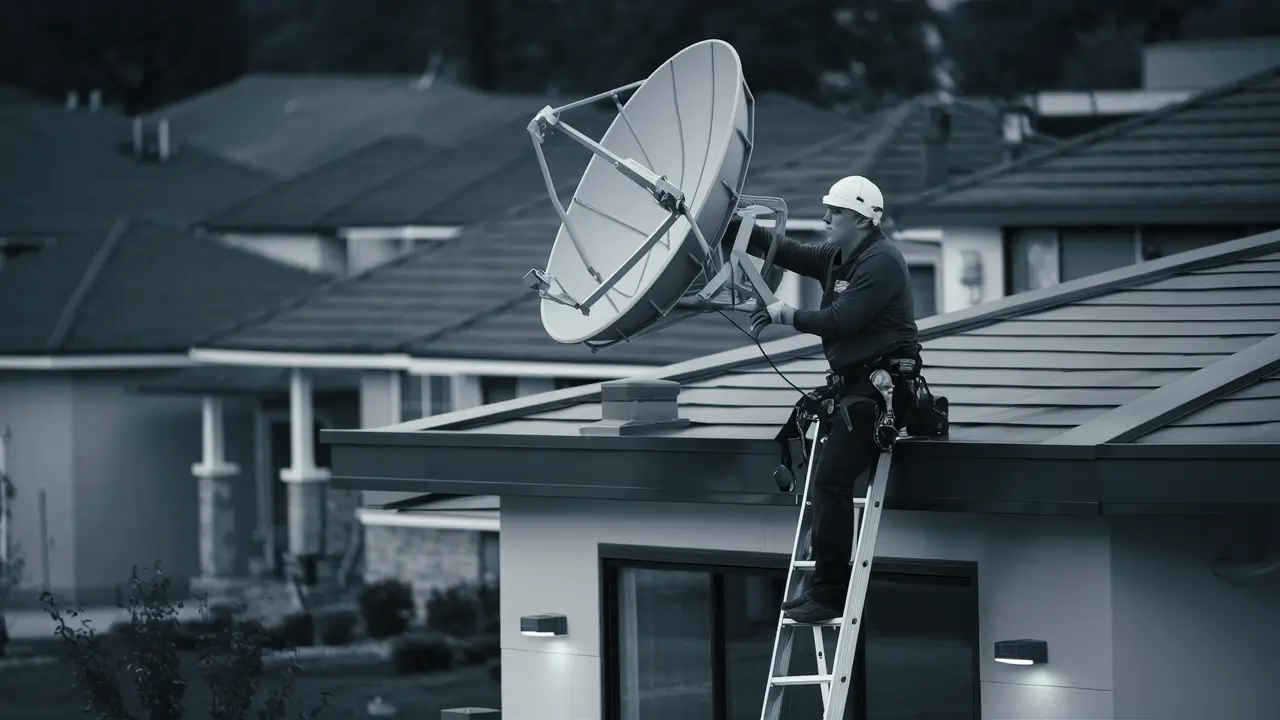
Removing a satellite dish can seem like a daunting task, but with the right guidance and safety precautions, it's a manageable DIY project. This comprehensive guide will walk you through every step, from assessing the situation to safely dismantling and disposing of your old satellite equipment, ensuring you understand the process thoroughly.
Why You Might Need to Remove a Satellite Dish
The landscape of home entertainment has shifted dramatically in recent years. With the rise of high-speed internet and the proliferation of streaming services, many households are reconsidering their reliance on traditional satellite television. In 2025 and 2026, we're seeing a continued trend of cord-cutting, with an estimated 15-20% of households in North America considering or actively switching away from satellite providers. This shift often leaves behind an unsightly and potentially hazardous satellite dish and its associated mounting hardware. Whether you're upgrading your home's exterior, switching to a different service provider, or simply no longer using the dish, understanding how to remove it safely and effectively is crucial. Ignoring a disused dish can lead to aesthetic issues, potential water damage if not properly sealed, and even safety hazards if it becomes loose.
Safety First: Essential Precautions Before You Begin
Before you even think about touching a wrench, prioritizing safety is paramount. Satellite dishes are often mounted in elevated or precarious locations, exposing you to risks of falls. Furthermore, electrical components are involved, even if the service is disconnected. In 2025, the Consumer Product Safety Commission (CPSC) reported a notable increase in DIY-related home improvement injuries, underscoring the importance of caution. Here are the non-negotiable safety measures:
- Never work alone: Always have a spotter or assistant to help stabilize ladders, hand tools, and to call for emergency services if needed.
- Weather conditions: Do not attempt removal in windy, rainy, or icy conditions. High winds can make ladder work extremely dangerous and can cause the dish to move unexpectedly.
- Electrical safety: Although the satellite service should be disconnected at the source, it's wise to assume there might be residual electrical charge or that cables could be connected to active power sources. If you are unsure, consult a qualified electrician. Always wear insulated gloves and boots.
- Ladder safety: Use a sturdy, well-maintained ladder. Ensure it is placed on a stable, level surface and extended at the correct angle (approximately 75 degrees). Secure the top of the ladder to prevent slipping.
- Personal Protective Equipment (PPE): Wear safety glasses or goggles to protect your eyes from debris, sturdy work gloves to prevent cuts and abrasions, and non-slip footwear. A hard hat is advisable, especially if working under the dish or near potential falling objects.
- Awareness of surroundings: Be mindful of power lines, overhead obstructions, and any potential fall hazards in the area.
- Understand your roof: If working on a roof, understand its pitch, material, and your comfort level with working at heights. Consider using a safety harness if working on a steep or slippery roof.
Essential Tools and Materials for Dish Removal
Having the right tools at hand will make the process smoother and safer. Gathering everything before you start is key to efficiency. Here’s a comprehensive list:
- Ladder: A sturdy extension ladder is usually necessary.
- Wrenches and Socket Set: Various sizes will be needed to loosen bolts and nuts holding the dish, LNB arm, and mount together. Adjustable wrenches can also be useful.
- Screwdrivers: Both Phillips and flathead screwdrivers for various components.
- Pliers: For gripping and manipulating cables or small parts.
- Wire Cutters/Strippers: To cut coaxial cables cleanly.
- Utility Knife: For cutting through any sealant or stubborn tape.
- Drill and Drill Bits: If you need to remove screws from mounting brackets or drill out rivets.
- Caulking Gun and Exterior Sealant: For properly sealing any holes left in your wall or roof after the mount is removed.
- Putty Knife or Scraper: To remove old sealant or paint.
- Safety Glasses/Goggles
- Work Gloves
- Sturdy Footwear
- Hard Hat (recommended)
- Bucket or Tool Bag: To carry tools and small parts.
- Trash Bags or Container: For collecting debris.
- Helper: An essential tool for safety and assistance.
- Optional: Stud Finder: If you need to locate studs for secure mounting of new fixtures after removal.
- Optional: Reciprocating Saw: For cutting through stubborn mounting hardware or poles if necessary, though this should be a last resort.
Assessing Your Satellite Dish and Mounting Location
Before you begin the physical removal, take a thorough look at your satellite dish setup. This assessment will inform your approach and highlight potential challenges. In 2025, satellite dish installations vary widely, from simple wall mounts to complex pole or chimney brackets. Understanding what you're dealing with is crucial for a safe and efficient removal.
Consider the following:
- Type of Mount: Is it a simple L-bracket screwed into a wall, a pole mounted in the ground, a bracket attached to a chimney, or something else? The type of mount dictates the complexity of its removal.
- Location of the Mount: Is it easily accessible from the ground with a ladder, or does it require roof access? Roof work significantly increases the risk and requires additional safety measures.
- Condition of the Mount and Dish: Is the dish loose? Is the mount rusted or corroded? Are there any signs of structural damage to the house where the mount is attached? Any signs of damage should be addressed carefully, and you may need professional help.
- Number and Type of Cables: How many coaxial cables are attached to the dish and where do they run? Are they secured with clips or staples?
- Surrounding Obstructions: Are there trees, power lines, or other structures near the dish that could impede removal or pose a hazard?
- Material of the Mounting Surface: Is the mount attached to wood siding, brick, stucco, or directly to a roof shingle? This will affect the tools and techniques needed to remove fasteners.
For example, a dish mounted on a sturdy brick wall might require different tools (like a masonry drill bit) than one attached to wooden siding. A dish on a roof edge might be easier to access than one directly on the roof slope.
Step-by-Step Guide to Removing a Satellite Dish
This section provides a detailed, chronological guide to removing a typical satellite dish. Always refer back to the safety precautions before starting any physical work.
Step 1: Disconnecting the Cables
The first and most crucial step is to disconnect the coaxial cables from the dish. These cables carry the satellite signal to your receiver. While they don't typically carry high voltage, it's good practice to treat them with caution.
- Locate the LNB: The Low-Noise Block downconverter (LNB) is the component at the end of the arm that points towards the dish's focal point. The coaxial cables connect here, usually with F-connectors (screw-on connectors).
- Unscrew the Connectors: Most F-connectors can be unscrewed by hand. If they are tight, use pliers to grip the connector and gently twist counter-clockwise. Be careful not to twist the cable itself, which could damage the internal wiring.
- Remove Cable Fasteners: Follow the cable down from the LNB. It's likely secured to the dish arm or mount with zip ties, clips, or tape. Carefully cut or remove these fasteners.
- Trace the Cable: Note where the cable enters your home. This will be important for sealing the entry point later.
- Disconnect from Receiver (Optional but Recommended): For complete removal, it’s a good idea to disconnect the cable from your satellite receiver inside the house as well.
Tip: If you're unsure about which cables are for the satellite dish, you can disconnect them one by one and check your TV to see if the signal is lost. However, it’s best to have a general idea before you start.
Step 2: Dismantling the Dish Itself
Once the cables are disconnected, you can begin to take the dish apart. Most satellite dishes are designed to be assembled, so they can also be disassembled. This often makes the dish easier to handle and transport.
- Loosen the Dish from the Arm: The dish is typically attached to the LNB arm via a bracket. Look for bolts or screws that secure the dish to this bracket. Loosen these fasteners. You may need your helper to hold the dish steady as you loosen the bolts.
- Remove the Dish: Once the bolts are loose enough, carefully detach the dish from the bracket. Dishes can be surprisingly large and unwieldy, so be prepared. If it's a large dish, it might be easier to remove it in sections if it's designed that way, though most residential dishes are a single piece.
- Remove the LNB Arm: The arm holding the LNB usually attaches to the main mount with one or two bolts. Loosen and remove these to detach the arm from the mount.
Note: Some dishes are designed to be removed as a single unit from the mount. If you can't easily detach the dish from its bracket, you might proceed to removing the entire assembly.
Step 3: Removing the Mounting Hardware
This is often the most challenging part, as the mount is secured firmly to your house to withstand wind and weather. The method for removal depends heavily on the type of mount and the surface it's attached to.
- Wall-Mounted Brackets (L-brackets): These are usually secured with lag bolts or screws directly into the wall studs or masonry.
- Identify the fasteners. They might be covered by plastic caps.
- Use a socket wrench or appropriate screwdriver to loosen and remove the bolts.
- If the bolts are rusted or difficult to turn, apply a penetrating lubricant (like WD-40) and let it sit for a few minutes.
- If the bolts are spinning but not loosening, they may have stripped the wood. You might need to use a pry bar to apply outward pressure while turning, or in some cases, cut the bolts.
- Pole Mounts: If the dish is mounted on a pole, the pole itself is usually set in concrete.
- First, remove the dish and arm from the pole, as described in Step 2.
- If the pole is freestanding and you want to remove it entirely, you'll need to dig around the base to expose the concrete and then lever the pole and concrete base out. This can be a significant undertaking.
- Alternatively, you can cut the pole off at ground level if removing the entire base is too difficult.
- Chimney Mounts: These typically involve straps or brackets that wrap around the chimney.
- Loosen the bolts or screws that secure the straps.
- Carefully remove the brackets. Be extremely cautious on a chimney, as the surface can be slippery and the structure itself can be fragile.
- Soffit/Fascia Mounts: These are attached to the eaves of your house.
- Identify the screws or bolts securing the bracket.
- Remove them carefully. Be aware that soffit and fascia materials can be soft and prone to damage.
Important: If you encounter significant resistance, rusted-in bolts, or feel the mounting surface is compromised, do not force it. It's safer to stop and reassess or call a professional.
Step 4: Dealing with Wall Penetrations and Sealing
Once the mount is completely removed, you will be left with holes in your exterior surface. Properly sealing these is crucial to prevent water damage, pest intrusion, and maintain the aesthetic appeal of your home. In 2025, homeowners are increasingly aware of the long-term implications of poor sealing, which can lead to rot and structural issues.
- Clean the Area: Use a putty knife or scraper to remove any old caulk, sealant, or debris around the holes.
- Inspect for Damage: Check the area for any signs of water damage, rot, or loose siding/brick. Address any such issues before sealing.
- Choose the Right Sealant: Use a high-quality exterior-grade caulk or sealant. For wood, vinyl, or stucco, an acrylic latex caulk with silicone is often suitable. For brick or masonry, a silicone-based sealant or masonry-specific caulk is recommended. Ensure it's paintable if you plan to repaint the area.
- Apply Sealant:
- For small screw holes: You can often fill these directly with sealant.
- For larger holes or bolt penetrations: You may need to insert a backing rod (a foam rod) into the hole before applying the sealant to create a proper seal and avoid excessive caulk usage.
- Apply the sealant generously into the holes, ensuring there are no air gaps.
- Smooth the sealant with a wet finger or a caulk-smoothing tool.
- Repair Siding/Brick (if necessary): If the removal has damaged siding or brick, you may need to patch or replace those sections before sealing. This might involve using wood filler, masonry repair products, or even replacing a section of siding.
- Repaint (if necessary): Once the sealant has cured, you may need to repaint the area to match the surrounding surface.
Example: If you removed an L-bracket from wood siding, you'd fill the lag bolt holes with exterior wood filler or sealant. If the siding itself was slightly damaged, you might need to use a patch or even replace a small section before caulking around the edges and painting.
Special Considerations and Challenging Scenarios
Not all satellite dish installations are straightforward. Some locations present unique challenges that require extra caution or different approaches.
Dish Mounted on a Roof
Roof-mounted dishes are common but significantly increase the risk of removal. In 2025, roof safety remains a top concern for DIYers.
- Safety Harness: If the dish is on a sloped roof, wearing a safety harness properly secured to a strong anchor point is highly recommended.
- Roof Boots/Seals: The mount likely penetrated the roof and was sealed with a roof boot or specialized sealant. Be prepared for potential roof damage if the seal was compromised.
- Ladder Stability: Ensure your ladder is securely placed on a stable surface and that you have a clear, safe path to the dish.
- Material Awareness: Be aware of the roofing material (shingles, metal, tile) and avoid damaging it unnecessarily.
- Professional Help: If you are uncomfortable working on a roof, or if the dish is on a steep or high roof, it is strongly advised to hire a professional.
Dish Mounted on a Chimney
Chimney mounts can be tricky due to the material and potential for structural integrity issues.
- Chimney Condition: Inspect the chimney for loose bricks, crumbling mortar, or other signs of damage before applying any pressure.
- Strap Tightness: Chimney mounts often use metal straps that are tightened with bolts. These can be difficult to access and may be rusted.
- Ladder Placement: Ensure your ladder is stable and not leaning directly against the chimney, which could cause damage.
- Professional Assessment: If the chimney appears unstable, do not attempt removal. Consult a chimney professional.
Dish Mounted on a Pole
Pole-mounted dishes are often used in areas with clear, unobstructed views, sometimes in yards or driveways.
- Pole Stability: Ensure the pole is firmly anchored. If it's loose, the entire structure could be unstable.
- Digging Out the Base: As mentioned, removing the pole might require significant digging to expose and remove the concrete base. This is a labor-intensive task.
- Cutting the Pole: A simpler alternative is to cut the pole at ground level using a reciprocating saw or angle grinder, leaving the base in the ground. Ensure you wear appropriate PPE for cutting metal.
Dish Mounted on a Soffit or Fascia
These mounts are attached to the underside of the roofline.
- Material Strength: Soffit and fascia materials can be made of wood, vinyl, or aluminum. They may not be as strong as a wall stud, so be cautious of the weight of the dish and mount.
- Potential for Rot: Wood soffits and fascia are susceptible to rot, especially around the mounting points. Inspect carefully for any signs of decay.
- Sealant: These mounts are also sealed to prevent water ingress.
Proper Disposal and Recycling of Satellite Dishes
Once your satellite dish is removed, you'll need to dispose of it responsibly. In 2025, environmental consciousness is a major factor in waste management. Satellite dishes are primarily made of metal (aluminum or steel) and plastic, with some electronic components.
- Check Local Regulations: Contact your local waste management authority or municipality to inquire about specific disposal guidelines for electronic waste or large items.
- Scrap Metal Yards: The metal components (dish, arm, mount) can often be taken to a local scrap metal recycling facility. You might even get a small payment for the metal.
- Electronics Recycling: The LNB and any associated wiring contain electronic components that may need to be recycled separately. Many electronics recycling centers accept these items.
- Curbside Bulk Pickup: Some municipalities offer curbside pickup for large items. You may need to schedule this service in advance.
- Donation: If the dish is still in good condition and you know someone who might use it, consider donating it. However, this is less common as satellite technology evolves.
- Landfill: If other options are not available, the dish may need to be taken to a landfill. However, recycling is always the preferred method to reduce environmental impact.
Example: You could take the metal parts of the dish to a local metal recycler and then drop off the LNB at an electronics recycling event hosted by your city.
When to Call a Professional for Satellite Dish Removal
While many people can successfully remove a satellite dish themselves, there are situations where hiring a professional is the safest and most sensible option. In 2025, professional services are readily available for this task.
Consider calling a professional if:
- You are uncomfortable with heights: If working on a ladder or roof makes you anxious, it's not worth the risk.
- The dish is on a steep or high roof: Roof work, especially on steep pitches or at significant heights, requires specialized safety equipment and experience.
- The mounting hardware is severely rusted or damaged: If you can't easily remove fasteners or if the mounting surface appears compromised, a professional has the tools and expertise to handle it safely.
- The dish is attached to a precarious structure: For example, a chimney that looks unstable or a weak siding material.
- You lack the necessary tools or confidence: If you don't have the right tools or feel unsure about any step, it's better to let an expert handle it.
- You need the area repaired and refinished: Professionals can ensure holes are properly sealed and the exterior is restored to its original condition.
Professionals who can perform this service include satellite installation companies (who may offer removal services), general handymen, or roofing contractors.
Conclusion: A Successful Satellite Dish Removal
Removing a satellite dish, while requiring careful planning and execution, is an achievable DIY project for many homeowners in 2025. By prioritizing safety, gathering the right tools, and following a systematic approach, you can effectively dismantle and remove old satellite equipment. Remember to always assess your specific situation, understand the risks involved, and never hesitate to call a professional if you feel uncertain or if the task presents significant challenges. Properly sealing any resulting holes is crucial for protecting your home's integrity. With this comprehensive guide, you are well-equipped to tackle the removal of your satellite dish, enhancing your home's exterior and ensuring a safer environment.