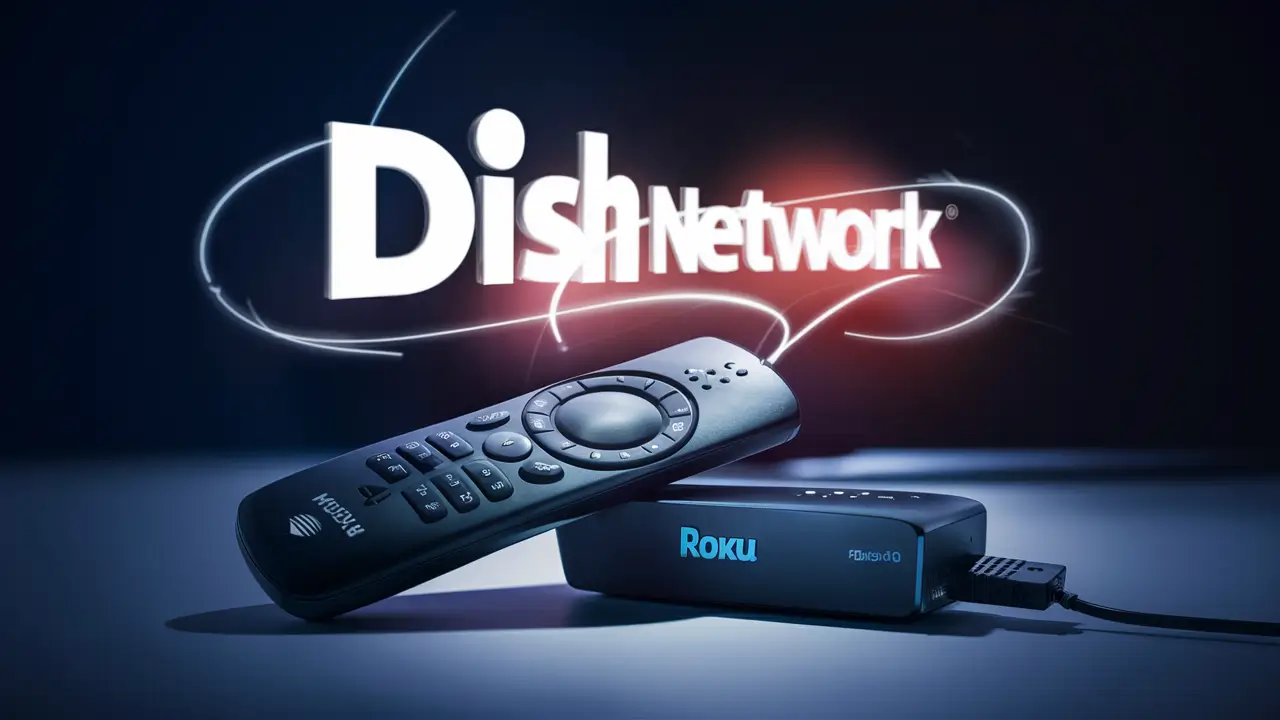
Unlock the full potential of your entertainment setup by seamlessly integrating your Dish Network remote with your Roku device. This guide provides a comprehensive, step-by-step approach to achieve this, ensuring you can navigate both platforms with a single, familiar controller, simplifying your viewing experience.
Understanding Compatibility: Dish Network Remote and Roku
The question of "How to use Dish Network remote with Roku?" often stems from a desire for convenience. While Dish Network remotes are primarily designed to control Dish receivers and associated home theater equipment, and Roku devices are standalone streaming players, direct, native integration is not a standard feature. Dish Network remotes typically operate using infrared (IR) signals, sending specific commands to devices programmed to recognize them. Roku devices, on the other hand, often use Wi-Fi or Bluetooth for communication, though some older models or specific setups might have limited IR reception capabilities.
The fundamental difference lies in their communication protocols and intended functions. A Dish remote is built to manage satellite TV functions – channel surfing, DVR control, menu navigation for Dish services. A Roku remote is designed to navigate the Roku operating system, access streaming apps, and control playback. Therefore, making one control the other requires a bridge or a workaround that translates the commands.
As of 2025, the landscape of home entertainment control is evolving. While dedicated universal remotes and smart home hubs have offered robust solutions in the past, the trend is moving towards app-based control and AI-driven voice commands. However, for users who prefer the tactile feedback and familiarity of their existing Dish remote, understanding the limitations and possibilities is key.
It's crucial to identify the specific Dish Network remote model you possess. Newer models might have enhanced features, including the potential for programming to control other devices, while older ones might be more limited. Similarly, the specific Roku model you own can influence the available integration methods. For instance, some Roku TVs might have better IR reception than Roku streaming sticks.
Why Integrate Your Dish Network Remote with Roku?
The primary motivation behind wanting to use your Dish Network remote with Roku is undeniably convenience. Imagine this: you're settled on the couch, ready to watch your favorite show. Instead of juggling two remotes – one for Dish for your live TV and one for Roku for your streaming apps – you can use a single, familiar controller. This reduces clutter, simplifies operation, and makes switching between services effortless.
Consider the user experience benefits:
- Reduced Clutter: Fewer remotes mean less mess on your coffee table or entertainment center.
- Simplified Navigation: Quickly switch between Dish channels and Roku apps without searching for the correct remote.
- Familiarity: You're already accustomed to the layout and button functions of your Dish remote, making the transition smoother.
- Enhanced Accessibility: For individuals who find managing multiple devices challenging, a unified control system can be a significant advantage.
In 2025, with the proliferation of streaming services and the continued popularity of traditional cable/satellite TV, the need for integrated entertainment solutions is more pronounced than ever. Users are looking for ways to streamline their home theater experience, and consolidating remote control is a significant step in that direction. This desire for a unified experience is a driving force behind many tech innovations, and while direct Dish-to-Roku integration isn't built-in, the pursuit of it highlights a broader trend in user expectations.
Furthermore, the cost-effectiveness of utilizing existing hardware is appealing. Instead of purchasing a new universal remote, users often explore if their current Dish remote can be repurposed. This aligns with a growing consumer consciousness around sustainability and reducing electronic waste, by maximizing the utility of devices already owned.
Methods of Integration: Exploring Your Options
Directly controlling a Roku device with a Dish Network remote isn't as straightforward as programming a universal remote for a TV and soundbar. This is because Roku devices primarily use Wi-Fi or Bluetooth, while Dish remotes are typically IR-based. However, several workarounds and alternative strategies can achieve a similar outcome, allowing you to control both services with a single point of interaction.
Method 1: Using the IR Blaster Functionality (If Available)
Some Dish Network remotes, particularly newer models or those designed with broader compatibility in mind, may include an IR blaster function. This allows the remote to send IR signals that can be programmed to control a wide range of devices, including streaming players like Roku. The effectiveness of this method depends entirely on whether your specific Dish remote model supports this feature and if Roku devices can be programmed into its database.
The process usually involves accessing a hidden menu or a setup sequence on the Dish remote to enter programming mode. You would then select the device type (e.g., "Streaming Player" or "Media Streamer") and cycle through codes until you find one that makes your Roku device respond. This is similar to how you would program a universal remote to control a TV or DVD player.
Pros:
- Uses your existing Dish remote directly.
- No additional hardware required if the remote has the capability.
- Potentially offers the most seamless integration if successful.
Cons:
- Not all Dish remotes have IR blaster capabilities.
- Finding compatible IR codes for Roku devices can be challenging.
- Roku's IR reception can be inconsistent, especially for certain models or if the IR sensor is obstructed.
Method 2: Leveraging Universal Remote Apps
This is often the most accessible and reliable method for users in 2025. Instead of trying to make the Dish remote control the Roku, you use a smartphone or tablet as a universal remote. Many free and paid apps are available that can turn your mobile device into a controller for both your Dish receiver and your Roku device.
For Roku, there's an official Roku mobile app that connects to your device over Wi-Fi. For Dish, you might find third-party apps that can control receivers via IP (if your receiver is network-connected) or through IR blaster functionality on your phone (if your phone has it). Some advanced universal remote apps aim to consolidate control for multiple devices, including set-top boxes and streaming players.
Pros:
- Highly versatile, controlling numerous devices.
- Often free or low-cost.
- Provides access to advanced features like voice search and keyboard input.
- Works over Wi-Fi, which is generally more reliable than IR for streaming devices.
Cons:
- Requires a smartphone or tablet.
- May involve learning a new interface.
- Requires both devices to be on the same Wi-Fi network (for Roku control).
- Dish control via app might depend on receiver model and network connectivity.
Method 3: The Logitech Harmony Hub Approach (Discontinued but Relevant)
While Logitech officially discontinued its Harmony line of universal remotes and hubs in early 2022, the existing Harmony ecosystem remains a powerful solution for many users and is still widely discussed and utilized in 2025. The Harmony Hub, when paired with a remote or used via the app, could learn IR commands and control devices via Wi-Fi or Bluetooth. It was renowned for its ability to integrate disparate devices into cohesive "activities" (e.g., "Watch Roku").
If you happen to own a Harmony Hub, it's an excellent tool for this purpose. You would program it to control your Dish receiver (often via IR) and your Roku device (via Wi-Fi). The hub then acts as the central brain, translating your commands from the Harmony remote or app into the correct signals for each device. This allowed for sophisticated setups where, for example, pressing a single button could turn on the TV, switch inputs, launch the Roku app, and adjust the volume.
Pros:
- Extremely powerful and customizable.
- Can create complex "activities" for seamless transitions.
- Excellent support for a vast range of devices.
Cons:
- Logitech has discontinued the product line, meaning no new hardware or software updates.
- Availability of new units is limited, and second-hand markets are the primary source.
- Setup can be complex.
Method 4: The "Simultaneous Use" Strategy
This is the simplest and most common method, requiring no complex setup. It involves using both remotes as intended, but strategically. You might use your Dish remote for all live TV functions and your Roku remote for all streaming functions. The key is to keep them readily accessible and to train yourself to grab the correct one without thinking.
For example, you could place the Roku remote on the left side of the couch and the Dish remote on the right. When you want to watch live TV, you reach for the right. When you want to stream, you reach for the left. This method doesn't technically integrate the remotes but achieves a similar goal of managing your entertainment with minimal disruption.
Pros:
- No setup required.
- Guaranteed to work.
- Maintains full functionality of both devices.
Cons:
- Doesn't solve the "one remote" problem.
- Requires keeping track of two separate devices.
Step-by-Step Guide: Setting Up IR Blaster Control
This method is contingent on your Dish Network remote having IR blaster capabilities. Not all Dish remotes are equipped with this feature. You'll need to consult your remote's manual or Dish Network's support resources to confirm if yours supports programming for external devices.
Step 1: Identify Your Dish Network Remote Model
Look for a model number on the back or inside the battery compartment of your remote. Common Dish remotes include models like the 54.0, 21.0, 30.0, and 40.0 series. Newer models, such as the 40.0 series (e.g., 40.0.1, 40.0.2), are more likely to have advanced features.
Step 2: Access the Remote Setup Menu
The method to enter setup mode varies by remote model. A common sequence for many Dish remotes is:
- Press and hold the SAT button until all buttons light up, then release.
- Press and hold the SELECT and INFO buttons simultaneously until all buttons light up again, then release.
- Press the AUX button (or the button for the device you wish to control, like TV or DVD, if available).
For some models, it might be pressing MENU, then navigating to Settings > Remote Setup.
Step 3: Select Device Type
Once in setup mode, you'll typically be prompted to select the type of device you want to control. Look for options like "Streaming Player," "Media Streamer," "Blu-ray/DVD," or a similar category that might encompass a Roku device. If there isn't a direct "Roku" option, you may need to try codes for other streaming devices or even some Blu-ray players, as they might share similar IR command structures.
Step 4: Enter or Cycle Through Codes
This is the most crucial and potentially time-consuming part. You will need to find the correct IR code that your Roku device recognizes. There are two primary ways to do this:
- Manual Code Entry: If you have a list of IR codes for Roku devices compatible with Dish remotes (which can be hard to find), you can enter them directly. The remote will usually prompt you to press a specific button (e.g., VOL +) to enter the code.
- Automatic Code Search: This is the more common method. The remote will cycle through its database of codes. After entering the device type and initiating the search, the remote will send a power-on command (or another test command). You will need to point the remote at your Roku device and press the CHANNEL UP button repeatedly. Each press sends a new code. As soon as your Roku device powers off (or responds in another way), you know you've found a working code.
Important: When the Roku device responds, you must immediately press the SELECT button to lock in that code. If you miss this window, you'll have to start the search again.
Step 5: Test Functionality
After locking in a code, test the basic functions of the remote with your Roku device. Try the power button, directional buttons (up, down, left, right), OK/SELECT button, and the back button. If these basic navigation commands work, you've been successful!
If only some buttons work, or if the code only controlled basic functions like power, you may need to repeat the process to find a code that offers more comprehensive control. Sometimes, a code that works for power might not work for navigation, and vice-versa.
Step 6: Assign Buttons (If Possible)
Some Dish remotes allow you to assign specific functions to buttons when controlling auxiliary devices. For instance, you might be able to map the "Home" button on your Dish remote to the Roku's home screen function. This level of customization depends heavily on your remote model.
Important Considerations for IR Control:
- Line of Sight: IR signals require a clear line of sight between the remote and the IR receiver on the Roku device. Obstructions will prevent commands from working.
- Roku IR Receiver: Not all Roku devices have robust IR receivers. Roku streaming sticks and some newer Roku TVs rely more heavily on Wi-Fi/Bluetooth. If your Roku device doesn't have a visible IR sensor, this method is unlikely to work.
- Code Availability: The biggest hurdle is finding compatible IR codes. Dish Network's database might not be as extensive for streaming devices as dedicated universal remote manufacturers.
Step-by-Step Guide: Using Universal Remote Apps
This is generally the most reliable and feature-rich method for controlling your Roku device, and often your Dish receiver as well, using your smartphone or tablet.
Step 1: Download the Official Roku App
This is the first and most essential step for Roku control.
- Go to your smartphone's app store (Google Play Store for Android or Apple App Store for iOS).
- Search for "Roku" and download the official app developed by Roku, Inc.
Step 2: Connect Roku App to Your Device
Ensure your smartphone/tablet and your Roku device are connected to the same Wi-Fi network.
- Open the Roku app.
- The app should automatically scan for Roku devices on your network.
- Select your Roku device from the list that appears.
- If prompted, pair the app with your Roku device. This usually involves pressing a button on your physical Roku remote or entering a code displayed on your TV screen.
Once connected, you'll have access to a virtual remote interface on your phone, allowing you to navigate Roku, launch apps, control playback, and use voice search.
Step 3: Explore Dish Network App Options
Controlling your Dish receiver via a smartphone app is less standardized than Roku. Here are the primary avenues:
- Official Dish Anywhere App: Dish offers the Dish Anywhere app. While primarily for remote viewing and DVR management, some versions or features might allow for basic receiver control if your receiver is connected to your home network. Check the app's description and your receiver's capabilities.
- Third-Party Universal Remote Apps: Many third-party apps aim to consolidate control. Some popular options include:
- AnyMote Universal Remote: This app can utilize your phone's IR blaster (if available) or Wi-Fi to control various devices. You'd need to configure it for your Dish receiver.
- SURE Universal Remote: Similar to AnyMote, SURE supports IR and Wi-Fi control and has a broad device database.
- Unified Remote: While often focused on PC control, some configurations might extend to other devices.
The setup process for these apps will involve selecting "Dish Network" or a similar option and following the app's specific instructions, which may include network scanning or IR code selection.
Step 4: Configure for Unified Control
Once you have both the Roku app and a Dish control app (or a single universal app that supports both), the goal is to have them readily accessible on your phone.
- Use Two Apps: Keep the Roku app open for Roku functions and switch to the Dish app (or your phone's virtual remote for Dish) when needed.
- Use a Single Universal App: If you find a robust universal remote app that supports both your Dish receiver and your Roku device, this offers the most streamlined experience. You'll set up both devices within that single app.
Step 5: Optimize Your Experience
- Voice Control: Many universal remote apps and the official Roku app offer voice search. This can be a powerful way to find content across both services without manual navigation.
- Customization: Explore the customization options within the apps. You might be able to create shortcuts for your favorite channels or apps, or even set up macros (sequences of commands) for frequently used actions.
- Widgets/Shortcuts: Some apps allow you to create home screen widgets or shortcuts for quick access to specific device controls.
Important Considerations for Apps:
- Wi-Fi Network: For Roku control, your phone and Roku must be on the same Wi-Fi network.
- Receiver Connectivity: For Dish control via IP, your Dish receiver must be connected to your home network via Ethernet or Wi-Fi.
- Phone Capabilities: If using an app that relies on your phone's IR blaster, ensure your phone model has one.
- App Permissions: Be mindful of the permissions requested by third-party apps.
Troubleshooting Common Issues
Integrating your Dish Network remote with Roku, or using alternative control methods, can sometimes lead to hiccups. Here are common issues and their solutions, relevant for 2025-26:
Issue: Dish Remote Not Responding to Roku (IR Method)
- Check Line of Sight: Ensure there are no obstructions between the Dish remote and the IR sensor on your Roku device.
- Verify IR Capability: Confirm your Dish remote model actually has IR blaster capabilities. Consult your manual or Dish support.
- Correct Codes: The IR codes programmed might be incorrect or incomplete. Repeat the code search process, trying different codes.
- Roku IR Sensor: Some Roku devices have weak or non-existent IR receivers. Check your Roku model's specifications. If it relies solely on Wi-Fi/Bluetooth, IR control won't work.
- Battery Power: Ensure your Dish remote has fresh batteries. Low battery power can cause intermittent issues.
- Interference: Bright sunlight or certain types of lighting (like fluorescent lights) can sometimes interfere with IR signals.
Issue: Roku App Not Connecting to Roku Device
- Same Wi-Fi Network: This is the most common cause. Double-check that your smartphone and your Roku device are connected to the exact same Wi-Fi network name (SSID).
- Router Reboot: Sometimes, a simple reboot of your router and modem can resolve network connectivity issues.
- Roku Device Reboot: Power cycle your Roku device by unplugging it from the power source for 30 seconds and plugging it back in.
- App Reinstallation: Uninstall and reinstall the Roku app on your smartphone.
- Firewall Settings: Ensure your router's firewall isn't blocking communication between devices on your network.
Issue: Dish App Not Controlling Receiver
- Network Connection: If controlling via IP, ensure your Dish receiver is connected to your home network and has a stable internet connection. Check the receiver's network settings.
- App Compatibility: Verify that the specific Dish app you are using is compatible with your Dish receiver model. Check Dish Anywhere or third-party app descriptions.
- Receiver Software Update: Ensure your Dish receiver has the latest software updates installed.
- Authentication: You may need to re-authenticate your account within the app or on the Dish website.
- IR Control Issues (if applicable): If the app uses your phone's IR blaster, follow the IR troubleshooting steps above.
Issue: Universal App Controls Some but Not All Functions
- Incomplete Code Database: The universal app might not have a complete set of commands for your specific Dish receiver or Roku model.
- Device-Specific Features: Some advanced functions of a device might not be supported by all universal remotes or apps.
- Configuration Errors: Revisit the setup within the universal app. Ensure you've selected the correct device models and followed all configuration steps accurately.
- Update the App: Check for updates to the universal remote app, as developers often add support for new devices and commands.
Issue: Lag or Delay in Response
- Network Congestion: A slow or congested Wi-Fi network can cause delays, especially for app-based control.
- Device Performance: If your smartphone or Roku device is running multiple background processes, it might affect performance.
- Signal Strength: For Wi-Fi control, ensure a strong Wi-Fi signal between your router, Roku, and smartphone.
- IR Signal Strength: For IR, ensure you're close enough to the device and have a clear line of sight.
Advanced Tips for an Optimized Experience
Once you've got the basic integration working, or you're using the simultaneous use strategy, you can further enhance your entertainment setup. These tips are designed to maximize convenience and functionality in 2025-26.
Tip 1: Master Voice Control
Voice control is arguably the most powerful tool for simplifying remote management.
- Roku Voice: The official Roku app and many Roku devices themselves support voice commands. Use it to search for shows, launch apps, control playback, and even adjust settings.
- Dish Voice Remote: If your Dish remote has voice capabilities, familiarize yourself with its commands for live TV, DVR, and channel guides.
- Smart Speaker Integration: For a truly integrated experience, consider linking your Roku and potentially your Dish receiver (if supported) to a smart assistant like Amazon Alexa or Google Assistant. This allows you to control both services using voice commands through a smart speaker or your phone, often bypassing the need for physical remotes entirely. For example, you could say, "Alexa, play Stranger Things on Netflix" (which would activate Roku) or "Hey Google, tune to ESPN on Dish" (if linked).
Tip 2: Create Custom Macros or Activities
If you're using a sophisticated universal remote app (like the legacy Harmony ecosystem or a capable third-party app), you can create custom "activities" or "macros."
- Example Activity: "Watch Streaming"
- Turns on the TV.
- Sets the TV input to the Roku device.
- Launches the Netflix app on Roku.
- Sets the volume to a preferred level.
- Example Activity: "Watch Live TV"
- Turns on the TV.
- Sets the TV input to the Dish receiver.
- Ensures the Dish receiver is on the correct channel.
- Sets the volume.
These pre-programmed sequences save significant time and effort.
Tip 3: Optimize Remote Placement and Accessibility
Even with the "simultaneous use" strategy, thoughtful placement makes a difference.
- Dedicated Holders: Invest in a remote caddy or holder for your coffee table or entertainment center.
- Charging Docks: If using app-based control, ensure your phone is always charged and accessible. Consider a charging stand near your viewing area.
- Designated Spots: Train yourself and other household members to always return remotes to their designated spots.
Tip 4: Leverage App Shortcuts and Widgets
Many smartphone operating systems allow you to create shortcuts or widgets for frequently used app functions directly on your home screen.
- Direct App Launch: Create a shortcut to quickly open the Roku app or your chosen Dish control app.
- Favorite Channels/Apps: Some apps allow you to add shortcuts to specific channels or streaming apps directly to your phone's home screen for one-tap access.
Tip 5: Consolidate with a Smart Hub (Future-Proofing)
While Logitech Harmony is discontinued, the concept of a central smart home hub remains relevant. In 2025-26, look for emerging smart hubs that can integrate IR, Wi-Fi, and Bluetooth devices. These hubs act as the brain of your entertainment system, allowing control via a single app or voice commands, and can often learn IR signals from existing remotes.
Tip 6: Understand Device Limitations
Be realistic about what's possible. Not every Dish remote can control every Roku, and vice-versa. Focus on the methods that work best for your specific hardware and prioritize the convenience that is achievable. Sometimes, the best solution is not a single remote, but a well-organized system of multiple remotes or a highly functional app.
The Future of Remote Integration: What to Expect in 2025-26
The landscape of home entertainment control is constantly evolving, and the quest for a single, intuitive remote is a persistent theme. As we move through 2025 and into 2026, several trends are shaping the future of how we interact with our TVs, streaming devices, and entertainment systems.
Trend 1: AI-Powered Voice Control Dominance
Voice control, already a significant player, will become even more sophisticated. AI advancements mean that voice assistants will understand more complex commands, context, and natural language. Expect them to seamlessly navigate between live TV, streaming apps, and even manage DVR recordings with greater accuracy and flexibility. Integration with smart home ecosystems will deepen, allowing for commands like "Movie Night," which could dim lights, adjust the thermostat, and set up your entertainment system across multiple devices.
Trend 2: Smart Hub Evolution and Consolidation
While Logitech Harmony is gone, the need for a central control hub persists. New smart hubs are emerging that focus on unifying control through apps and voice. These hubs are increasingly capable of learning IR signals, communicating via Wi-Fi and Bluetooth, and integrating with popular smart home platforms. The key differentiator will be ease of setup and robust device compatibility, aiming to replicate and improve upon the Harmony experience. Expect these hubs to offer more intelligent automation and personalized user experiences.
Trend 3: Enhanced Mobile App Functionality
Smartphone apps will continue to be a primary control interface. Beyond basic remote functions, expect apps to offer more advanced features:
- Personalized Dashboards: Customizable interfaces showing favorite channels, apps, and content recommendations from all services.
- Advanced Macros and Routines: The ability to create complex sequences of actions triggered by a single tap or voice command.
- Cross-Platform Search: More powerful search functionalities that can find content across both live TV and all installed streaming apps simultaneously.
- Integrated Media Guides: Unified electronic program guides (EPGs) that blend live TV schedules with streaming availability.
Trend 4: IR Blaster Phasing Out in New Devices
While IR is still prevalent in many existing Dish remotes and older TVs, the trend in newer consumer electronics is towards Wi-Fi and Bluetooth connectivity. This means that future Roku devices and even some set-top boxes might rely less on IR. Consequently, methods relying solely on IR blaster functionality from remotes or phones may become less relevant for controlling the latest hardware. The focus will shift to network-based control.
Trend 5: Device-Agnostic Control
The ideal future scenario is one where the user doesn't need to think about which device is controlling what. Platforms will become more adept at recognizing and controlling any connected entertainment device, regardless of brand or protocol, through a unified interface. This could be driven by operating system-level integrations or by third-party solutions that act as universal translators for your home entertainment.
For users in 2025-26, the best approach is to embrace the most reliable current methods—primarily app-based control and voice commands—while keeping an eye on emerging technologies that promise even more seamless integration.
Conclusion
Navigating the world of home entertainment often involves managing multiple devices and remotes. While directly using your Dish Network remote to control your Roku device isn't a native feature, this comprehensive guide has explored the most effective strategies for achieving a unified control experience. Whether you leverage the IR blaster capabilities of your Dish remote, embrace the versatility of universal remote apps on your smartphone, or adopt the simple yet effective "simultaneous use" method, the goal of streamlined control is within reach.
For users seeking the most reliable and feature-rich solution in 2025-26, app-based control, particularly the official Roku app combined with a capable Dish control app or a robust universal remote application, offers the best path forward. These solutions provide access to advanced features like voice search and customizable shortcuts, significantly enhancing your viewing convenience. Always ensure your devices are on the same network and that your apps are up-to-date for optimal performance. By understanding the options and applying these troubleshooting tips and advanced strategies, you can effectively simplify your entertainment setup and enjoy a more integrated viewing experience.