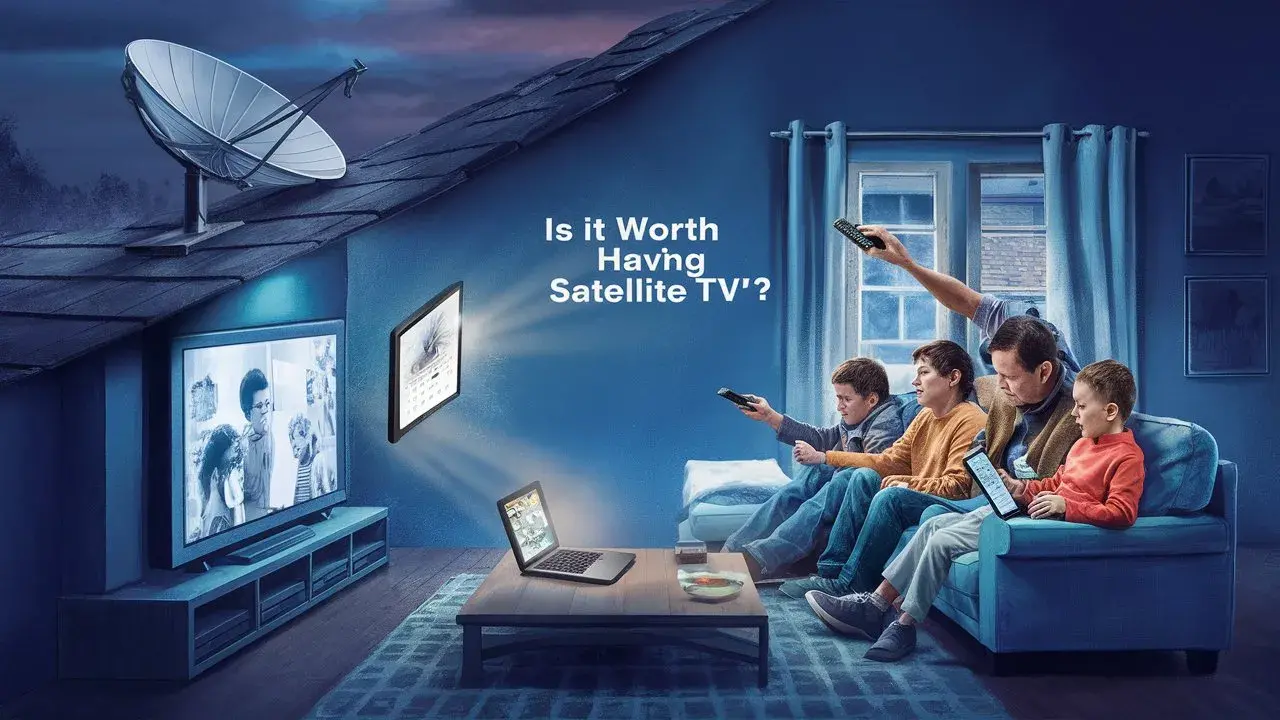
Deciding whether satellite TV is the right choice for your household in 2025-26 involves weighing its unique advantages against potential drawbacks. This guide offers a comprehensive analysis to help you determine if satellite television's extensive channel selection and nationwide availability justify its cost and installation requirements for your specific needs.
What is Satellite TV?
Satellite television is a system that delivers television programming via signals transmitted from orbiting satellites. A satellite dish, typically installed on the exterior of a home, receives these signals and relays them to a set-top box, which then decodes them for display on a television. This technology has been a significant player in the home entertainment landscape for decades, offering a distinct alternative to cable and over-the-air broadcasts. In 2025-26, satellite TV providers continue to offer a wide array of channels, including premium networks, sports packages, and international programming, reaching virtually any location with a clear view of the southern sky.
The Advantages: Why Satellite TV Might Be Worth It
Satellite TV presents several compelling benefits that make it a worthwhile consideration for many households. These advantages often address specific consumer needs and preferences, particularly in areas where other services may be limited or less comprehensive.
Nationwide Availability and Reach
One of the most significant selling points of satellite TV is its unparalleled reach. Unlike cable television, which relies on extensive underground or aerial cable infrastructure, satellite signals are broadcast from space. This means that as long as you have a clear line of sight to the southern sky, you can receive satellite TV. This makes it an ideal solution for:
- Rural and Remote Areas: Many regions that lack robust cable or fiber optic infrastructure can still access high-quality television through satellite. This has been a lifeline for entertainment and information in underserved communities for years.
- Apartment Dwellers and Renters: While some apartment complexes may have restrictions on external dish installations, many satellite providers offer solutions for multi-dwelling units, or residents can often install dishes on balconies or windowsills where permitted.
- Travelers and RV Owners: Portable satellite systems allow for continuous entertainment access while on the road, a feature not easily replicated by other terrestrial services.
In 2025-26, this universal accessibility remains a core strength, ensuring that a vast majority of the population can tap into the satellite TV ecosystem.
Extensive Channel Selection and Premium Packages
Satellite providers are known for offering a vast library of channels, often exceeding what is available through basic cable tiers or over-the-air broadcasts. This includes:
- Hundreds of Channels: From general entertainment and news to niche interests like cooking, history, and foreign language programming, satellite packages are designed to cater to diverse tastes.
- Premium Sports Networks: Access to dedicated sports channels such as ESPN, Fox Sports, NFL Network, MLB Network, and NBA TV is a major draw for sports enthusiasts. Many providers offer comprehensive sports packages that aggregate these offerings.
- Premium Movie Channels: Subscribers can often add channels like HBO, Showtime, Cinemax, and Starz to their packages for a more robust cinematic experience at home.
- International Programming: For those seeking content from their home country or specific foreign markets, satellite TV frequently offers extensive international channel lineups.
The ability to customize packages and add premium content means that users can tailor their viewing experience precisely to their preferences, a level of flexibility that is highly valued.
High-Definition (HD) and 4K Content
Satellite technology is well-equipped to deliver high-definition and, increasingly, 4K Ultra HD programming. The quality of the picture and sound is generally excellent, providing an immersive viewing experience. In 2025-26, the availability of 4K content continues to expand, offering sharper images and more vibrant colors for compatible televisions and content. Providers are investing in their satellite infrastructure to ensure that they can transmit these advanced formats efficiently.
Bundling Options and Potential Savings
Many satellite TV providers also offer bundled services, combining television with internet and sometimes even phone plans. These bundles can often lead to significant savings compared to subscribing to each service individually. For households looking for a one-stop shop for their home entertainment and communication needs, these bundled packages can be a very attractive proposition. Comparing these bundles against competitors is crucial for maximizing value.
Reliability in Certain Scenarios
While weather can sometimes affect satellite signals (more on this later), the underlying technology is robust. For areas prone to cable outages due to ground-level damage (e.g., construction, severe storms affecting poles and wires), satellite can offer a more resilient alternative, as its primary infrastructure is in the sky.
The Disadvantages: When Satellite TV Might Not Be the Best Fit
Despite its advantages, satellite TV is not without its drawbacks. Understanding these limitations is crucial for making an informed decision that aligns with your household's needs and expectations.
Weather Interference (Rain Fade)
Perhaps the most commonly cited disadvantage of satellite TV is its susceptibility to weather interference, often referred to as "rain fade." Heavy rain, snow, or ice can disrupt the satellite signal, causing temporary picture degradation, pixelation, or complete signal loss. While modern satellite technology and dish designs have improved to mitigate this, it remains a potential issue, particularly in regions with frequent severe weather. The degree of interference depends on the intensity of the weather and the satellite's frequency band.
Installation Requirements and Restrictions
Satellite TV requires the installation of a satellite dish on the exterior of your home. This typically involves:
- Professional Installation: Most providers mandate professional installation to ensure the dish is correctly aligned for optimal signal reception. This adds to the initial cost and requires scheduling an appointment.
- Clear Line of Sight: The dish needs an unobstructed view of the southern sky. Trees, buildings, or other obstructions can prevent a stable signal. This can be a challenge for homes with dense foliage or specific architectural layouts.
- Property Restrictions: Renters or residents in certain housing associations or neighborhoods may face restrictions on mounting satellite dishes on their property, limiting their ability to use the service.
While DIY installation is sometimes possible for existing customers or with specific equipment, it's generally not recommended for new setups due to the precision required.
Long-Term Contracts and Early Termination Fees
Many satellite TV providers require customers to sign long-term contracts, often for 12, 18, or 24 months. These contracts can lock you into a service and price, and breaking the contract early typically incurs substantial early termination fees (ETFs). This lack of flexibility can be a deterrent for those who prefer month-to-month commitments or anticipate moving frequently.
Cost Over Time and Price Increases
While introductory offers can make satellite TV seem affordable, the monthly subscription fees can add up significantly over time. Furthermore, providers often implement annual price increases, especially after promotional periods expire. This can lead to a higher-than-expected monthly bill if not carefully monitored. The cost of premium channels and sports packages can further inflate the total expense.
Limited Internet Speeds and Data Caps (in some bundles)
While satellite TV providers often bundle internet services, satellite internet itself can have limitations. Speeds may not be as fast as fiber or cable internet, and data caps are common, which can be problematic for heavy internet users. While the TV service itself doesn't consume internet data (unless it's an on-demand feature), the bundled internet offering might not be suitable for everyone's needs in 2025-26.
Potential for Signal Degradation with Older Equipment
Like any technology, older satellite equipment might not perform as optimally as newer models. While providers generally upgrade equipment during installations, if you're using older hardware, you might experience less reliable performance compared to the latest systems.
Satellite TV vs. The Competition: A 2025-26 Comparison
To truly assess if satellite TV is worth it, it's essential to compare it against its primary competitors: cable TV, streaming services, and over-the-air (OTA) antennas. Each offers a different value proposition.
Satellite TV vs. Cable TV
Availability: Cable TV is limited to areas with existing cable infrastructure. Satellite TV is available almost anywhere. For rural areas, satellite is often the only option besides OTA.
Channel Selection: Both offer extensive channel lineups, with premium sports and movie packages available. Satellite providers often boast slightly larger channel counts in their base packages.
Weather Interference: Cable TV is generally not affected by weather, whereas satellite TV can experience rain fade.
Installation: Cable installation can sometimes be less intrusive (e.g., using existing lines), but satellite requires an external dish. Both typically involve professional installation and contracts.
Cost: Initial costs can be comparable, but long-term costs depend heavily on packages and price increases. Bundling options are common for both.
Speed: Cable internet speeds are generally faster and more reliable than satellite internet, making cable a better choice for those prioritizing high-speed internet alongside TV.
Satellite TV vs. Streaming Services (e.g., Netflix, Hulu + Live TV, YouTube TV, Sling TV)
Availability: Streaming services require a stable internet connection. Satellite TV requires a clear sky view.
Channel Selection: Live TV streaming services (like YouTube TV, Hulu + Live TV, Sling TV) offer a good selection of live channels, often comparable to basic satellite packages, but may lack some niche or premium sports channels. On-demand streaming services (Netflix, Disney+) offer vast libraries of movies and shows but no live TV.
Weather Interference: Streaming is unaffected by weather, assuming your internet connection is stable.
Installation: Streaming requires no physical installation beyond setting up streaming devices (smart TVs, streaming sticks). Satellite requires dish installation.
Cost: Streaming services are generally more flexible, with no long-term contracts and often lower monthly costs for comparable live TV channels. However, subscribing to multiple streaming services can quickly exceed the cost of a single satellite package. On-demand streaming is typically much cheaper than live TV.
Data Usage: Streaming live TV consumes significant internet data, which can be an issue for those with data caps. Satellite TV's primary service does not use internet data.
4K Content: Many streaming services offer 4K content, and some on-demand services have extensive 4K libraries. Satellite is also expanding its 4K offerings.
Satellite TV vs. Over-the-Air (OTA) Antennas
Availability: OTA antennas receive local broadcast channels (ABC, CBS, NBC, FOX, PBS, etc.) and are dependent on proximity to broadcast towers. Satellite TV is available nationwide.
Channel Selection: OTA provides free access to local channels, but no premium cable channels, sports, or international programming. Satellite offers a vast array of channels.
Weather Interference: OTA reception can be affected by weather, though generally less so than satellite.
Installation: OTA antenna installation can range from simple indoor antennas to complex outdoor setups. Satellite requires a professional dish installation.
Cost: OTA antennas are a one-time purchase, offering free TV indefinitely. Satellite TV involves ongoing monthly subscription fees.
4K Content: Some local broadcast channels transmit in 4K OTA, but it's less common than with satellite or streaming.
In summary, satellite TV excels in nationwide availability and extensive channel options, particularly for premium content and in areas with limited infrastructure. However, it faces competition from more flexible, often cheaper streaming services and the free, albeit limited, option of OTA antennas.
Understanding the Costs: What to Expect in 2025-26
The financial aspect of satellite TV is a significant factor in determining its value. Costs can be broken down into several components:
Monthly Subscription Fees
This is the primary ongoing cost. Providers offer various packages, typically tiered by channel count and content. As of 2025-26, expect entry-level packages to start around $50-$70 per month, with more comprehensive packages, including premium sports and movie channels, ranging from $100 to $200+ per month. These prices often reflect introductory promotional rates that increase significantly after the first 12-24 months.
Installation Fees
While some providers may offer free installation as a promotion, standard installation fees can range from $50 to $200. This fee covers the professional setup of the satellite dish and receiver equipment.
Equipment Rental or Purchase
Most providers require you to rent their satellite receivers and DVRs. Monthly equipment rental fees can add $10-$20 per month per receiver. Some providers might offer the option to purchase equipment outright, but this is often a substantial upfront cost.
Premium Channel and Sports Package Add-ons
If you want access to channels like HBO, Showtime, or specific sports leagues, you'll need to pay extra. These add-ons can range from $10-$15 per channel or package per month, quickly increasing your total bill.
Regional Sports Fees
Many providers pass on costs associated with carrying regional sports networks, which can add several dollars to your monthly bill, especially if you live in a market with multiple popular regional sports teams.
Taxes and Fees
Don't forget to factor in federal, state, and local taxes, as well as various regulatory and administrative fees, which can add another 10-20% to your advertised monthly price.
Early Termination Fees (ETFs)
If you break your contract before its term ends, expect to pay ETFs, which can be as high as $15-$20 for each month remaining on the contract. This can amount to several hundred dollars.
Example Cost Scenario (2025-26 Estimate):
Let's consider a hypothetical scenario for a family wanting a mid-tier package with some premium sports:
- Base Package: $75/month (after 12-month promo)
- Premium Sports Package: $20/month
- Equipment Rental (2 receivers): $20/month
- Regional Sports Fee: $5/month
- Estimated Taxes & Fees: $15/month
- Total Estimated Monthly Cost: $135/month
This example highlights how costs can escalate beyond the advertised base price. It is crucial to read the fine print and understand all potential charges before signing up.
Installation and Equipment: The Practicalities
The physical setup of satellite TV is a key consideration. Understanding the process and the equipment involved will help manage expectations.
The Satellite Dish
The satellite dish is a parabolic antenna, typically 18-30 inches in diameter. It must be mounted securely on an exterior surface (wall, roof, pole) and precisely aligned to receive signals from the orbiting satellites. The alignment is critical for optimal performance, and professional installers use specialized equipment to achieve this accuracy.
The Receiver/Set-Top Box
This is the device that decodes the satellite signal and converts it into a format your TV can display. Most modern receivers are High-Definition (HD) and can support 4K content. Many also include Digital Video Recorder (DVR) functionality, allowing you to record, pause, and rewind live TV, as well as schedule recordings. You may need multiple receivers for different TVs in your home, each incurring an additional rental fee.
Cabling and Connections
Cables run from the satellite dish to the receiver inside your home. Installers will typically drill a small hole through an exterior wall to run these cables. They will ensure the connections are secure and weather-sealed.
The Installation Process (Step-by-Step)
- Site Survey: The technician will assess your property to determine the best location for the dish, ensuring a clear line of sight to the southern sky.
- Mounting the Dish: The dish mount is securely attached to the chosen surface.
- Dish Alignment: The dish is attached to the mount and meticulously aligned using a signal meter to lock onto the satellite's transponder.
- Running Cables: Cables are run from the dish into the house.
- Connecting Equipment: The receiver(s) are connected to the cables and your television(s) via HDMI.
- System Activation and Testing: The technician activates your service and performs tests to ensure all channels are accessible and the signal is strong. They will also guide you through basic operation of the receiver and remote.
The entire installation process typically takes 2-4 hours, depending on the complexity of the setup.
Troubleshooting Common Issues
If you experience signal loss, common troubleshooting steps include:
- Check for Obstructions: Ensure nothing new has blocked the dish's view of the sky.
- Check Connections: Make sure all cables are securely plugged in at the dish, receiver, and TV.
- Reboot the Receiver: Unplug the receiver from the power outlet for 30 seconds, then plug it back in.
- Weather: If it's raining heavily, signal interruption is likely temporary.
- Contact Support: If problems persist, contact your provider.
For most technical issues, especially those related to dish alignment or internal wiring, a service call from a technician is usually required.
Who is Satellite TV Best For in 2025-26?
Based on the pros and cons, satellite TV is an excellent choice for specific user profiles:
Residents of Rural or Remote Areas
If you live far from urban centers and lack access to cable or reliable high-speed internet, satellite TV offers a robust solution for accessing a wide range of entertainment and news channels. It bridges the digital divide for many.
Sports Enthusiasts Needing Specific Channels
For dedicated sports fans who want access to a comprehensive suite of national and regional sports networks, satellite packages often provide the most complete offering, especially when compared to the more limited sports channel availability on some streaming services.
Individuals Seeking Extensive Channel Variety
If you enjoy a wide array of programming, including niche channels, international content, and premium movie networks, satellite TV's extensive channel lineups are hard to beat. You can often customize your package to include exactly what you want.
Those Who Prioritize TV Over Internet Speed
If your primary need is television viewing and you are less concerned about having the absolute fastest internet speeds (or if satellite internet is your only viable option), satellite TV can be a good fit. Remember that the TV service itself doesn't consume internet data.
People Moving to Areas with Limited Infrastructure
When relocating, especially to areas where cable infrastructure is absent or outdated, satellite TV provides a consistent and readily available option for home entertainment.
Households Seeking Bundled Services
For those who want to consolidate their home services, the bundles offered by satellite providers (TV, internet, phone) can offer convenience and potential cost savings, provided the bundled internet meets their needs.
Making Your Decision: A Final Checklist
To make the best choice for your household in 2025-26, consider these questions:
1. What is your primary motivation for getting TV service?
Is it for local news, premium sports, movies, or general entertainment?
2. Where do you live?
Is cable readily available? Are there obstructions to a clear sky view? How frequent is severe weather?
3. What is your budget?
Consider both initial installation costs and long-term monthly expenses, including potential price increases and add-ons.
4. How important is internet speed and data allowance to you?
If you need high-speed internet, compare satellite internet capabilities carefully against cable or fiber options.
5. Are you comfortable with long-term contracts?
Weigh the benefits of promotional pricing against the risks of early termination fees.
6. What is your tolerance for potential weather interference?
If you live in an area with frequent severe storms, this could be a significant drawback.
7. Do you have alternatives that better suit your needs?
Compare satellite packages meticulously with live TV streaming services and other options.
By carefully considering these points and reviewing the information presented in this guide, you'll be well-equipped to determine if satellite TV is truly worth it for your home in 2025-26.
Conclusion
In 2025-26, the question of "Is it worth having satellite TV?" hinges on your specific circumstances. For those in rural or remote locations underserved by cable, or for avid sports fans demanding comprehensive channel access, satellite TV remains a powerful and often indispensable solution. Its nationwide reach and extensive programming options continue to be significant advantages. However, potential subscribers must carefully weigh these benefits against the realities of weather interference, the necessity of professional installation, and the financial commitment of long-term contracts and escalating monthly fees. When compared to the growing flexibility and often lower entry costs of streaming services, satellite TV's value proposition is more nuanced. Ultimately, a thorough assessment of your household's viewing habits, location, budget, and tolerance for contract commitments will guide you to the right decision, ensuring your home entertainment investment aligns perfectly with your needs.