-
Posted on: 07 Jan 2026
-
Is satellite internet good? For many in rural and underserved areas, it's not just good, it's the only viable option for high-speed connectivity. While historically plagued by latency and speed issues, modern satellite technology has dramatically improved, offering a compelling alternative to traditional broadband, though it still comes with trade-offs.
Understanding Satellite Internet: How It Works
Before diving into whether satellite internet is "good," it's essential to understand the fundamental technology behind it. Satellite internet operates by transmitting data signals between a user's satellite dish, a satellite orbiting Earth, and a ground station connected to the internet backbone. This process, while ingenious, inherently involves significant distances, which is the primary factor influencing its performance characteristics.
The Journey of Data
When you request information online, your request travels from your computer, through your modem and router, to your satellite dish. This dish then beams the signal up to a geostationary satellite (GEO) or a low-Earth orbit (LEO) satellite. The satellite acts as a relay, forwarding the signal to a ground station, which is a large facility with antennas that connect to the global internet infrastructure. Once the data is retrieved or processed at the ground station, it follows the reverse path back to your device.
Geostationary (GEO) vs. Low-Earth Orbit (LEO) Satellites
The type of satellite used significantly impacts the user experience. Historically, satellite internet has relied on GEO satellites, which orbit at an altitude of approximately 22,000 miles above Earth. While these satellites cover a vast area and appear stationary from the ground, their extreme distance introduces substantial latency – the time it takes for data to travel to the satellite and back. This latency can make real-time applications like online gaming or video conferencing feel sluggish.
More recently, LEO satellite constellations, such as Starlink by SpaceX and OneWeb, have emerged. These satellites orbit at much lower altitudes, typically between 300 to 1,200 miles. This drastically reduces the distance data must travel, leading to significantly lower latency and potentially higher speeds. However, LEO constellations require a vast number of satellites to maintain continuous coverage, as individual satellites move rapidly across the sky.
Key Components of a Satellite Internet System
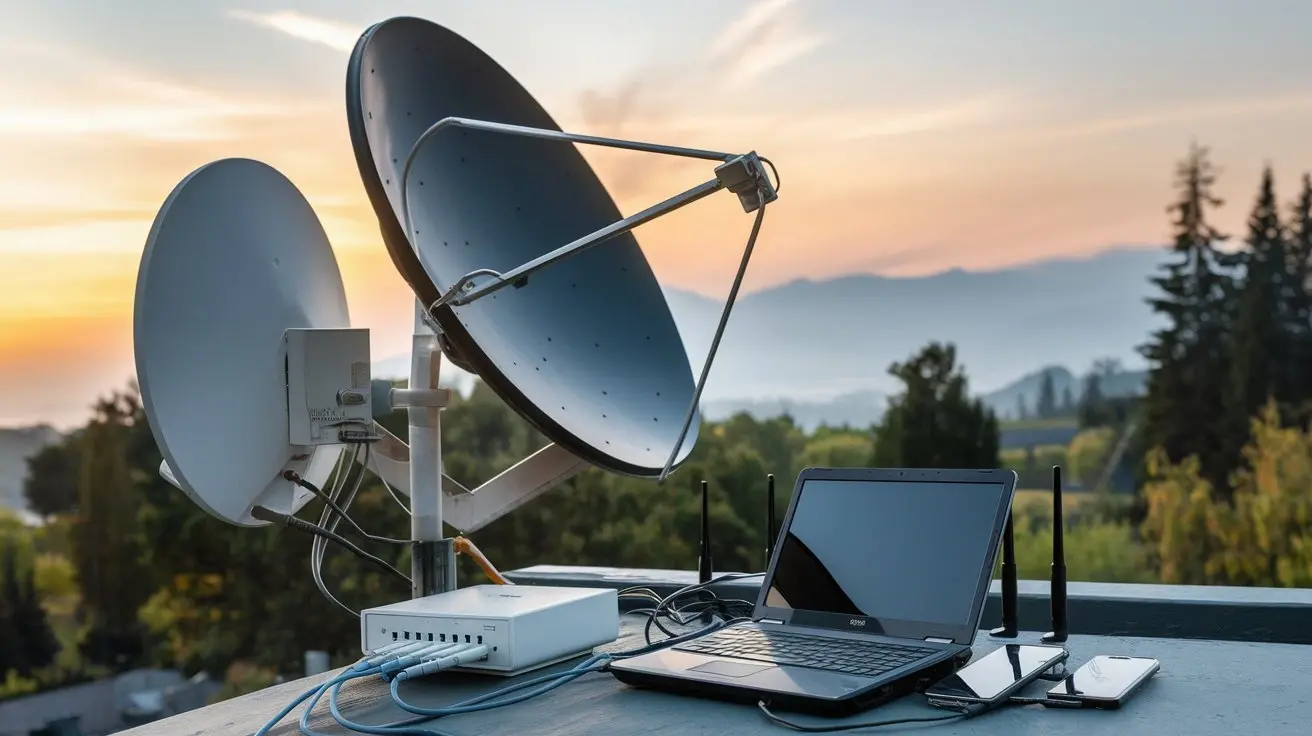
- Satellite Dish: This is the outdoor antenna installed at your home or business. It needs a clear, unobstructed view of the sky to communicate with the satellite.
- Modem/Router: This indoor device connects to the satellite dish and your home network, allowing your devices to access the internet.
- Satellite: The orbiting spacecraft that relays signals between your dish and the ground station.
- Ground Station: A terrestrial facility that connects the satellite network to the broader internet.
Understanding these components and the physics of signal transmission is crucial for appreciating the strengths and weaknesses of satellite internet. The inherent distance involved is the primary challenge, but advancements are actively addressing this.
The Advantages: When Satellite Internet Shines
Despite its historical limitations, satellite internet offers several compelling advantages, particularly for specific demographics and geographic locations. For many, it represents the only pathway to broadband connectivity, unlocking opportunities previously out of reach.
Ubiquitous Availability
The most significant advantage of satellite internet is its unparalleled availability. Unlike terrestrial broadband technologies like DSL, cable, or fiber optic, which require extensive physical infrastructure to be laid, satellite internet can be deployed virtually anywhere with a clear view of the sky. This makes it an indispensable service for:
- Rural Communities: Vast areas of the countryside often lack the population density to justify the high cost of laying fiber optic cables or robust copper lines.
- Remote Locations: Islands, mountainous regions, and isolated homesteads can gain internet access through satellite.
- Mobile Applications: RVs, boats, and even remote work sites can be equipped with satellite internet for on-the-go connectivity.
In 2025-26, the digital divide remains a significant issue, and satellite internet is a critical tool in bridging this gap, ensuring that more people can participate in the digital economy and access online resources.
Improved Speeds and Performance
The narrative around satellite internet has been dominated by its past limitations. However, recent technological advancements have dramatically improved its capabilities. Modern satellite internet services, especially those utilizing LEO constellations, are offering speeds that are competitive with, and in some cases surpass, older DSL technologies and even some forms of fixed wireless.
- Download Speeds: Many LEO satellite plans now offer download speeds ranging from 50 Mbps to over 200 Mbps, which is sufficient for streaming HD video, browsing the web, and managing emails.
- Upload Speeds: While typically lower than download speeds, upload speeds have also seen improvements, with some plans offering 10-20 Mbps, adequate for video calls and uploading moderate files.
- Reduced Latency (LEO): As mentioned, LEO satellites significantly reduce latency, making activities like online gaming, VoIP calls, and real-time collaboration much more feasible and enjoyable than with traditional GEO satellite services.
For instance, in 2025, a user in a rural area might find that their only option for speeds above 25 Mbps is satellite internet, whereas their nearest town might have access to fiber. This makes satellite internet a revolutionary step for those previously limited to dial-up or extremely slow DSL.
Competitive Pricing (in certain contexts)
While the upfront cost of equipment can be a barrier, the monthly subscription fees for satellite internet are becoming increasingly competitive, especially when compared to the cost of laying new infrastructure for other broadband types in difficult-to-reach areas. Furthermore, in locations where satellite is the only option, its price point is often the most accessible for achieving a usable internet connection.
Example: A family living on a remote ranch might face installation costs of tens of thousands of dollars for a fiber optic line. Satellite internet, with its fixed equipment cost and monthly fee, becomes a far more practical and affordable solution.
Reliability in Disaster Situations
In the event of natural disasters that can damage terrestrial network infrastructure (e.g., earthquakes, hurricanes, floods), satellite internet can often remain operational. As long as the satellite dish is undamaged and has a clear view of the sky, it can provide a vital communication link when other services are down. This makes it a critical tool for emergency services, disaster relief, and maintaining communication in affected areas.
The Disadvantages: Where Satellite Internet Falls Short
While satellite internet has made significant strides, it's not without its drawbacks. Understanding these limitations is crucial for setting realistic expectations and determining if it's the right fit for your needs.
Latency and Ping Times
This remains the most significant hurdle for satellite internet, especially for GEO-based services. Even with LEO advancements, latency is inherently higher than with fiber or cable. Latency, often measured as "ping time," is the delay between sending a command and receiving a response. For activities requiring near-instantaneous feedback, such as:
- Competitive Online Gaming: High ping times can lead to lag, making it difficult to react quickly and affecting gameplay.
- Real-time Video Conferencing: While improved, some delay can still be noticeable, leading to choppy audio or video.
- Certain Financial Transactions: High-frequency trading or other time-sensitive online activities might be impacted.
In 2025, while LEO satellite internet can offer ping times as low as 20-50 ms, which is acceptable for many users, it's still typically higher than the sub-10 ms often achieved with fiber optics.
Data Caps and Throttling
Many satellite internet plans, particularly older GEO plans, come with strict data caps. Exceeding these caps can result in significantly reduced speeds (throttling) or additional charges. This can be a major issue for households with multiple users or those who stream a lot of video content, download large files, or engage in extensive online gaming. While newer LEO services are moving towards unlimited data or much higher caps, it's still a factor to consider when comparing plans.
Example: A family might have a 100 GB data cap per month. If they stream a few hours of 4K video, they could easily exceed this cap, leading to a frustratingly slow internet experience for the rest of the billing cycle.
Weather Interference
Satellite signals are transmitted through the atmosphere, making them susceptible to interference from adverse weather conditions. Heavy rain, snow, or dense fog can degrade the signal strength, leading to slower speeds or temporary disconnections. This phenomenon is known as "rain fade." While modern systems are designed to mitigate this, it can still be an issue in regions with frequent severe weather.
Equipment Costs and Installation
The initial investment for satellite internet equipment (dish, modem) can be substantial, often ranging from a few hundred to over a thousand dollars. While some providers offer equipment leasing options or promotional discounts, this upfront cost can be a barrier for some users. Installation also requires a professional technician to ensure proper alignment of the dish for optimal signal reception, adding to the overall cost.
Line of Sight Requirements
As mentioned, the satellite dish requires a clear, unobstructed view of the sky. Trees, buildings, or other obstructions can block the signal, preventing the service from working or significantly degrading its performance. This means that in heavily wooded areas or densely built environments, finding a suitable installation location can be challenging.
Variable Speeds
While advertised speeds are often based on ideal conditions, actual speeds can vary throughout the day. This variability can be due to factors like network congestion (especially during peak usage hours), satellite positioning, and atmospheric conditions. Users might experience faster speeds at night or early morning compared to the afternoon or evening.
Satellite Internet vs. Other Broadband Technologies
To determine if satellite internet is "good," it's essential to compare it against the alternatives available. The best choice often depends on your location and specific needs.
Satellite vs. DSL
DSL (Digital Subscriber Line) uses existing telephone lines to provide internet access. It's widely available in areas with telephone infrastructure but is often limited by distance from the telephone company's central office.
- Speed: Satellite (especially LEO) can offer significantly higher download speeds than DSL, which typically tops out at 25-100 Mbps, often less in rural areas.
- Latency: LEO satellite latency is comparable to or slightly higher than DSL. GEO satellite latency is much higher.
- Availability: DSL is limited to areas with phone lines. Satellite is available almost anywhere.
- Data Caps: DSL often has unlimited data. Satellite plans can have strict data caps.
Satellite vs. Cable Internet
Cable internet uses coaxial cable lines, the same infrastructure used for cable television. It's generally faster and more reliable than DSL.
- Speed: LEO satellite speeds can rival or exceed entry-level cable plans. High-end cable plans often offer superior download and upload speeds.
- Latency: Cable internet generally offers lower latency than even LEO satellite internet.
- Availability: Cable is widely available in urban and suburban areas but not in most rural locations.
- Data Caps: Many cable providers have data caps, though they are often higher than those on satellite plans.
Satellite vs. Fiber Optic
Fiber optic internet uses light signals transmitted through glass fibers. It's the fastest and most reliable form of internet currently available.
- Speed: Fiber optic offers symmetrical speeds (equal download and upload) that far surpass satellite internet, often reaching 1 Gbps or more.
- Latency: Fiber optic has the lowest latency of all broadband types, making it ideal for demanding applications.
- Availability: Fiber is the least available, primarily found in newer developments and densely populated areas.
- Data Caps: Fiber plans are typically unlimited.
Satellite vs. Fixed Wireless
Fixed wireless internet uses radio signals to connect a fixed antenna at your location to a tower. It's a common solution for rural areas where cable or fiber isn't available.
- Speed: LEO satellite can offer comparable or higher speeds than some fixed wireless services, but high-end fixed wireless can be very competitive.
- Latency: Fixed wireless generally offers lower latency than satellite internet.
- Availability: Fixed wireless is limited by the proximity of a tower and line of sight. Satellite is more universally available.
- Data Caps: Data caps vary widely for fixed wireless.
Comparison Table (2025-26 Estimates):
Technology Typical Download Speed (Mbps) Typical Upload Speed (Mbps) Typical Latency (ms) Availability Data Caps GEO Satellite 12-100 3-10 600+ Universal Strict (e.g., 100-200 GB) LEO Satellite (e.g., Starlink) 50-200+ 10-20+ 20-50 Expanding Often Unlimited or High Caps DSL 5-100 1-10 20-80 Areas with phone lines Often Unlimited Cable 50-1000+ 10-50+ 10-30 Urban/Suburban Varies (often 1-2 TB) Fiber Optic 100-10000+ 100-10000+ <10 Limited Typically Unlimited Fixed Wireless 25-150+ 5-20+ 20-60 Areas with tower access Varies The data in this table reflects general trends and can vary significantly by provider and specific plan. For users in areas with no other options, satellite internet, particularly LEO, often provides the best available speeds and a much-needed connection to the digital world.
Choosing the Right Satellite Internet Provider in 2025-26
With the emergence of new players and the evolution of existing services, selecting a satellite internet provider in 2025-26 requires careful consideration. The landscape is dynamic, with LEO providers rapidly expanding their coverage and GEO providers striving to remain competitive.
Key Providers to Consider
- Starlink (SpaceX): Currently the leading LEO provider, Starlink offers high speeds and low latency, making it a strong contender for many. Its service is expanding rapidly, but availability can still be limited in some regions, and waitlists are common.
- HughesNet: A long-standing GEO satellite internet provider, HughesNet offers widespread availability but is generally characterized by higher latency and more restrictive data caps compared to LEO options. They have been updating their plans to offer more data.
- Viasat: Another major GEO provider, Viasat also boasts broad coverage. Similar to HughesNet, it faces challenges with latency and data limits, but they have introduced plans with higher data allowances and improved speeds on their newer satellites.
- OneWeb: Primarily focused on enterprise, government, and aviation markets, OneWeb is also a LEO constellation. While not typically available for residential use, it represents significant competition and technological advancement in the satellite internet space.
Factors to Evaluate When Choosing
- Availability in Your Area: This is the first and most crucial step. Visit the websites of providers like Starlink, HughesNet, and Viasat and enter your address to check for service availability. LEO services are still expanding, so availability can change rapidly.
- Advertised Speeds vs. Realistic Speeds: Look beyond the maximum advertised speeds. Research user reviews and independent speed tests for your specific region. LEO services generally offer more consistent high speeds than GEO.
- Latency Requirements: If you plan to game, conduct frequent video calls, or use other real-time applications, LEO satellite internet (like Starlink) is significantly better than GEO (HughesNet, Viasat) due to its lower latency.
- Data Allowances and Policies: Understand the data caps, if any, and what happens when you exceed them (throttling, overage charges). Many LEO plans offer unlimited data, which is a major advantage. GEO plans often have a "hard cap" or a period of reduced speeds after a certain threshold.
- Equipment Costs and Installation Fees: Compare the upfront cost of the satellite dish and modem. Some providers offer rental plans, while others require purchase. Factor in professional installation costs.
- Contract Lengths: Some providers require long-term contracts (e.g., 24 months), while others operate on a month-to-month basis. Understand the commitment involved.
- Customer Service and Support: Research provider reviews regarding customer service responsiveness and problem resolution. This is particularly important for a technology that can sometimes require troubleshooting.
- Bundling Options: While less common for satellite internet, check if any providers offer bundles with other services that might provide savings.
For most residential users seeking a modern, high-performance satellite internet experience in 2025-26, LEO options like Starlink are likely to be the superior choice if available. However, for users in extremely remote areas where even LEO coverage is not yet established, or for those with very basic internet needs who prioritize widespread availability, HughesNet and Viasat remain viable, albeit with more compromises.
Real-World Satellite Internet Experiences and Use Cases
Moving beyond technical specifications, understanding how satellite internet performs in real-world scenarios provides valuable insight. The experiences of users vary greatly depending on the provider, their location, and their specific internet usage habits.
The Rural Home Office Professional
Sarah, a graphic designer living in a remote mountain town, relies on satellite internet for her work. Previously, she struggled with slow speeds and unreliable connections that made video conferencing with clients nearly impossible. She recently switched to a LEO satellite service.
"It's been a game-changer. I can now upload large design files without waiting hours, and my video calls are smooth and professional. The latency is low enough that I don't feel disconnected. I still have to be mindful of my data usage on some platforms, but overall, it's opened up so many more opportunities for my business."
Sarah's experience highlights how modern satellite internet can support demanding professional activities, enabling remote work in previously underserved areas.
The Avid Online Gamer
Mark, a college student living in a rural area, is an avid online gamer. He previously used a GEO satellite service and found it unplayable due to high ping times. After his family upgraded to a LEO satellite service:
"The difference is night and day. My ping is now consistently under 50ms, which is playable for most games. I can compete with my friends who live in the city. It's not quite fiber-optic level, but for where I live, it's an incredible upgrade. I still have to watch my data, but the speeds are fast enough for downloading games quickly."
Mark's story illustrates the critical impact of latency on gaming and how LEO technology has made satellite internet a feasible option for this demographic.
The Remote RV Enthusiast
The advent of mobile satellite internet solutions, often utilizing LEO technology, has transformed the lives of RV enthusiasts and digital nomads. Companies are developing smaller, more portable dishes designed for vehicles.
A user named Alex, who travels full-time in his RV, shares:
"Being able to have a reliable internet connection wherever I go is essential for my work and staying in touch. The portable Starlink dish sets up in minutes, and I get speeds comparable to what I had at my old apartment. It allows me to work from anywhere – a national park, a quiet beach. It's freedom."
This use case demonstrates the versatility of satellite internet beyond fixed locations, enabling a mobile lifestyle for many.
The Small Business in a Remote Location
A rural bed and breakfast owner, Maria, needed reliable internet for online bookings, guest Wi-Fi, and managing her business operations. With limited terrestrial options, she opted for satellite internet.
"Before, I was losing bookings because my website was too slow to load, and guests complained about the Wi-Fi. Now, with the improved speeds and lower latency, everything runs smoothly. I can manage my online presence effectively, and my guests are happy with the service. It's made a real difference to my bottom line."
Maria's case shows how satellite internet can directly contribute to the economic viability of small businesses in remote areas.
Challenges and Considerations
Despite these positive experiences, challenges remain. Users in areas with frequent severe weather might still face intermittent disruptions. Those with strict data caps on GEO plans must carefully monitor their usage to avoid penalties. The initial cost of equipment can also be a hurdle for some, even with payment plans.
In summary, for many, especially those in rural and underserved areas, satellite internet is not just "good" – it's transformative. Its ability to provide high-speed connectivity where no other options exist is its greatest strength. The key is to match the right type of satellite service (LEO vs. GEO) and provider to individual needs and expectations.
The Evolving Landscape: The Future of Satellite Internet
The satellite internet industry is undergoing a rapid and exciting transformation, driven by technological innovation and increasing demand for global connectivity. The advancements seen in the last few years are just the beginning, with significant developments expected in the coming years.
The Rise of LEO Constellations
Low-Earth Orbit (LEO) satellite constellations are the primary drivers of this revolution. Companies like SpaceX (Starlink) and OneWeb are launching thousands of satellites, creating a dense network that offers significantly lower latency and higher speeds than traditional geostationary (GEO) satellites. This trend is expected to continue:
- Increased Satellite Deployment: Expect to see even more LEO satellites launched, leading to improved coverage, capacity, and potentially lower costs as competition intensifies.
- Enhanced Performance: As constellations mature, orbital mechanics will be optimized, and ground infrastructure will scale, further reducing latency and increasing speeds. We might see speeds exceeding 300-500 Mbps becoming more common for residential users.
- Global Coverage Expansion: LEO services are actively working to achieve true global coverage, bringing high-speed internet to the most remote corners of the planet, including oceans and polar regions.
Advancements in Satellite Technology
Beyond the sheer number of satellites, the technology itself is becoming more sophisticated:
- Phased Array Antennas: User terminals are becoming more advanced, using phased array technology to electronically steer beams towards satellites without physical movement. This allows for faster satellite handoffs and more robust connections.
- On-Orbit Servicing and Debris Mitigation: Efforts are underway to develop technologies for repairing satellites in orbit and actively managing space debris, ensuring the long-term sustainability of these vast constellations.
- Inter-Satellite Links: Some LEO constellations are incorporating laser links between satellites. This allows data to travel directly between satellites in orbit, bypassing the need to descend to a ground station, further reducing latency and increasing network efficiency.
Integration with Terrestrial Networks
The future of internet connectivity likely involves a hybrid approach. Satellite internet will not necessarily replace terrestrial broadband but will complement it:
- Bridging the Digital Divide: Satellite will continue to be crucial for connecting areas where terrestrial infrastructure is uneconomical to deploy.
- Backup and Redundancy: Businesses and critical infrastructure may use satellite as a backup connection to ensure continuity of service in case of terrestrial network failures.
- Mobile and IoT Applications: Satellite connectivity will become increasingly integrated into mobile devices, vehicles, and Internet of Things (IoT) applications, providing seamless connectivity across various platforms.
Increased Competition and Affordability
As more LEO providers enter the market and existing ones scale up, competition is expected to drive down prices and improve service offerings. This will make satellite internet more accessible to a broader range of consumers and businesses.
Potential Challenges
Despite the optimistic outlook, challenges remain:
- Space Debris and Congestion: The sheer number of satellites poses risks of collisions and contributes to space debris. Regulatory frameworks will need to evolve to manage this.
- Spectrum Allocation: Securing sufficient radio spectrum for satellite communications is vital and can be a point of contention with terrestrial providers.
- Environmental Impact: The manufacturing, launch, and eventual deorbiting of thousands of satellites raise environmental concerns that will need to be addressed.
Overall, the future of satellite internet is bright. It's no longer just a niche solution for the unconnected; it's becoming a mainstream technology capable of delivering high-performance internet access globally. For those who were once left behind, the evolving landscape of satellite technology promises a connected future.
Conclusion: Is Satellite Internet Good for You?
So, is satellite internet good? The answer, as with many technology questions, is nuanced: it depends entirely on your circumstances. For millions living in rural, remote, or underserved areas, modern satellite internet, particularly the newer LEO services, is not just good – it's a revolutionary leap forward. It provides access to high-speed connectivity that was previously unimaginable, enabling education, remote work, telehealth, and participation in the digital economy.
The key advantages of satellite internet – its near-universal availability and the dramatically improved speeds and reduced latency offered by LEO constellations – make it a compelling option. It’s a vital tool for bridging the digital divide. However, it’s crucial to acknowledge its limitations. Latency, while much better with LEO, is still a factor for highly sensitive real-time applications compared to fiber. Data caps can be restrictive on some plans, and weather interference can occasionally impact service. The upfront cost of equipment also remains a consideration.
To determine if satellite internet is good for *you*, ask yourself:
- What are my internet needs? (Streaming, gaming, remote work, basic browsing?)
- What other options are available in my area? (DSL, cable, fiber, fixed wireless?)
- What is my budget for equipment and monthly service?
- How sensitive am I to latency?
If you are in an area with limited or no terrestrial broadband options, and your primary needs are general browsing, streaming, and moderate remote work, then modern satellite internet, especially LEO services like Starlink, is likely an excellent solution. It offers a significant upgrade over older satellite technologies and even many DSL connections. However, if you are a serious online gamer demanding sub-20ms ping times or require the absolute fastest and most reliable connection for professional, time-sensitive tasks, and fiber optic is available, it will likely remain the superior choice. Evaluate your specific situation, research available providers, and consider the trade-offs. For many, satellite internet is the key to unlocking a connected life.