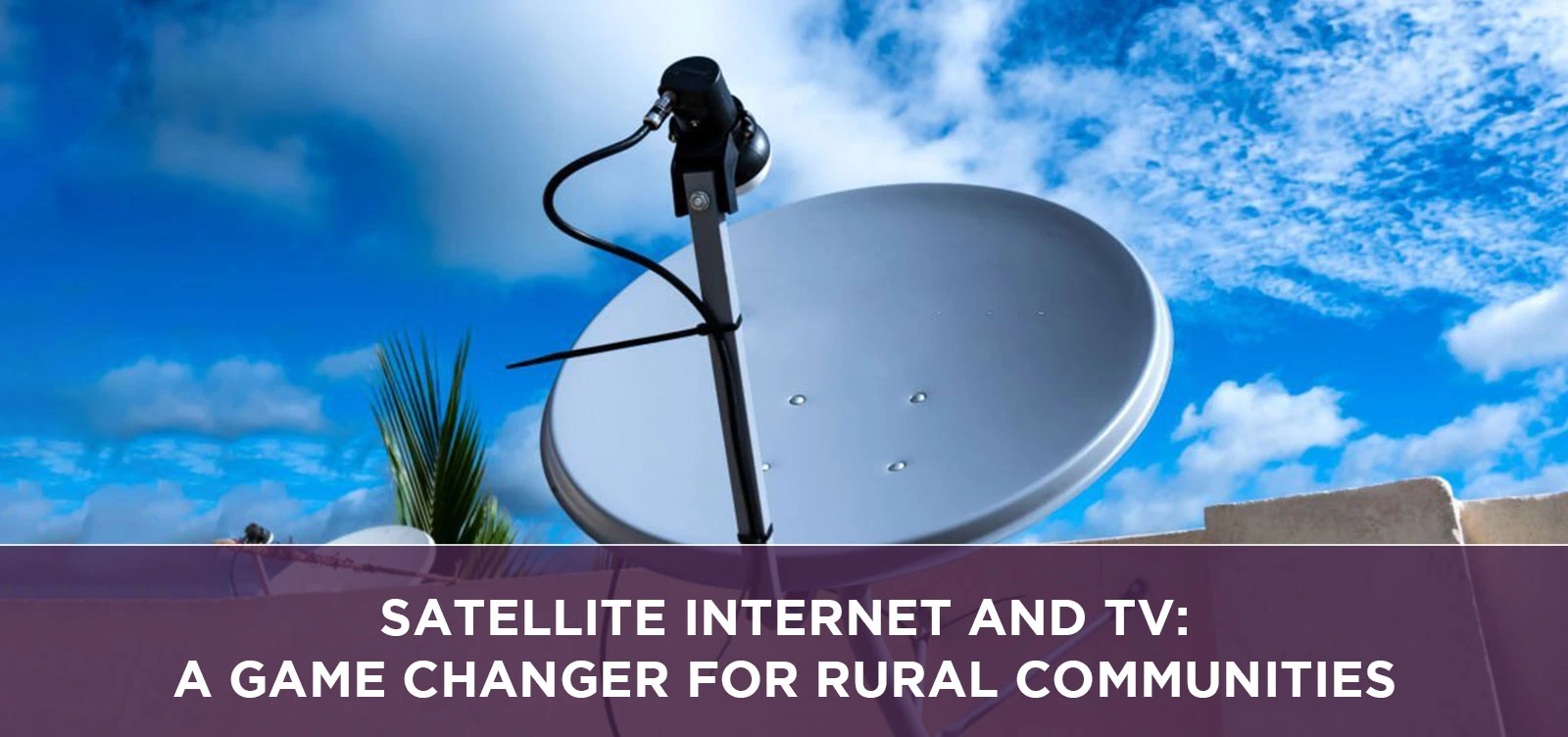
Satellite internet and TV are revolutionizing connectivity for rural communities, bridging the digital divide and unlocking unprecedented opportunities. This comprehensive guide explores how these technologies are transforming remote living, offering reliable access where traditional infrastructure falls short.
The Rural Connectivity Challenge
For decades, rural communities have grappled with a persistent digital divide. Limited access to reliable, high-speed internet and comprehensive television services has historically isolated these areas, hindering economic development, educational attainment, and access to essential services. Traditional terrestrial infrastructure, such as fiber optic cables and extensive cellular networks, often proves prohibitively expensive and logistically challenging to deploy across vast, sparsely populated landscapes. This disparity creates significant disadvantages for residents, impacting everything from their ability to participate in the modern economy to their access to timely information and entertainment. Satellite technology, once a niche solution, is now emerging as a powerful and transformative force, fundamentally altering the connectivity landscape for millions in underserved regions.
Understanding Satellite Internet
Satellite internet represents a significant leap forward in providing broadband access to areas where wired connections are unavailable or unreliable. Unlike traditional internet services that rely on physical cables laid underground or strung on poles, satellite internet utilizes a network of orbiting satellites to transmit data between a ground station and a user's home or business. This method bypasses the need for extensive physical infrastructure, making it a viable option for even the most remote locations.
How Satellite Internet Works
The process of satellite internet connectivity involves several key components working in concert. First, a satellite dish, installed at the user's location, acts as the primary point of contact. This dish communicates with a geostationary satellite (or a constellation of satellites in the case of LEO services) positioned in orbit thousands of miles above the Earth. The satellite, in turn, relays signals to and from a ground station, which is connected to the broader internet backbone. When a user requests information, such as visiting a website, the request travels from their computer, through the satellite dish, up to the orbiting satellite, down to the ground station, and then out to the internet. The response follows the reverse path. This complex, multi-step transmission is what gives satellite internet its characteristic latency, though advancements are rapidly mitigating this issue.
Types of Satellite Internet Services
Historically, satellite internet has been dominated by Geostationary (GEO) satellite services. These satellites orbit at an altitude of approximately 22,000 miles, providing a wide coverage area from a single satellite. While this broad coverage is advantageous, the extreme distance results in higher latency (the delay in data transmission). In recent years, a new generation of Low Earth Orbit (LEO) satellite internet services has emerged, such as Starlink. LEO satellites orbit much closer to Earth, typically between 300 to 1,200 miles. This proximity significantly reduces latency, offering speeds and responsiveness that are much closer to terrestrial broadband. The transition to LEO technology is a major factor in satellite internet's growing viability as a game-changer for rural areas.
The Evolution of Satellite Television
Satellite television has been a staple for rural viewers for decades, offering a way to access a wide array of channels without the need for cable lines. Early satellite TV systems often involved large, manually-aimed dishes and a limited selection of programming. However, the technology has evolved dramatically, offering higher quality, more diverse content, and greater convenience.
Traditional vs. Modern Satellite TV
Traditional satellite TV often required significant technical expertise for installation and alignment. The equipment could be bulky, and channel packages were often less flexible. Modern satellite TV systems, on the other hand, feature smaller, more efficient dishes that are often professionally installed. They offer High Definition (HD) and even 4K programming, advanced DVR capabilities, and a vast selection of channel packages tailored to various interests. Providers have also improved their customer service and technical support, making the experience much more user-friendly. The integration of smart TV apps and on-demand content further blurs the lines between traditional broadcast and modern streaming, all delivered via satellite.
Benefits of Satellite TV for Rural Areas
For rural communities, satellite TV offers a direct solution to the lack of terrestrial cable infrastructure. It provides access to national and international news, diverse entertainment options, and educational programming that might otherwise be inaccessible. This is particularly crucial for areas where local broadcast signals are weak or non-existent. Furthermore, satellite TV can be bundled with satellite internet services, offering a more comprehensive connectivity solution from a single provider, simplifying billing and installation for residents.
The Game-Changer Synergy: Internet and TV Combined
The true power of satellite technology for rural communities lies in the synergistic combination of high-speed internet and comprehensive television services. This dual offering addresses multiple needs, transforming the quality of life and economic prospects for residents. It's not just about having access; it's about having *quality* access that opens up a world of possibilities.
Access to Information and Education
Reliable satellite internet is a cornerstone of modern education. Students in rural areas can now access online learning platforms, participate in virtual classrooms, and conduct research with the same ease as their urban counterparts. This democratizes education, breaking down geographical barriers. For lifelong learners, satellite internet provides access to a wealth of online courses, educational documentaries, and digital libraries. Satellite TV also contributes by offering educational channels and programming that supplement formal learning. In 2025-26, the demand for remote learning resources continues to surge, making satellite solutions indispensable for educational equity.
Economic Opportunities and Remote Work
The rise of remote work has been significantly amplified by the availability of robust satellite internet. Rural residents are no longer tethered to local job markets. They can now apply for and perform jobs that are based anywhere in the world, provided they have a stable internet connection. This opens up new avenues for employment, boosts local economies, and helps retain talent within rural communities. Small businesses in these areas can also leverage satellite internet to establish an online presence, reach wider customer bases, and utilize cloud-based business tools. E-commerce, digital marketing, and online service provision are now within reach. The trend of digital nomadism, further fueled by LEO satellite internet, is also enabling individuals to live in rural areas while working remotely.
Healthcare and Telemedicine
Telemedicine has emerged as a critical service, especially for rural populations who often face long travel times to reach healthcare facilities. Satellite internet enables secure and reliable video consultations with doctors and specialists, remote patient monitoring, and access to online health resources. This is particularly vital for managing chronic conditions and for emergency situations where immediate medical advice is needed. Satellite TV can also provide access to health and wellness programs. By 2025-26, the integration of AI-powered diagnostic tools delivered over high-speed internet will further enhance the capabilities of rural telemedicine, making it a truly transformative force in healthcare access.
Enhanced Entertainment and Social Connection
Beyond practical applications, satellite internet and TV significantly enhance the quality of life by providing access to a world of entertainment and social connection. Residents can stream movies and TV shows in high definition, play online multiplayer games, and stay connected with friends and family through social media and video calls. Satellite TV offers a diverse range of channels, catering to every interest, from sports and news to movies and children's programming. This combats the isolation that can often accompany rural living, fostering a greater sense of community and connection to the wider world.
Overcoming the Challenges of Satellite Deployment
While the benefits are clear, the adoption of satellite internet and TV in rural areas is not without its challenges. Understanding these hurdles and their solutions is key to successful implementation.
The Installation Process
Installing a satellite dish requires a clear, unobstructed view of the sky, typically towards the south (in the Northern Hemisphere). This means avoiding tall trees, buildings, or other obstructions. For many rural homes, finding such a location is feasible. Professional installation is often recommended, especially for internet services, to ensure optimal alignment and signal strength. Providers typically offer professional installation services, which can be included in the initial cost or a monthly fee. In 2025-26, user-friendly, self-installation kits are also becoming more common for simpler TV setups, but professional help remains the gold standard for internet performance.
Cost Considerations
The initial cost of equipment (dish, modem, receiver) and installation can be a barrier for some rural households. However, many providers offer financing options, lease programs, or bundled deals that can make the upfront investment more manageable. Monthly service fees for satellite internet can sometimes be higher than for comparable terrestrial services, reflecting the advanced technology and infrastructure involved. Data caps were a significant concern in the past, but many modern satellite internet plans, especially LEO services, offer unlimited or very high data allowances. Government subsidies and rural broadband initiatives, which are increasingly prevalent in 2025-26, also play a crucial role in making these services affordable for low-income households.
Performance and Latency
Historically, GEO satellite internet was known for its high latency, which could make real-time applications like online gaming, video conferencing, and VoIP calls challenging. However, the advent of LEO satellite internet has dramatically reduced latency, bringing it down to levels comparable to or even better than some terrestrial broadband options. Speeds offered by LEO services in 2025-26 are often in the hundreds of megabits per second, enabling smooth streaming, fast downloads, and responsive online experiences. While occasional weather-related interference (rain fade) can occur, it is becoming less of an issue with improved technology and system redundancy.
Choosing the Right Provider
Selecting the best satellite internet and TV provider requires careful consideration of several factors. Potential users should research:
- Coverage: Ensure the provider offers service in their specific rural location.
- Speeds and Data Allowances: Match the plan to individual or household needs. For LEO services, unlimited data is increasingly the norm.
- Equipment Costs: Understand the upfront investment and any rental fees.
- Monthly Fees: Compare pricing, including any introductory offers or long-term contracts.
- Customer Service and Support: Read reviews and assess the provider's reputation for support, especially for technical issues.
- Bundling Options: Explore if bundling internet and TV services offers cost savings.
In 2025-26, the competitive landscape for satellite internet, particularly with LEO providers, is rapidly evolving, offering more choices and better value propositions for rural consumers.
The 2025-26 Landscape: Innovations and Trends
The satellite technology sector is experiencing a period of unprecedented innovation, with significant advancements poised to further solidify its role as a game-changer for rural communities in the 2025-26 timeframe.
Low Earth Orbit (LEO) Satellites
LEO constellations, such as SpaceX's Starlink and Amazon's Project Kuiper, are revolutionizing satellite internet. By deploying thousands of smaller satellites in orbits much closer to Earth, these systems achieve significantly lower latency and higher speeds. This makes them a compelling alternative to traditional GEO satellite internet and, in many cases, a viable competitor to terrestrial broadband. In 2025-26, LEO services are expected to achieve near-ubiquitous coverage in many developed nations, providing speeds that support high-definition streaming, online gaming, and robust remote work capabilities. The ongoing expansion and optimization of these LEO networks are central to the future of rural connectivity.
5G Integration with Satellite
The convergence of 5G wireless technology and satellite networks is another significant trend. Satellite backhaul is becoming increasingly important for extending 5G coverage to remote and underserved areas where building terrestrial fiber infrastructure is impractical. This means that rural communities can benefit from the high speeds and low latency of 5G, even if their connection to the core network is via satellite. This integration promises to unlock new applications and services, from enhanced mobile broadband to the Internet of Things (IoT) in rural settings. By 2025-26, pilot programs and early deployments of satellite-integrated 5G are expected to demonstrate its potential.
Advancements in TV Technology
Satellite TV providers are also continuously innovating. Beyond higher resolution (4K/8K) and improved DVR capabilities, there's a growing integration of streaming apps and on-demand content directly into satellite TV platforms. This allows users to access a vast library of entertainment without needing multiple subscriptions or devices. Furthermore, satellite providers are exploring more flexible packaging and personalized content delivery. The ability to bundle satellite TV with high-speed satellite internet offers a streamlined and cost-effective entertainment and connectivity solution for rural households in 2025-26.
Government Initiatives and Subsidies
Recognizing the critical importance of broadband access, governments worldwide are investing heavily in rural connectivity initiatives. In 2025-26, programs like the FCC's Rural Digital Opportunity Fund (RDOF) in the US, and similar initiatives in Europe, Canada, and Australia, are providing significant subsidies to satellite providers and other broadband deployers to expand their services to unserved and underserved areas. These subsidies help offset the high costs of infrastructure deployment, making satellite internet and TV more affordable and accessible for rural residents. Consumers can often find information on these programs through their local government or by inquiring directly with satellite providers.
Real-World Impact: Case Studies and Statistics
The transformative impact of satellite internet and TV on rural communities is not theoretical; it's evident in countless real-world scenarios. Consider the agricultural sector, where precision farming techniques rely heavily on real-time data. Satellite internet enables farmers to access weather forecasts, soil sensor data, and market information instantly, optimizing crop yields and resource management. In 2025, studies show that farms utilizing advanced connectivity technologies, often enabled by satellite, report an average increase in productivity of 15-20% compared to those without.
In education, a small school district in rural Montana, previously reliant on dial-up or limited DSL, transitioned to LEO satellite internet in late 2024. By early 2025, teachers reported a significant improvement in student engagement, with access to interactive learning tools and vast online resources. The district noted a 25% increase in students participating in advanced placement online courses. Similarly, in remote parts of Appalachia, telemedicine services facilitated by satellite internet have reduced patient travel time for specialist appointments by an average of 60 miles, improving health outcomes and reducing patient burden. Statistics from 2025 indicate that rural areas with reliable satellite broadband see a 10% higher rate of small business creation compared to areas without.
The entertainment aspect is also crucial. A family in a remote Alaskan village, previously limited to a few local broadcast channels and slow internet, now enjoys HD streaming and video calls with relatives in the lower 48 states, thanks to satellite internet and TV. This connection combats isolation and fosters stronger family ties. The demand for satellite services in such regions continues to grow, with projections for 2026 indicating a 30% increase in satellite internet subscriptions in areas previously considered "hard to reach."
The Future Outlook for Rural Connectivity
The trajectory for satellite internet and TV in rural communities is overwhelmingly positive. The ongoing advancements in LEO satellite technology, coupled with the integration of 5G and continued government support, are creating a future where geographical isolation is no longer a barrier to essential digital services. By 2027, it is projected that over 95% of rural households in developed nations will have access to broadband speeds of at least 100 Mbps, with a significant portion of this access being satellite-based. This will not only bridge the digital divide but also foster greater economic resilience, educational equity, and social inclusion in these vital communities.
The competition among satellite providers, particularly LEO operators, is driving down costs and improving service quality, making it an increasingly attractive and accessible option. Furthermore, the development of hybrid solutions, which may combine satellite with other technologies like fixed wireless or even cellular, will offer even more robust and tailored connectivity options. The focus will shift from simply providing access to ensuring high-quality, reliable, and affordable services that empower rural residents to thrive in the digital age. The era of limited connectivity for rural areas is rapidly drawing to a close, replaced by an era of opportunity powered by the innovation of satellite technology.
Conclusion
Satellite internet and TV have definitively transitioned from niche solutions to indispensable tools, acting as true game-changers for rural communities. They are dismantling the barriers of distance and infrastructure limitations, providing access to high-speed internet and a world of entertainment and information. The rapid evolution of LEO satellite technology, coupled with ongoing advancements in TV delivery and the critical support of government initiatives, ensures that these services will continue to improve in speed, reliability, and affordability through 2025-26 and beyond. For rural residents, embracing these technologies means unlocking opportunities for education, remote work, improved healthcare via telemedicine, and enhanced social connections. The digital divide is shrinking, and satellite technology is at the forefront of this transformative movement, empowering rural America and communities worldwide to participate fully in the modern digital landscape. It's time to explore the satellite options available and connect to a brighter future.