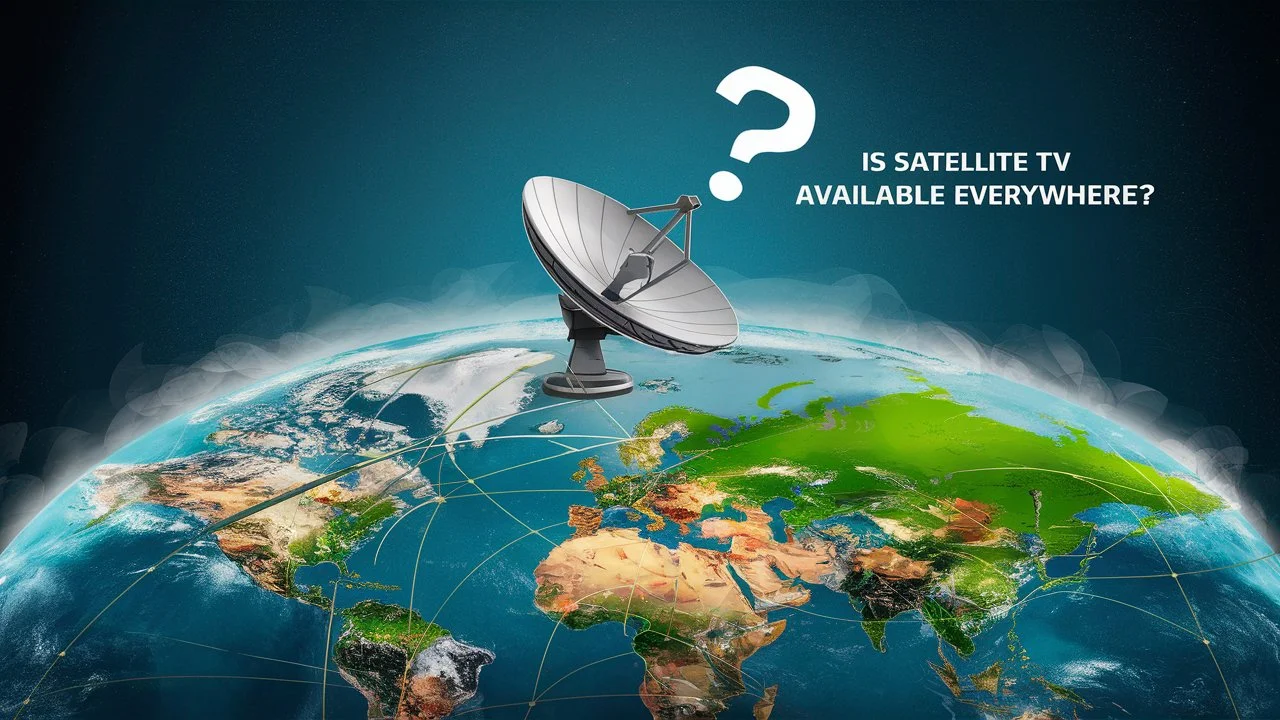
Satellite TV offers a unique solution for entertainment, especially in areas underserved by traditional cable or fiber. But the burning question remains: is satellite TV truly available everywhere? This comprehensive guide delves into the nuances of satellite TV accessibility, its limitations, and what you can expect in 2025-26.
Understanding Satellite TV Availability
The question "Is satellite TV available everywhere?" is a common one, particularly for individuals residing in rural, remote, or geographically challenging areas where traditional terrestrial television signals struggle to penetrate. Satellite television, by its very nature, leverages orbiting satellites to transmit signals directly to a dish installed at a subscriber's home. This technology promises a broad reach, but the reality of its availability is more nuanced than a simple yes or no. Factors such as clear skies, regulatory permissions, and the presence of service providers play critical roles. In 2025-26, while satellite TV remains a vital option for many, understanding its specific limitations and requirements is essential for anyone considering it as their primary entertainment source.
How Satellite TV Works: The Basics
To understand the availability of satellite TV, it's crucial to grasp its fundamental operational principles. Satellite television systems rely on a network of geostationary satellites positioned approximately 22,000 miles above the Earth's equator. These satellites are strategically placed to remain in a fixed position relative to a specific point on the ground, allowing for continuous signal transmission.
The process begins at a ground-based uplink station, where television signals are encoded, compressed, and transmitted upwards to the satellite. The satellite then amplifies these signals and beams them back down to Earth. Consumers receive these signals using a parabolic dish antenna, commonly known as a satellite dish, which is precisely aligned to capture the signal from the orbiting satellite. This dish is connected via coaxial cable to a satellite receiver (set-top box) inside the home, which decodes the signal and displays the channels on a television.
The key advantage of this system is its ability to bypass terrestrial infrastructure like cables and broadcast towers. This makes it an attractive option for areas where laying cable is prohibitively expensive or physically impossible. However, the effectiveness of this transmission is directly dependent on an unobstructed path between the satellite dish and the satellite itself.
Global Coverage: The Promise and Reality
The promise of satellite TV is vast global coverage. Unlike terrestrial broadcasting, which is limited by the range of broadcast towers and terrain, satellite signals can theoretically reach almost any point on the planet where a clear line of sight to the sky exists. This has been a significant boon for expanding access to television programming in underserved regions.
In practice, however, "global coverage" is a complex term. Satellite TV providers typically operate their services within specific geographical regions or continents. For instance, a provider based in North America will use satellites that cover North America, and their service will not be directly accessible in Europe or Asia without a different satellite and a different provider. The footprint of a satellite's broadcast beam determines the geographical area it can serve.
Furthermore, even within a provider's designated service area, actual availability is contingent on several factors. For example, while a satellite might beam signals over a vast expanse of land, local regulations, the presence of tall buildings, dense forests, or mountains can obstruct the signal. As of 2025-26, while the technology enables near-global reach in principle, practical deployment and consumer access are constrained by these real-world limitations. Major providers like DirecTV, Dish Network (in the US), Sky (in Europe), and Bell TV (in Canada) have extensive coverage within their respective markets, but this does not translate to universal availability across all countries or even all regions within a single country.
Key Factors Affecting Satellite TV Availability
The question of whether satellite TV is available everywhere hinges on a confluence of technical, geographical, regulatory, and logistical factors. Understanding these elements is crucial for assessing accessibility at any given location.
The Crucial Line of Sight
This is arguably the most significant technical requirement for satellite TV. A satellite dish needs an unobstructed view of the sky in the direction of the geostationary satellite it's communicating with. This means no trees, buildings, hills, or any other physical obstructions should be between the dish and the satellite.
For most residential installations, this translates to needing a clear view towards the southern sky (in the Northern Hemisphere) or northern sky (in the Southern Hemisphere), where most geostationary satellites are positioned. Even a small obstruction can weaken or completely block the signal, leading to pixelation, freezing, or complete loss of service. This is why installers often conduct a site survey to determine the optimal placement for the dish. In densely forested areas or locations surrounded by tall structures, achieving a consistent line of sight can be challenging, potentially rendering satellite TV unavailable or unreliable.
Geographical Limitations and Obstructions
Beyond the immediate line of sight, broader geographical features can also impact satellite TV availability. Mountainous regions, for instance, can create significant signal blockages over large areas. Similarly, very remote islands or polar regions might be outside the primary coverage footprint of most commercial satellites.
While satellite technology is designed for broad coverage, the specific satellites used by providers have defined "footprints"—areas where their signal is strongest. If a location falls outside this primary footprint, the signal might be too weak to receive reliably, even with a properly aimed dish. In 2025-26, advancements in satellite technology are increasing signal strength and narrowing beamwidths, allowing for more targeted and robust coverage, but these geographical limitations still persist for many areas.
Regulatory and Legal Hurdles
The availability of satellite TV is not solely a technical matter; it's also governed by national and local regulations. Governments control the allocation of orbital slots and the licensing of satellite broadcasting services within their territories. A satellite TV provider must obtain the necessary permits and licenses to operate and broadcast within a specific country.
In some countries, foreign satellite services may be restricted or prohibited to protect domestic media industries or for political reasons. Additionally, there can be local ordinances regarding the installation of satellite dishes, such as aesthetic restrictions or building codes, which could indirectly affect availability by making installation difficult or impossible. For example, some apartment complexes or historical districts might have strict rules about external fixtures.
Infrastructure and Installation Requirements
While satellite TV is often chosen for its lack of reliance on ground-based infrastructure, it still requires some on-site setup. A clear, unobstructed location for the satellite dish is paramount, along with a suitable mounting surface (wall, roof, or ground mount). The dish must be professionally installed and precisely aligned with the satellite.
The availability of qualified installers is also a factor. In extremely remote or sparsely populated areas, it might be difficult to find technicians who can service the location. The cost of installation can also be a barrier. While providers often offer installation packages, the price can vary significantly based on the complexity of the installation and the distance from service hubs. For consumers in areas with limited installer availability, this can effectively mean satellite TV is not a viable option, even if the signal technically reaches their location.
Provider-Specific Coverage Maps
The most direct way to determine satellite TV availability is to consult the coverage maps provided by satellite TV providers. These maps are crucial resources for potential customers. They typically show the strength of the satellite signal across different geographical regions.
Major providers like DirecTV, Dish Network, Sky, and others publish these maps on their websites. They often use color-coding to indicate signal strength, with darker or warmer colors representing stronger signals and lighter or cooler colors indicating weaker signals. A location within a strong signal area is highly likely to receive reliable service, while a location in a weak signal area might experience intermittent issues or require a larger dish and more specialized equipment. As of 2025-26, these maps are more detailed than ever, often allowing users to input their exact address to check for serviceability.
| Factor | Impact on Availability | 2025-26 Considerations |
|---|---|---|
| Line of Sight | Requires clear, unobstructed view of the sky towards the satellite. | Consistent challenge in urban or heavily forested areas. |
| Geographical Location | Can be outside satellite footprint or affected by terrain (mountains, etc.). | Advancements in satellite beam technology are improving reach. |
| Regulatory Approval | Provider must be licensed to operate in the country/region. | Varies significantly by nation; some countries restrict foreign services. |
| Installation Infrastructure | Need for suitable mounting and access for installers. | Installer availability can be limited in very remote areas. |
| Provider's Service Area | Specific satellites cover specific regions. | Major providers focus on core markets, but global options are expanding. |
Satellite TV vs. Other Connectivity Options
When considering the availability of satellite TV, it's helpful to compare it against other common methods of receiving television content. Each technology has its own strengths, weaknesses, and geographical limitations.
Satellite TV vs. Cable TV
Cable TV relies on a physical network of coaxial cables or fiber optic lines laid underground or on utility poles. Its availability is directly tied to the presence of this infrastructure.
- Availability: Cable TV is widely available in urban and suburban areas where infrastructure has been established. It is generally not available in rural or very remote locations due to the high cost of extending the cable network.
- Signal Quality: Cable TV typically offers a very stable and high-quality signal, less susceptible to weather interference than satellite.
- Channel Selection: Both can offer a wide range of channels, though specific packages vary by provider.
- Installation: Requires a connection point into the home from the existing cable network.
In 2025-26, cable penetration remains strong in developed areas, but its expansion into new territories is slow. Satellite TV, therefore, serves as the primary alternative for areas without cable.
Satellite TV vs. Fiber Optic
Fiber optic internet and TV services use thin strands of glass to transmit data as light signals. This technology offers the highest speeds and reliability for internet and can also deliver television services.
- Availability: Fiber optic networks are still being deployed and are most common in densely populated areas. Availability is significantly more limited than cable, and even more so than satellite in terms of sheer geographical reach.
- Signal Quality: Extremely high quality, robust, and resistant to interference.
- Speed: Offers the fastest internet speeds available.
- Installation: Requires a direct fiber optic connection to the home.
While fiber offers superior performance, its widespread availability is still a long-term goal. Satellite TV remains the go-to solution for many areas where fiber is not yet present.
Satellite TV vs. Terrestrial Broadcast
Terrestrial broadcast television (over-the-air or OTA) uses radio waves transmitted from local broadcast towers. Consumers receive these signals using an antenna.
- Availability: Availability depends on proximity to broadcast towers and the presence of clear channels. It's generally available in areas with good reception from local stations.
- Channel Selection: Limited to local broadcast channels (e.g., ABC, CBS, NBC, Fox, PBS in the US), though digital broadcasting has increased the number of subchannels.
- Signal Quality: Can be excellent but is highly susceptible to weather, terrain, and distance from the tower.
- Cost: Once an antenna is purchased, receiving OTA channels is free.
For many, OTA is a supplementary service. Satellite TV offers a much broader selection of national and international channels, making it a more comprehensive entertainment solution where OTA is insufficient.
Satellite TV vs. Streaming Services
Streaming services (like Netflix, Hulu, Disney+, etc.) require a reliable internet connection. They offer on-demand content and live TV options.
- Availability: Dependent on internet access. If you have a stable internet connection, streaming is available.
- Content: Vast libraries of on-demand content, plus live TV channels for some services.
- Flexibility: Accessible on various devices (smart TVs, computers, tablets, phones).
- Cost: Subscription-based, with costs adding up for multiple services.
This is where the availability of satellite TV becomes particularly relevant. In areas with poor or no broadband internet, streaming is not a viable option. Satellite internet is an alternative, but its performance can be inconsistent. Therefore, for many in these situations, satellite TV remains the most practical way to access a wide array of entertainment channels. As of 2025-26, the digital divide means that for many, satellite TV is the primary or only option for comprehensive channel access.
The Synergy of Satellite Internet and TV
It's worth noting the growing synergy between satellite internet and satellite TV. For individuals in remote areas who lack terrestrial broadband, satellite internet has become a crucial enabler for modern digital life, including streaming. However, satellite internet, while improving, can still face challenges like latency and data caps.
In situations where satellite internet is available but not ideal for extensive streaming, or where it's unavailable altogether, satellite TV provides a dedicated, often more stable, solution for linear television programming. Some providers even offer bundled packages that include both satellite TV and satellite internet services, streamlining the setup and billing process for customers in underserved regions. This integrated approach highlights how satellite technology is adapting to meet the diverse connectivity needs of its user base in 2025-26.
Debunking Common Misconceptions
Several common misconceptions surround satellite TV availability and performance. Addressing these can provide a clearer picture for potential users.
-
Misconception: Satellite TV is unavailable in cities.
While urban environments can present challenges due to tall buildings and dense housing, satellite TV is often available in cities. The primary issue is finding a clear line of sight, which might require careful dish placement (e.g., on a balcony, rooftop, or specific side of a building). Providers do serve urban areas.
-
Misconception: Satellite TV is always affected by bad weather.
While severe weather like heavy rain, snow, or ice storms can temporarily degrade satellite TV signals (known as "rain fade"), modern systems are designed to mitigate this. The impact is often less severe than perceived, and signal recovery is usually quick once the weather clears. Providers often use multiple satellites or advanced signal processing to minimize these disruptions.
-
Misconception: Satellite TV requires a constant, fast internet connection.
This is incorrect for traditional satellite TV. The television signal is broadcast directly from the satellite and decoded by the receiver. While some interactive features or on-demand content might require an internet connection (often a separate satellite internet service), the core channel reception does not.
-
Misconception: Satellite dishes are difficult to install.
While precise alignment is critical, professional installers are trained to mount and aim dishes efficiently. For most standard installations, it's a straightforward process. Difficulties arise primarily from challenging mounting locations or extreme obstructions.
The Future of Satellite TV in 2025-26 and Beyond
The landscape of television delivery is constantly evolving, with streaming services gaining significant traction. However, satellite TV is far from obsolete. In fact, its role is adapting.
For 2025-26, satellite TV continues to be a critical service for millions worldwide, especially in regions lacking robust terrestrial infrastructure. Providers are investing in more powerful satellites and advanced technologies to improve signal strength, reduce rain fade, and offer more sophisticated features. The development of low-earth orbit (LEO) satellite constellations, like Starlink (primarily for internet, but with potential for TV services in the future), is also changing the satellite landscape, promising lower latency and potentially broader accessibility.
While some may see satellite TV as a legacy technology, its ability to deliver a wide array of channels directly to virtually any location with a clear sky view ensures its continued relevance. For many, it remains the most reliable and comprehensive option for entertainment. The focus is shifting towards hybrid solutions that integrate satellite services with internet connectivity and on-demand options, catering to a broader range of consumer needs.
How to Determine Satellite TV Availability at Your Location
Determining if satellite TV is available at your specific address is a straightforward process. Here are the steps you should take:
- Identify Major Providers: Research the primary satellite TV providers that operate in your country or region. For example, in the United States, these are typically DirecTV and Dish Network. In the UK, it's Sky. Canada has Bell TV and Shaw Direct.
- Visit Provider Websites: Navigate to the official websites of these providers. Most have a dedicated section for checking service availability.
- Use the Address Checker Tool: Look for an "Check Availability" or "Enter Your Address" tool. You will be prompted to enter your full street address, city, state/province, and zip/postal code.
- Consult Coverage Maps: If an automated tool isn't available, look for interactive coverage maps. These maps often allow you to zoom in on your area and assess signal strength. Pay attention to the legend to understand what different colors or shading represent.
- Contact Customer Service: If you are still unsure or your location is particularly remote, contact the provider's customer service directly. They can often provide the most accurate information based on their internal data and installer networks.
- Consider Installation Requirements: Even if the signal is available, ensure you have a suitable location for a satellite dish. Check for obstructions like trees or buildings that might interfere with the line of sight.
By following these steps, you can quickly ascertain whether satellite TV is a viable option for your home.
Conclusion: Is Satellite TV Available Everywhere?
In conclusion, the answer to "Is satellite TV available everywhere?" is a nuanced "almost, but with significant caveats." While the technology itself has the potential for near-global reach, practical availability is constrained by several critical factors. These include the absolute necessity of a clear line of sight to the satellite, the specific coverage footprint of the provider's satellites, regulatory approvals within a given country, and the logistical feasibility of installation.
As of 2025-26, satellite TV remains an indispensable service for millions in rural and remote areas where terrestrial alternatives are absent. It offers a comprehensive entertainment package that streaming services cannot match without reliable broadband. However, it is not a universal plug-and-play solution. Potential users must verify coverage with specific providers, assess their location for obstructions, and understand any local regulations. For those who meet the technical and logistical requirements, satellite TV continues to be a robust and accessible option for staying connected to a world of television programming.