Navigating the vast landscape of satellite internet providers for 2025-26 can feel like charting an unknown galaxy. This guide cuts through the cosmic dust to reveal the top contenders, helping you find the fastest, most reliable connection for your home or business, no matter how remote your location.
Understanding Satellite Internet in 2025-26
In the ever-expanding digital universe, reliable internet access remains a cornerstone of modern life. For millions living in rural or underserved areas, traditional broadband options like fiber or cable are often out of reach. This is where satellite internet shines, beaming connectivity directly from space to your doorstep. Unlike its predecessors, which relied on massive geostationary satellites in orbit hundreds of miles above Earth, the satellite internet landscape of 2025-26 is being revolutionized by Low Earth Orbit (LEO) constellations. These constellations, comprised of thousands of smaller satellites orbiting much closer to our planet, offer significantly lower latency and higher speeds, bridging the gap between satellite and terrestrial broadband performance.
The shift towards LEO technology has been a game-changer. Older geostationary satellite services, while providing coverage to vast areas, were plagued by high latency – the delay between sending a command and receiving a response. This made real-time activities like online gaming, video conferencing, and even smooth web browsing a challenge. LEO satellites, orbiting at altitudes of just a few hundred miles, drastically reduce this delay, making satellite internet a viable option for a much wider range of applications. As we enter 2025-26, the competition in this sector is fiercer than ever, with established players upgrading their offerings and new ventures launching ambitious projects, all vying to capture the market share of those seeking connectivity beyond the reach of traditional infrastructure.
Key Factors for Choosing a Satellite Internet Provider
Selecting the right satellite internet provider requires a careful assessment of several critical factors. The "best" provider is not a one-size-fits-all solution; it depends heavily on your individual needs, location, and budget. Understanding these elements will empower you to make an informed decision that aligns with your connectivity goals.
Speed and Performance
This is often the primary concern for consumers. Satellite internet speeds have seen dramatic improvements, especially with the advent of LEO services. Look for advertised download and upload speeds. While advertised speeds are theoretical maximums, consistent performance is what truly matters. Consider your typical internet usage: streaming high-definition video, online gaming, and large file downloads require higher speeds than basic web browsing and email.
Latency
Latency, measured in milliseconds (ms), is the delay in data transmission. For geostationary satellite internet, latency can be as high as 600ms or more, making it unsuitable for real-time applications. LEO satellite services have significantly reduced this, often achieving latencies below 50ms, comparable to many terrestrial broadband services. Low latency is crucial for video calls, online gaming, and any activity requiring immediate feedback.
Data Caps and Throttling
Historically, satellite internet has been characterized by strict data caps and aggressive throttling once those caps are reached. This means providers limit the amount of data you can use per month. Exceeding your data allowance can result in significantly reduced speeds or additional charges. In 2025-26, while some providers still enforce caps, many are moving towards more generous data allowances or even unlimited data plans, especially within their LEO offerings. It's vital to understand the data policy before signing up.
Cost and Contracts
Satellite internet can be more expensive than terrestrial options. Consider not only the monthly service fee but also the cost of equipment (dish, modem) and installation. Many providers offer equipment leases or purchase options. Pay close attention to contract lengths. Shorter contracts offer more flexibility, while longer contracts might come with lower monthly rates but tie you in for an extended period. Watch out for hidden fees or promotional pricing that expires after a set term.
Availability and Coverage
This is perhaps the most defining characteristic of satellite internet. Its primary advantage is its availability in virtually any location. However, specific providers may have different coverage maps and service availability based on your exact geographic coordinates. Some LEO services, due to their rapidly expanding constellations, might still be in the process of rolling out full coverage in certain regions.
Customer Service and Support
When you encounter issues, prompt and effective customer support is invaluable. Research customer reviews and ratings for each provider's support services. Consider factors like the availability of technical support (24/7 is ideal), ease of contact, and problem resolution times.
Equipment and Installation
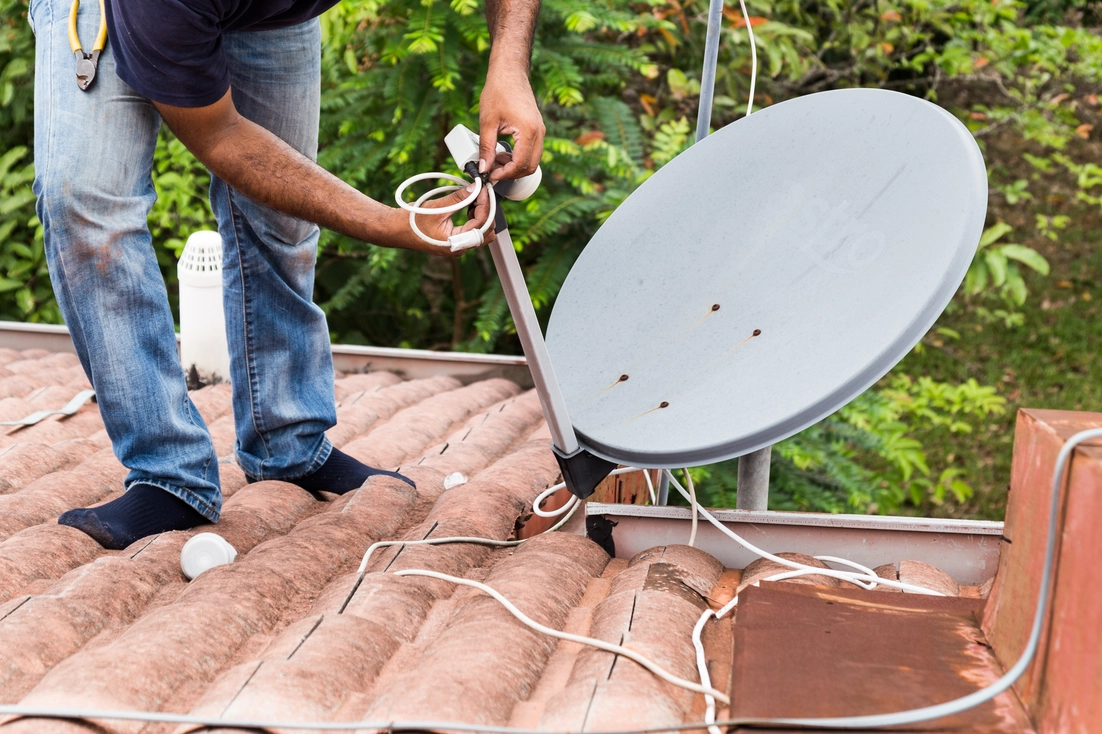
Satellite internet requires a specialized dish antenna and modem. The installation process typically involves mounting the dish on your roof or a pole with a clear view of the sky. Some providers offer professional installation, while others may provide self-installation kits. Understand the installation requirements and costs associated with each provider.
Top Satellite Internet Providers for 2025-26: The Space Race Leaders
The satellite internet market is dynamic, with innovation and competition driving rapid advancements. As of 2025-26, a few key players are leading the charge, offering distinct advantages and catering to different user needs. Here's an in-depth look at the top contenders:
Starlink by SpaceX
Starlink, SpaceX's ambitious satellite internet constellation, has rapidly become a dominant force in the LEO satellite internet market. Its primary advantage lies in its cutting-edge technology, utilizing a vast network of thousands of satellites in low Earth orbit. This design inherently provides significantly lower latency and higher potential speeds compared to traditional geostationary satellite providers.
Key Features and Offerings (2025-26):
- Speeds: Starlink typically offers download speeds ranging from 100 Mbps to over 200 Mbps, with upload speeds often between 10 Mbps and 20 Mbps. These speeds are highly competitive and suitable for most demanding online activities, including HD/4K streaming, online gaming, and large file transfers.
- Latency: Latency is a major strength, often falling between 20-50 ms, making it comparable to many terrestrial broadband services. This low latency is crucial for real-time applications.
- Data: Starlink's standard plans generally offer unlimited standard data. However, they have introduced a "Priority" data tier for users who require guaranteed speeds for more intensive tasks. Standard data may experience deprioritization during peak usage times in congested areas, a policy that has evolved to manage network load effectively.
- Equipment: The standard Starlink kit includes a self-installable phased-array antenna (often referred to as a "dishy"), a Wi-Fi router, and necessary cables. The setup process is designed to be user-friendly, requiring a clear view of the sky.
- Availability: Starlink has rapidly expanded its global coverage. While it aims for near-universal availability, some regions might still be in the rollout phase or have waitlists. It's essential to check their website for real-time availability in your specific location.
- Cost: The upfront cost for the Starlink hardware can be significant, typically ranging from $499 to $599, though this can vary by region and promotions. Monthly service fees are generally competitive within the LEO satellite internet space, often around $90-$120 for residential service, with business plans costing more.
- Use Cases: Ideal for rural homes, remote businesses, RV users, and anyone requiring high-speed, low-latency internet where traditional options are unavailable.
Pros: High speeds, low latency, unlimited standard data, user-friendly setup, global coverage expansion.
Cons: Higher upfront hardware cost, potential for standard data deprioritization during peak hours, requires a clear view of the sky.
Viasat
Viasat is a long-standing provider of satellite internet, primarily utilizing geostationary satellites. While historically known for higher latency compared to LEO services, Viasat has been investing in upgrading its satellite technology and expanding its capacity, aiming to offer more competitive plans, especially in areas where LEO options are not yet fully established or preferred.
Key Features and Offerings (2025-26):
- Speeds: Viasat offers a range of plans with advertised download speeds varying significantly by plan and location, often from 25 Mbps up to 100 Mbps or more for their premium plans. Upload speeds are typically lower, often in the 2-5 Mbps range.
- Latency: As a geostationary provider, Viasat's latency is inherently higher, typically ranging from 400-600 ms. This makes it less ideal for real-time applications like online gaming or frequent video conferencing compared to LEO services.
- Data: Viasat plans often come with data allowances, which can range from 10 GB to 100 GB or more, depending on the plan. Once the high-speed data allowance is used, speeds are typically reduced to very slow levels (e.g., 1-3 Mbps) for the remainder of the billing cycle. Some plans may offer unlimited data with a "soft cap" where speeds are reduced after a certain threshold.
- Equipment: Viasat requires a professional installation of their satellite dish and modem. The equipment is typically leased from Viasat, with monthly lease fees often included in the overall service cost.
- Availability: Viasat boasts extensive coverage across North America, South America, and parts of Europe and Africa, making it a reliable option for many remote locations.
- Cost: Monthly service fees can vary widely, often starting around $70-$100 for basic plans and going up to $150-$200+ for higher-tier plans with more data. The cost of professional installation and equipment leasing needs to be factored in.
- Use Cases: Suitable for basic internet needs like web browsing, email, and standard-definition streaming in areas where LEO services are not yet available or for users who don't require low latency.
Pros: Wide geographic coverage, established provider, can be an option where LEO is not yet available.
Cons: High latency, strict data caps with significant speed reductions after exceeding limits, typically requires professional installation, potentially higher overall cost when factoring in equipment lease.
HughesNet
HughesNet is another established geostationary satellite internet provider, similar to Viasat, offering nationwide coverage. They have also been working to improve their service offerings, focusing on providing a stable connection for essential internet tasks in hard-to-reach areas. HughesNet often competes directly with Viasat in terms of target markets and service characteristics.
Key Features and Offerings (2025-26):
- Speeds: HughesNet plans generally offer download speeds up to 25 Mbps and upload speeds up to 3 Mbps. These speeds are adequate for basic internet use but can be slow for data-intensive activities.
- Latency: Like Viasat, HughesNet uses geostationary satellites, resulting in high latency, typically between 500-700 ms. This is a significant limitation for real-time online activities.
- Data: HughesNet plans come with a fixed monthly data allowance, often ranging from 10 GB to 100 GB. Once this allowance is consumed, speeds are dramatically reduced to 1-3 Mbps for the remainder of the billing cycle. They also have a "Bonus Zone" which offers extra data at specific off-peak hours, but this data is still subject to the overall plan limitations.
- Equipment: Professional installation is standard for HughesNet. The satellite dish and modem are leased from HughesNet, with associated monthly fees.
- Availability: HughesNet provides service across the contiguous United States, making it accessible in most rural and remote locations.
- Cost: Monthly costs for HughesNet typically range from $65 to $100+, depending on the data allowance and promotional offers. The equipment lease fee is usually bundled into the monthly price.
- Use Cases: Best suited for users with basic internet needs, such as checking email, browsing websites, and occasional standard-definition streaming, in areas where no other broadband options exist.
Pros: Wide availability across the US, a long-standing provider with a known presence.
Cons: Very high latency, strict data caps with severe speed throttling, slower speeds compared to LEO options, requires professional installation, equipment lease fees.
Amazon's Project Kuiper (Emerging Contender)
While not yet fully operational for consumer services as of early 2025, Amazon's Project Kuiper is a significant emerging player in the LEO satellite internet space. With substantial investment and backing from Amazon, Kuiper aims to deploy a constellation of over 3,000 satellites to provide high-speed, low-latency broadband services globally. Its development is closely watched as it has the potential to dramatically reshape the competitive landscape.
Projected Features and Offerings (Anticipated 2025-26 and beyond):
- Speeds: Amazon has indicated that Kuiper aims to deliver speeds competitive with other LEO providers, likely in the hundreds of Mbps for downloads, suitable for demanding internet applications.
- Latency: As a LEO constellation, Kuiper is expected to offer low latency, comparable to Starlink, making it suitable for real-time online activities.
- Data: Details on data caps are still emerging, but it is anticipated that Kuiper will offer generous data allowances or unlimited plans to compete effectively in the market.
- Equipment: Amazon is developing its own customer terminals and is also partnering with other companies to create a variety of user devices, potentially offering different form factors and price points.
- Availability: Kuiper's deployment is ongoing, with initial test satellites launched and plans for mass production and deployment of the full constellation. Full commercial service rollout is expected to begin in late 2025 or 2026, gradually expanding coverage.
- Cost: Pricing models are not yet finalized, but given Amazon's strategy in other markets, it's possible they will aim for competitive pricing to gain market share.
- Use Cases: Expected to serve residential, business, and enterprise customers, similar to Starlink, aiming to provide broadband to unserved and underserved areas.
Note: Project Kuiper is still in its developmental and deployment phases. Information regarding specific service plans, pricing, and availability is subject to change as the project progresses towards commercial launch.
Head-to-Head: Comparing the Leaders
To provide a clearer picture, let's compare the leading providers based on key metrics relevant to a 2025-26 user. This table simplifies complex offerings, highlighting the most critical differences.
| Feature | Starlink (SpaceX) | Viasat | HughesNet | Project Kuiper (Amazon) - Projected |
|---|---|---|---|---|
| Technology | Low Earth Orbit (LEO) | Geostationary (GEO) | Geostationary (GEO) | Low Earth Orbit (LEO) |
| Typical Download Speeds | 100-200+ Mbps | 25-100+ Mbps | Up to 25 Mbps | 100+ Mbps (projected) |
| Typical Upload Speeds | 10-20 Mbps | 2-5 Mbps | Up to 3 Mbps | 20+ Mbps (projected) |
| Typical Latency | 20-50 ms | 400-600 ms | 500-700 ms | 20-50 ms (projected) |
| Data Caps | Unlimited Standard Data (Priority tier available) | Strict caps, significant throttling after usage | Strict caps, severe throttling after usage | Likely generous/unlimited (projected) |
| Installation | Self-install (DIY) | Professional Installation Required | Professional Installation Required | Likely self-install or professional options (projected) |
| Upfront Equipment Cost | High ($499-$599+) | Leased (fee often included in monthly cost) | Leased (fee often included in monthly cost) | TBD (projected) |
| Monthly Cost (Residential) | ~$90-$120 | ~$70-$200+ | ~$65-$100+ | TBD (projected competitive) |
| Best For | High-performance needs, gaming, streaming, remote work | Basic needs in very remote areas, where LEO isn't available | Basic needs in very remote areas, where LEO isn't available | Future competitive LEO option for broad applications |
How to Choose the Right Satellite Internet Plan
With multiple providers and varying plans, selecting the perfect satellite internet package requires a strategic approach. It's not just about picking the cheapest or fastest option; it's about finding the best fit for your specific circumstances. Here’s a step-by-step guide to help you navigate the process:
1. Assess Your Internet Needs
Begin by understanding how you and your household use the internet. Create a list of your most common online activities:
- Basic Use: Email, social media, web browsing, occasional standard-definition video streaming.
- Moderate Use: Frequent HD streaming, video conferencing, online learning, downloading medium-sized files.
- Heavy Use: 4K streaming, online gaming, large file downloads/uploads, remote work requiring constant connectivity, multiple users.
This assessment will help you determine the speed and data allowance you'll realistically need.
2. Check Availability in Your Area
This is the most critical step for satellite internet. Visit the websites of Starlink, Viasat, and HughesNet and enter your exact address. For Project Kuiper, monitor their announcements for service rollout timelines.
- Starlink: Check for immediate availability or if you need to join a waitlist.
- Viasat & HughesNet: These generally have broader coverage, but it's still essential to confirm serviceability.
If multiple providers are available, proceed to the next steps. If only one is available, your choice is narrowed down significantly.
3. Compare Speed and Latency Requirements
Based on your needs assessment:
- For basic use, a provider with speeds around 25-50 Mbps might suffice, but even then, low latency is preferable.
- For moderate to heavy use, aim for providers offering 100 Mbps or more with low latency. This points strongly towards LEO providers like Starlink.
Remember that advertised speeds are often peak speeds. Look for reviews or ask existing customers about real-world performance.
4. Scrutinize Data Policies
This is where satellite internet can be tricky. Understand:
- Data Caps: How much high-speed data is allocated per month?
- Throttling: What happens after you exceed your data cap? Is it a complete shutdown, or a reduced speed? How slow is it?
- Unlimited Data: Does the provider offer truly unlimited data, or is there a "soft cap" where speeds are deprioritized during peak hours?
For heavy data users, Starlink's unlimited standard data (with the caveat of potential deprioritization) or a generous plan from another provider is essential.
5. Evaluate Costs Holistically
Don't just look at the monthly service fee. Consider:
- Upfront Equipment Cost: Is it a one-time purchase or a lease?
- Installation Fees: Is professional installation mandatory, and what does it cost?
- Monthly Lease Fees: If equipment is leased, is this fee included or separate?
- Contract Length: Are you locked into a multi-year contract? What are the early termination fees?
- Promotional Pricing: How long does the introductory rate last, and what is the price afterward?
Calculate the total cost of ownership over a year or two to make a fair comparison.
6. Read Reviews and Seek Recommendations
Look for independent reviews and testimonials from users in your geographical area. Online forums, tech review sites, and local community groups can provide valuable insights into the real-world performance and customer service experiences of different providers.
7. Consider Future Needs
If your internet usage is likely to increase in the future (e.g., more smart home devices, new family members, remote work expansion), choose a plan that can accommodate that growth. Upgrading plans can sometimes be complex or incur additional fees.
Satellite Internet Installation and Equipment
The physical setup of satellite internet is a crucial aspect of the service. The equipment and installation process can vary significantly between providers, impacting ease of setup and initial costs.
The Satellite Dish (Antenna)
This is the most visible piece of equipment. Its primary function is to transmit and receive signals to and from the satellite. The size and type of dish depend on the satellite technology used:
- Geostationary (GEO) Providers (Viasat, HughesNet): These typically use larger, fixed dishes that require precise alignment with a single satellite in a very high orbit. This alignment is critical for optimal performance and is usually done by a professional installer.
- Low Earth Orbit (LEO) Providers (Starlink, Project Kuiper): These use smaller, electronically steerable phased-array antennas. These dishes can rapidly adjust their beam to track the movement of multiple satellites passing overhead. Starlink's dish is designed for user-friendly self-installation, often requiring only a clear, unobstructed view of the sky.
The Modem
The modem acts as the bridge between your satellite dish and your home network. It translates the satellite signals into data that your router and devices can understand. Most satellite modems also include built-in Wi-Fi capabilities or are paired with a separate Wi-Fi router.
Installation Process
The installation method is a key differentiator:
- Professional Installation: Viasat and HughesNet mandate professional installation. A technician will visit your home, determine the optimal mounting location for the dish (usually on the roof or a pole), align it precisely, run cables into your home, and set up the modem and router. This ensures correct alignment but adds to the initial cost and scheduling requirements.
- Self-Installation (DIY): Starlink is primarily designed for self-installation. The kit comes with clear instructions, and the user typically needs to find a location with an unobstructed view of the sky, mount the dish (often on a provided stand or optional mounts), connect it to power and the router, and follow on-screen prompts via a mobile app to achieve optimal alignment. While generally straightforward, it requires some technical comfort and a suitable mounting location.
Equipment Costs
Purchasing: Starlink requires a significant upfront purchase of its hardware kit. This cost is a one-time investment. Project Kuiper is also expected to have hardware purchase options.
Leasing: Viasat and HughesNet typically lease their equipment to customers. This means you pay a monthly fee for the use of the dish and modem, which is usually bundled into your overall service cost. While this lowers the initial barrier to entry, it results in ongoing costs and the equipment remains the property of the provider.
Clear Sky View Requirement
A critical factor for all satellite internet systems is the need for an unobstructed view of the sky. Trees, buildings, or other obstructions can block or weaken the signal, leading to intermittent service or complete outages. Providers will assess your location's suitability during the sign-up or installation process.
Understanding Data Caps and Throttling
Data caps and throttling have historically been significant drawbacks of satellite internet. Understanding these policies is paramount to avoiding frustration and unexpected charges in 2025-26.
What are Data Caps?
A data cap is a limit on the amount of data you can download and upload within a specific billing cycle (usually a month). This is often measured in gigabytes (GB). For example, a plan might offer 100 GB of high-speed data per month.
What is Throttling?
Throttling refers to the reduction of your internet speed once you exceed your data cap. This reduction can be substantial, turning a usable connection into one that is barely functional for modern internet use. Speeds might drop from 100 Mbps to 1-3 Mbps, making streaming, video calls, and even loading complex web pages a slow and arduous process.
How Providers Handle Data in 2025-26
- Geostationary Providers (Viasat, HughesNet): These providers generally continue to employ strict data caps. Once your high-speed data allowance is exhausted, your speeds are severely throttled for the remainder of the billing period. Some may offer a "Bonus Zone" or off-peak data, but this is still within the overall limited allowance.
- LEO Providers (Starlink): Starlink has shifted the paradigm by offering unlimited standard data for its residential plans. However, to manage network congestion, they have implemented a deprioritization policy. If you use a significant amount of data (e.g., over 1 TB in a month), your traffic may be deprioritized during peak network hours, meaning you might experience slower speeds when many users are online. For users requiring guaranteed speeds, Starlink offers a "Priority" data tier at an additional cost, which does not get deprioritized.
- Emerging Providers (Project Kuiper): It is anticipated that Project Kuiper will also offer competitive data plans, likely with generous allowances or unlimited options to compete with Starlink.
Why Data Policies Matter
In an era where streaming, remote work, online education, and cloud services are commonplace, data usage can quickly accumulate. A 100 GB data cap might seem large, but:
- An hour of HD streaming can use 3 GB of data.
- An hour of 4K streaming can use up to 7 GB of data.
- A 30-minute video call can consume 1-2 GB.
- Downloading a single large game can exceed 50 GB.
Therefore, if you are a moderate to heavy internet user, providers with strict data caps (like Viasat and HughesNet) can quickly become unviable. LEO providers with unlimited standard data or very large allowances are generally the preferred choice for most users seeking a robust satellite internet experience.
Always read the fine print regarding data usage, overage charges, and speed reductions. Some providers might have different data allowances for different plans, so choose wisely based on your expected monthly consumption.
The Evolving Future of Satellite Internet
The satellite internet industry is in a period of unprecedented growth and innovation. The advancements seen in recent years, particularly with the rise of LEO constellations, are just the beginning. The future promises even more robust, faster, and more accessible internet for people worldwide.
Continued LEO Constellation Expansion
Companies like SpaceX (Starlink) and Amazon (Project Kuiper) are continuing to launch thousands of satellites to build out their LEO constellations. This expansion will lead to:
- Increased Capacity: More satellites mean more bandwidth and the ability to serve a greater number of users without significant performance degradation.
- Improved Coverage: As more satellites are deployed, coverage gaps will shrink, and service will become available in even more remote and challenging locations.
- Enhanced Reliability: A denser constellation can offer more redundant paths for data, increasing overall network resilience.
Technological Advancements
Beyond constellation size, expect improvements in:
- User Terminals: Lighter, more efficient, and potentially lower-cost user dishes will emerge, making installation easier and reducing upfront costs.
- Ground Station Infrastructure: The network of ground stations that connect the satellites to the terrestrial internet backbone will also be expanded and upgraded to handle increased traffic.
- On-Orbit Servicing: Future innovations might include satellites that can be repaired or upgraded in orbit, extending their lifespan and improving performance over time.
Competition and Pricing
The increasing number of players in the satellite internet market, including established companies and new entrants, is likely to drive further competition. This competition could lead to:
- More Competitive Pricing: As providers vie for market share, consumers may see more attractive pricing structures, including lower hardware costs and monthly service fees.
- Differentiated Service Tiers: We might see more specialized plans catering to specific needs, such as ultra-low latency for enterprise applications or higher data allowances for businesses.
- Bundled Services: Providers might begin to bundle satellite internet with other services, offering greater value to customers.
Bridging the Digital Divide
Perhaps the most significant impact of the future of satellite internet will be its role in bridging the global digital divide. By providing high-speed, reliable internet access to rural, remote, and underserved communities, satellite technology will:
- Empower Education: Enabling students in remote areas to access online learning resources and participate in virtual classrooms.
- Boost Economic Development: Allowing small businesses in remote locations to connect with wider markets, access online tools, and participate in the digital economy.
- Improve Healthcare: Facilitating telehealth services, remote patient monitoring, and access to critical health information.
- Enhance Public Services: Supporting emergency response, government services, and community connectivity initiatives.
While challenges like regulatory hurdles, launch costs, and space debris management remain, the trajectory of satellite internet is overwhelmingly positive. The "space race" for connectivity is well underway, and the beneficiaries will be those who have historically been left behind by terrestrial infrastructure limitations.
Conclusion: Your Guide to Space-Age Connectivity
As we’ve explored the dynamic world of satellite internet in 2025-26, it's clear that the era of slow, high-latency connections is rapidly fading. The emergence of LEO constellations, spearheaded by Starlink and soon to be joined by Project Kuiper, has fundamentally reshaped the landscape, offering speeds and latency that rival traditional broadband. For those in rural or underserved areas, this represents a monumental leap in connectivity potential.
Starlink stands out as the current leader for those prioritizing performance, offering impressive speeds, low latency, and unlimited standard data, making it ideal for demanding online activities. While its upfront cost is higher, the long-term benefits for remote workers, gamers, and heavy streamers are substantial. Viasat and HughesNet remain options for basic internet needs in extremely remote locations where LEO service isn't yet available, but their limitations in speed, latency, and data caps are significant drawbacks in today's digital world.
When choosing your provider, meticulously assess your internet usage, confirm availability, and scrutinize data policies and total costs. The future of satellite internet is bright, promising to connect more people than ever before. By understanding the options and making an informed decision, you can secure a reliable, high-speed internet connection that propels you into the space age of connectivity.