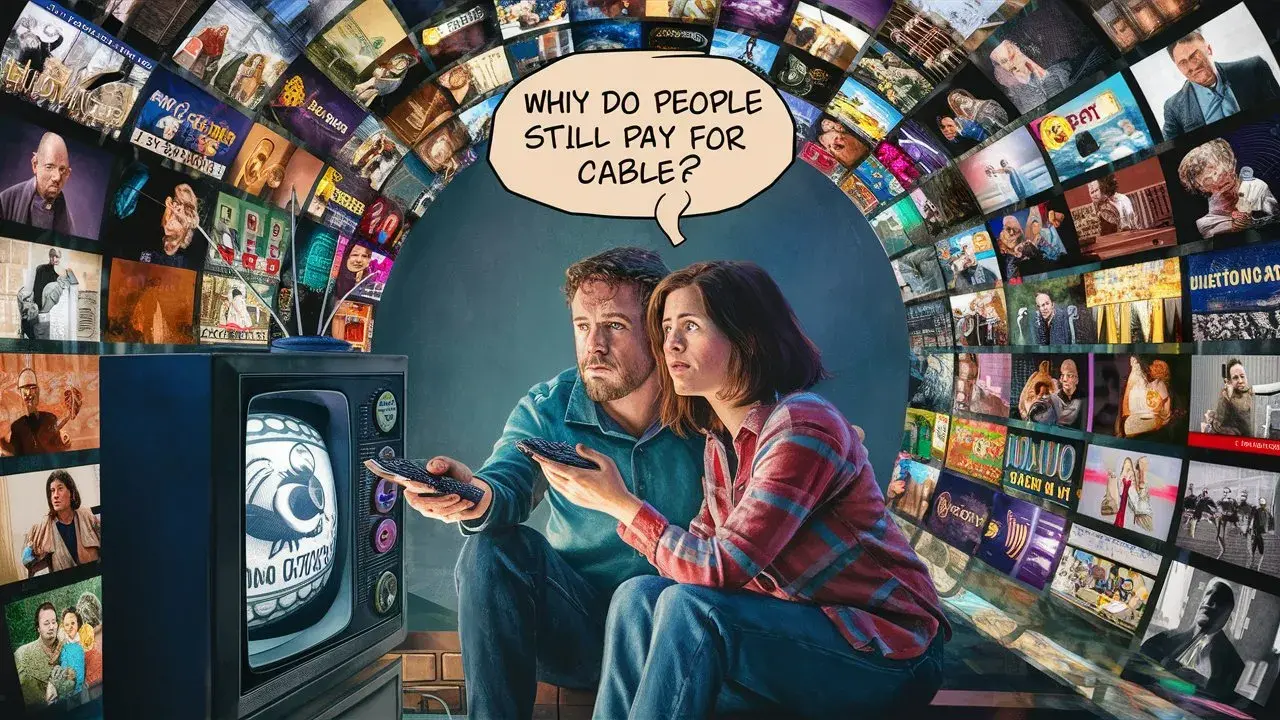
Even with the explosion of streaming services, a significant portion of households continue to subscribe to traditional cable TV. This enduring popularity stems from a unique blend of convenience, content availability, and ingrained habits that streaming alone hasn't entirely replicated. Let's explore the compelling reasons behind this continued cable subscription.
The Enduring Appeal of Convenience and Simplicity
In an era defined by digital complexity, the straightforward nature of cable television remains a significant draw for many consumers. The "set it and forget it" mentality, coupled with a unified interface, offers a level of ease that can be surprisingly hard to abandon, even when faced with the seemingly endless options of streaming. For a substantial segment of the population, cable represents a familiar and predictable entertainment ecosystem.
Unified Interface and Ease of Use
One of the primary reasons people continue to pay for cable is the inherent simplicity of its user interface. Unlike the fragmented landscape of streaming apps, where users often need to navigate multiple platforms, remember different login credentials, and search across various libraries, cable provides a single, integrated system. This unified experience is particularly appealing to demographics less comfortable with advanced technology, such as older adults or those who prefer a less hands-on approach to their entertainment.
The familiar channel guide, a staple of cable for decades, offers a visual roadmap of what's currently airing and what's coming up. This passive discovery method, where viewers can simply flip through channels and stumble upon something interesting, contrasts sharply with the active search required by most streaming services. For many, this serendipitous discovery is a cherished aspect of their viewing habits, something that on-demand streaming struggles to replicate.
Furthermore, the physical remote control, while perhaps seen as antiquated by some, offers a tactile and intuitive way to interact with the television. The lack of reliance on internet connectivity for basic channel surfing also contributes to its perceived simplicity. In areas with less reliable internet infrastructure, or for individuals who simply don't want to deal with buffering or connection issues, cable remains a dependable option.
Reduced Cognitive Load
The sheer volume of content available across numerous streaming platforms can lead to what is often termed "choice paralysis." Deciding what to watch can become a time-consuming and mentally draining process. Cable, with its curated programming schedules, significantly reduces this cognitive load. Viewers know that by tuning into a specific channel at a specific time, they will find a particular type of content – be it news, sports, drama, or comedy. This predictability eliminates the need for extensive research and decision-making, allowing for a more relaxed viewing experience.
This is especially true for live programming. While streaming services are increasingly offering live content, cable has historically been the primary conduit for scheduled broadcasts. The comfort of knowing that a favorite show will air at its designated time, without the need to remember to press "play" or navigate an app, is a powerful retention factor. It aligns with a more traditional viewing pattern that many have cultivated over years, if not decades.
Bundled Internet and Phone Services
A significant factor in the continued popularity of cable subscriptions is the prevalence of bundled service packages. Many cable providers offer attractive deals that combine internet, cable television, and home phone services. For consumers looking to streamline their monthly bills and simplify their service providers, these bundles can represent a cost-effective and convenient solution. Consolidating multiple essential services under one provider reduces administrative overhead and often leads to overall savings compared to subscribing to each service individually from different companies.
This bundling strategy is particularly effective for households that require all three services. The perceived value proposition of a bundled package can outweigh the individual cost savings that might be achieved by piecing together services from various providers, especially when considering the potential hassle of managing multiple accounts and payment schedules. The convenience of a single bill and a single point of contact for support further enhances the appeal of these bundled offerings.
Unmatched Content Access and Exclusivity
While streaming services boast vast libraries, cable television still holds a unique position in providing access to certain types of content, particularly live events and a wide array of niche channels that may not be economically viable for individual streaming platforms to host exclusively. The breadth of programming available through cable remains a compelling reason for many to maintain their subscriptions.
Niche Channels and Broad Variety
Cable television offers an unparalleled breadth of niche channels catering to a diverse range of interests. From specialized sports networks (like regional sports networks not available on major streaming platforms) and dedicated cooking channels to educational programming, foreign language channels, and specific genre networks (e.g., classic movies, documentaries, religious programming), cable provides access to content that might be too specialized for a mainstream streaming service to acquire or produce. These channels often serve dedicated audiences who value having a single source for their specific interests.
For example, a viewer passionate about specific types of motorsports might rely on a dedicated cable channel that aggregates various racing events, whereas a streaming service might only offer one or two major series. Similarly, individuals seeking access to international news or cultural programming often find these options more readily available and comprehensive through traditional cable packages. The aggregation of these diverse channels under one subscription model simplifies access for viewers with eclectic tastes.
Local Broadcast Channels
A critical component of cable packages, especially in the United States, is the inclusion of local broadcast channels (e.g., ABC, CBS, NBC, FOX). These channels are essential for accessing local news, weather updates, community events, and popular network programming that may not always be available on streaming services or may have delayed availability. While some streaming services offer local channels through specific add-ons or virtual MVPDs (multichannel video programming distributors), cable provides this access as a standard feature.
For many, particularly those who rely on local news for critical information, maintaining cable is a necessity. The immediacy and local relevance of this content are difficult for purely on-demand streaming services to match. This is especially true during severe weather events or local emergencies, where immediate, localized information is paramount.
Original Programming and Exclusive Content
While streaming giants are investing heavily in original content, many traditional cable networks continue to produce high-quality, critically acclaimed original programming that draws significant viewership. Networks like HBO (now part of Max, but historically a cable powerhouse), AMC, FX, and others have built reputations on their flagship series, which are often bundled within cable packages. For viewers who are fans of these specific shows, the cable subscription remains the most straightforward way to access them as they air.
Moreover, certain sporting events, award shows, and other live broadcasts are exclusively aired on cable channels, making a subscription essential for fans who don't want to miss out. While rights deals are constantly shifting, some major sporting leagues and events still maintain exclusive broadcast windows on traditional cable networks, ensuring a consistent subscriber base for those particular channels.
The Role of DVRs and Recording Capabilities
A significant advantage of traditional cable packages, often overlooked in the streaming discussion, is the integrated Digital Video Recorder (DVR) functionality. Most modern cable boxes come equipped with DVR capabilities, allowing subscribers to record live television for later viewing. This feature offers a level of control and flexibility that can be highly appealing.
Unlike streaming, where content is typically only available for a limited time or requires specific download features, a DVR allows users to build their own personal library of recorded shows and movies. This is particularly useful for those who want to watch content on their own schedule, skip commercials (though this is becoming less common with modern DVRs that may have ad-skipping limitations), or ensure they don't miss a specific broadcast. The ability to pause, rewind, and fast-forward live TV, and to record entire series with a single command, offers a user experience that some find superior to navigating the often-cluttered interfaces of streaming platforms.
The Power of Bundled Services and Perceived Value
The economic aspect of cable subscriptions often extends beyond just the television service itself. Bundling with internet and phone services, along with promotional offers and perceived long-term value, plays a crucial role in retaining subscribers, even as standalone streaming options proliferate.
Cost-Effectiveness of Bundles
As mentioned earlier, cable providers frequently offer attractive bundles that combine internet, TV, and sometimes landline phone services. These packages are often priced competitively, especially when compared to the cumulative cost of subscribing to separate high-speed internet, multiple streaming services, and a phone plan. For households that require all these services, the bundled discount can be substantial, making cable a more economically sensible choice than piecing together individual services.
For instance, a family might pay $100-$150 per month for a comprehensive cable bundle that includes internet speeds suitable for streaming, a wide array of TV channels, and a phone line. In contrast, subscribing to a high-speed internet plan ($70-$90), Netflix ($15-$20), Hulu ($15-$20), Disney+ ($13-$15), and a separate phone service ($30-$50) could easily exceed $150-$200 per month. The perceived value of getting "more for less" through a bundle is a powerful retention tool for cable companies.
Promotional Offers and Introductory Pricing
Cable companies are adept at using promotional offers and introductory pricing to attract and retain customers. New subscribers are often lured in with significantly discounted rates for the first 12-24 months of service. While these prices inevitably increase after the promotional period, the initial savings can be enough to get customers locked into a contract or accustomed to the service. Even after the price hike, the perceived value, especially within a bundle, can still make it difficult for consumers to switch.
These promotions also extend to existing customers, who may be offered upgrades or discounts to prevent them from cutting the cord. This constant stream of deals and incentives contributes to the perception that cable, when managed strategically, can still offer good value for money, especially when compared to the escalating costs of multiple individual streaming subscriptions.
Long-Term Contracts and Early Termination Fees
A significant factor contributing to the inertia of cable subscriptions is the prevalence of long-term contracts. Many cable providers still require customers to sign 1- or 2-year contracts, often with substantial early termination fees (ETFs). The prospect of paying hundreds of dollars to break a contract can be a powerful deterrent for consumers considering switching to streaming-only options. This contractual obligation effectively locks customers into their cable service, regardless of whether they are actively using it or finding better alternatives.
Even for those not under contract, the hassle of switching providers – scheduling installations, returning equipment, setting up new services – can be a significant barrier. The path of least resistance often leads to simply renewing the existing cable subscription, especially if the provider offers a somewhat reasonable rate to retain them.
Perceived Stability and Reliability of Service
While internet-based streaming services are heavily reliant on a stable internet connection, cable television, in many cases, operates on a separate infrastructure. This can lead to a perception of greater reliability, particularly for live events. Viewers may feel more confident that their cable signal won't drop during a crucial moment in a sports game or a live broadcast, even if their internet connection is experiencing issues.
This perception of stability is reinforced by the physical infrastructure of cable networks, which have been in place for decades and are often maintained by dedicated technicians. While outages can and do occur with cable, the experience of a buffering stream or a dropped internet connection can make the consistent, albeit sometimes less flexible, delivery of cable content seem more dependable to some consumers.
Demographics, Habit, and the Digital Divide
The reasons for sticking with cable aren't solely about technology or content; they are also deeply intertwined with user demographics, ingrained habits, and the ongoing digital divide that persists in various communities.
Older Demographics and Technologically Less Savvy Users
Older generations, who grew up with and are accustomed to traditional broadcast television, often find cable to be the most intuitive and comfortable way to access entertainment. The learning curve for streaming services, with their multiple apps, interfaces, and subscription models, can be daunting for individuals who are less technologically inclined. The familiar channel guide and the simplicity of a single remote control offer a sense of security and ease of use that streaming platforms have yet to fully replicate for this demographic.
For many seniors, cable is not just a source of entertainment but also a connection to the outside world through news and current events programming. The reliability and ease of access provided by cable are paramount. The thought of navigating complex apps, troubleshooting internet issues, or managing multiple streaming accounts can be overwhelming, making the status quo of cable a preferred choice.
Ingrained Habits and Rituals
For decades, watching television was synonymous with tuning into a specific channel at a specific time. These viewing habits and rituals become deeply ingrained. Families might have a tradition of watching a particular show together on a certain night, or individuals might have a routine of flipping through channels after dinner. These established patterns of behavior are not easily disrupted, even by the allure of on-demand content. The social aspect of shared viewing experiences, often tied to scheduled broadcasts, also contributes to the persistence of cable.
The act of "channel surfing" itself, while sometimes seen as inefficient, can be a form of relaxation and passive entertainment for many. It allows for serendipitous discovery and a break from the decision-making fatigue associated with curated streaming libraries. This ingrained habit contributes to the continued relevance of the linear television model offered by cable.
The Digital Divide and Accessibility Issues
Despite advancements in technology, a significant digital divide still exists. In rural areas or lower-income communities, reliable high-speed internet access can be expensive, unreliable, or simply unavailable. For these households, cable television often remains the most accessible and affordable option for accessing a wide range of entertainment and information. The infrastructure for cable is often more established in these areas than robust broadband internet.
Furthermore, the cost of multiple streaming subscriptions can be prohibitive for individuals and families on a tight budget. While a single cable subscription might seem expensive, it can sometimes be more economical than subscribing to several individual streaming services, especially when considering the added cost of the necessary internet bandwidth. This economic reality ensures that cable continues to serve a vital role for a segment of the population.
The "Set-Top Box" Ecosystem
Cable providers have invested heavily in their set-top box technology, which often includes advanced features like DVRs, on-demand libraries, and integrated apps. This comprehensive ecosystem provides a centralized entertainment hub that many users find convenient. The ability to access a wide range of content – live TV, recorded shows, and even some streaming apps – through a single device and interface simplifies the user experience.
The seamless integration of these features, often managed by a single remote, reduces the need for multiple devices and complex setups. For consumers who prefer a streamlined approach to their home entertainment, the cable set-top box offers a compelling all-in-one solution that streaming alone has not yet fully replicated without additional hardware and complexity.
The Unbeatable Draw of Live Sports and Major Events
Perhaps the most significant remaining stronghold of traditional cable television is its unparalleled access to live sports and major televised events. While streaming services are making inroads, cable still holds a dominant position in delivering these high-demand, time-sensitive broadcasts.
Exclusive Rights to Major Sporting Leagues
Many major professional and collegiate sports leagues still have exclusive broadcast rights deals with cable networks. This includes a significant portion of NFL, NBA, MLB, NHL, and major college football and basketball games. While some games are simulcast or made available through specific streaming packages, the most comprehensive access, especially for regional games or specific conferences, often remains on traditional cable channels. For dedicated sports fans, this exclusivity makes cable a necessity.
For example, a fan of a specific NFL team might need to subscribe to a cable package that includes the regional sports network carrying their team's games, as these are often not available on national streaming platforms. Similarly, college sports enthusiasts may rely on networks like ESPN, ESPN2, or ACC Network, which are primarily distributed via cable and satellite.
The Immediacy and Social Aspect of Live Viewing
Live sports and major events are inherently time-sensitive. The excitement lies in experiencing them as they happen, alongside millions of other viewers. The communal aspect of watching a big game or a national event creates a shared cultural experience that is difficult to replicate with on-demand content. Cable's reliable delivery of these live broadcasts ensures that viewers don't miss any of the action.
The ability to react in real-time to plays, share commentary with friends and family (whether in person or online), and be part of the collective conversation surrounding a major event is a powerful draw. Streaming services can sometimes introduce slight delays or buffering issues that can detract from the live viewing experience, making the consistent delivery of cable even more valuable for these critical broadcasts.
Major Award Shows and Special Events
Beyond sports, major televised events like the Academy Awards, the Grammy Awards, the Super Bowl halftime show, and presidential debates are often broadcast on traditional network channels that are part of cable packages. While some of these events might be streamed online, the most accessible and widely available way to watch them live remains through cable. This ensures that cable subscribers don't miss out on significant cultural moments that capture national attention.
The broad reach of cable ensures that these events are accessible to the widest possible audience, making it the default choice for many broadcasters and event organizers. For individuals who want to stay connected to these cultural touchstones without needing to seek out specific online streams or apps, cable provides a straightforward solution.
The Value of a Comprehensive Sports Package
Cable providers often offer specialized sports packages that bundle multiple sports-specific channels, including regional sports networks, international sports channels, and niche sports programming. These packages can be highly attractive to avid sports fans who want access to a wide variety of games and events across different sports and leagues. The convenience of having all these channels consolidated within a single subscription often outweighs the cost for dedicated enthusiasts.
For instance, a hockey fan might subscribe to a package that includes NHL Network, along with their regional sports network, ensuring they can follow their team and the league at large. This comprehensive offering is something that individual streaming services, with their focus on specific leagues or content categories, often struggle to match in terms of breadth and depth for the dedicated fan.
Technical Considerations and Perceived Reliability
Beyond content and convenience, the technical aspects of cable delivery and its perceived reliability continue to be significant factors in its enduring appeal, especially when compared to the dependencies of internet-based streaming.
Independence from Internet Bandwidth
One of the most significant technical advantages of traditional cable television is its independence from internet bandwidth. Cable TV signals are delivered over a separate coaxial cable network, meaning that the quality of your television viewing is not affected by how many devices are using your internet connection, or by the overall speed of your broadband. This is a crucial distinction for households with multiple users or those who experience inconsistent internet speeds.
Streaming services, by contrast, require a stable and sufficiently fast internet connection. If your internet is slow, congested, or experiencing issues, your streaming experience will suffer, leading to buffering, lower video quality, or complete service interruption. For many, the guaranteed delivery of cable, especially during critical live events, offers peace of mind that internet-dependent streaming cannot always provide.
Ease of Installation and Setup
While the initial setup of cable television might involve a technician visit, the ongoing use is generally straightforward. Once installed, the system is designed to be user-friendly, with minimal technical input required from the subscriber. The set-top box handles signal decoding, and the channel guide provides an intuitive way to navigate content.
Compare this to setting up streaming services, which can involve purchasing streaming devices (Roku, Fire Stick, Apple TV), ensuring they are connected to the internet, downloading apps, logging into multiple accounts, and potentially troubleshooting Wi-Fi issues. For individuals who are not tech-savvy, the simplicity of a cable installation and its subsequent ease of use can be a significant deciding factor.
Perceived Robustness of Infrastructure
Cable infrastructure has been in place for decades and is a well-established utility in many areas. While subject to outages due to weather or damage, the physical network is often perceived as robust and reliable. The technology is mature, and maintenance procedures are well-defined. This established infrastructure can instill a greater sense of confidence in the long-term availability of the service.
In contrast, streaming relies on a complex, interconnected web of internet service providers, data centers, and content delivery networks. While generally reliable, this system can be more susceptible to widespread issues caused by network congestion, server problems, or cyberattacks. The tangible nature of cable infrastructure can contribute to a feeling of greater security and dependability for the end-user.
Bundled Equipment and Unified Support
Cable providers typically supply all the necessary equipment – the set-top box, modem (if bundled with internet), and remote – as part of the subscription. This eliminates the need for consumers to research, purchase, and manage multiple pieces of hardware from different manufacturers. Furthermore, when issues arise, customers can often contact a single provider for support, rather than having to troubleshoot between their internet provider, streaming device manufacturer, and individual streaming services.
This unified approach to equipment and support simplifies the customer experience. If the cable box malfunctions, the customer calls the cable company. If the internet is down, they call the cable company. This consolidated support structure can be a significant convenience factor, reducing the frustration often associated with diagnosing and resolving technical problems in a multi-service environment.
The Evolving Landscape: The Future of Cable
The traditional cable model is not static; it is continuously adapting to the changing media landscape. While the term "cable" might evoke images of old-fashioned television, the services offered by cable providers are evolving, incorporating elements of streaming and on-demand content to remain competitive.
Convergence with Streaming Services
Many cable providers are now offering integrated solutions that allow subscribers to access popular streaming apps directly through their set-top boxes. This means users can switch between live TV channels and services like Netflix, Hulu, or Max without needing to change inputs or use multiple remotes. This convergence aims to provide the best of both worlds: the convenience of a unified interface with access to a vast array of on-demand content.
Furthermore, some cable companies are developing their own streaming platforms or offering their linear channels as streaming options. This allows subscribers to watch their cable content on mobile devices or other internet-connected screens, blurring the lines between traditional cable and streaming. The goal is to retain subscribers by offering flexibility and a comprehensive entertainment package that adapts to modern viewing habits.
IPTV and Next-Generation Delivery
The future of cable delivery is increasingly moving towards Internet Protocol Television (IPTV). This technology uses internet protocols to deliver television content, allowing for more interactive features, on-demand libraries, and personalized experiences. While still delivered by traditional cable companies, IPTV represents a significant technological shift that bridges the gap between cable and internet-based streaming.
IPTV offers the potential for enhanced features such as personalized recommendations, interactive advertising, and seamless integration with other digital services. As this technology becomes more widespread, the distinction between traditional cable and streaming will continue to diminish, with cable providers leveraging their infrastructure to offer advanced, internet-delivered entertainment solutions.
The "Cord-Nevers" and Shifting Market Dynamics
While cable continues to hold a significant market share, the trend of "cord-cutting" (canceling cable) and "cord-nevering" (younger generations who have never subscribed to cable) is undeniable. The market is dynamic, with streaming services capturing an ever-larger share of viewer time and subscription revenue. Cable companies are acutely aware of this shift and are actively working to adapt.
The survival and continued relevance of cable will depend on its ability to innovate and offer value that streaming alone cannot easily replicate. This includes leveraging their existing infrastructure for advanced IPTV services, continuing to provide exclusive live content, and offering competitive bundles that simplify the consumer's digital life. The question is not whether cable will disappear, but how it will transform to meet the demands of the 21st-century consumer.
Conclusion
In summary, the continued popularity of cable television in 2025-26 is a testament to its enduring strengths: unparalleled convenience, a vast and diverse content library including essential local channels, the economic advantages of bundled services, and the irreplaceable draw of live sports and major events. For many, especially older demographics and those in areas with limited internet access, cable remains the most reliable, user-friendly, and cost-effective entertainment solution. The simplicity of its interface, the reliability of its delivery independent of internet bandwidth, and the ingrained habits of linear viewing all contribute to its persistent appeal. As cable providers increasingly integrate streaming capabilities and adopt IPTV technologies, the line between traditional and modern viewing continues to blur, ensuring that cable, in its evolving form, will remain a significant player in the home entertainment landscape for the foreseeable future. For those who prioritize ease of use, comprehensive live event access, and bundled value, paying for cable still makes compelling sense.