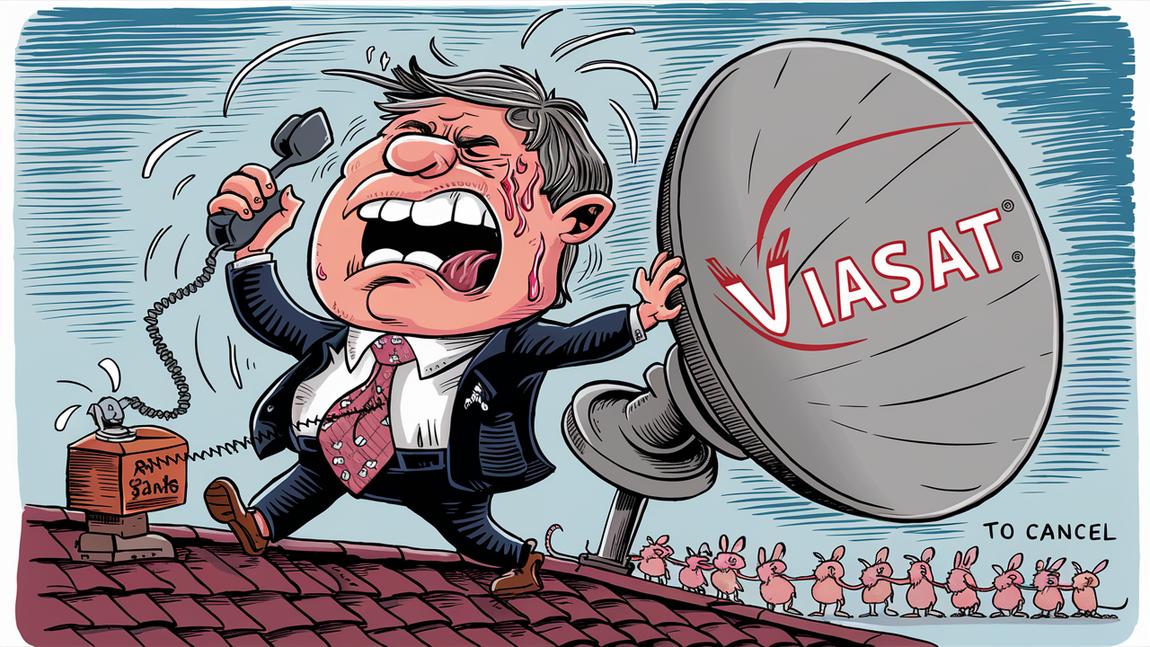
Canceling Viasat can be a complex process, often involving early termination fees and specific contractual obligations. This guide will break down the difficulty, outline the steps involved, and provide insights into potential challenges to help you navigate the Viasat cancellation process smoothly.
Understanding Viasat Contracts and Fees
Before diving into the mechanics of canceling Viasat, it's crucial to understand the contractual landscape that governs your service. Viasat, like many satellite internet providers, operates on a contract basis, and these agreements are the primary determinant of how "hard" it is to cancel. The terms laid out in your contract dictate early termination fees (ETFs), notice periods, and equipment return procedures. As of 2025-26, Viasat typically offers service contracts ranging from 12 to 24 months. Understanding these terms is the first hurdle in assessing the difficulty of cancellation.
The Role of Early Termination Fees (ETFs)
The most significant factor contributing to the perceived difficulty of canceling Viasat is the presence of Early Termination Fees. These fees are designed to recoup some of the provider's costs associated with installation, equipment, and the expected revenue over the contract term. For Viasat, ETFs can be substantial. While the exact amount can vary based on your specific plan and the remaining duration of your contract, a common structure involves a prorated fee that decreases over time. For example, a contract might stipulate a fee of $15 for each month remaining on the contract. If you are 10 months into a 24-month contract, your ETF could be around $210 ($15 x 14 months). However, some older or promotional plans might have higher monthly fees or a fixed ETF. It is imperative to consult your original service agreement or contact Viasat customer service directly to ascertain the precise ETF applicable to your situation. Ignoring this fee is not an option, as Viasat will likely pursue collection if it remains unpaid.
Equipment Leases vs. Purchases
Another critical aspect of Viasat contracts relates to the satellite dish and modem equipment. In most cases, Viasat provides this equipment on a lease basis. This means the equipment remains the property of Viasat, and you are responsible for its care and return upon cancellation. If you purchased the equipment outright, the terms would differ, but this is less common. The lease agreement usually stipulates that the equipment must be returned in good working condition. Failure to do so, or to return it within a specified timeframe after cancellation, can result in additional charges that are separate from the ETF. These charges can sometimes be as high as the original cost of the equipment, making the return process a vital step in avoiding unexpected expenses. The difficulty here lies in coordinating the return logistics, ensuring the equipment is properly packaged, and obtaining proof of shipment.
Contract Renewal and Auto-Renewal Clauses
Many Viasat contracts include auto-renewal clauses. This means that if you do not actively cancel or provide notice of your intent not to renew before the contract's end date, the contract may automatically extend for another term. This can be a significant trap for unsuspecting customers who assume their service will simply end. Understanding these renewal terms is vital. If your contract auto-renews, you may find yourself locked into another term, and attempting to cancel shortly after renewal could incur substantial ETFs. Therefore, diarizing contract end dates and understanding the required notice period for non-renewal is a proactive step that can significantly reduce the "difficulty" of ending your service on your own terms.
Promotional Offers and Their Impact
Viasat often entices new customers with promotional offers, such as discounted monthly rates, free installation, or bonus data. While these can be attractive, they often come with stricter contract terms or higher ETFs if canceled early. It's common for these promotions to be tied to a minimum service commitment. If you signed up for a promotional rate that included a 24-month commitment, canceling before the full term is up will almost certainly trigger the ETF. It’s essential to read the fine print of any promotional offer and understand how it affects your contract duration and cancellation penalties. Sometimes, the perceived savings of a promotion can be outweighed by the cost of early termination if your circumstances change.
The Viasat Cancellation Process: Step-by-Step
Navigating the cancellation of Viasat requires a methodical approach. While the exact steps might have minor variations, the general process involves preparation, communication, and execution. Following these steps diligently can minimize frustration and ensure a smoother transition away from Viasat service.
Step 1: Review Your Contract and Service Agreement
The absolute first step is to locate and thoroughly review your Viasat service agreement. This document is your primary guide. Pay close attention to:
- Contract End Date: When does your commitment officially end?
- Early Termination Fee (ETF) Clause: What is the penalty for canceling before the contract end date? How is it calculated?
- Notice Period: How much advance notice must you give Viasat before canceling? (e.g., 30 days)
- Equipment Return Policy: What are the requirements for returning leased equipment? What are the penalties for non-return or damage?
- Contact Information: How should you officially notify Viasat of your cancellation?
If you cannot find your physical copy, you can usually access your account information and potentially a digital copy of your agreement through the Viasat customer portal online or by contacting their customer service. This step is critical; without this information, you are operating in the dark and are more susceptible to unexpected fees or complications.
Step 2: Contact Viasat Customer Service
Once you have a clear understanding of your contract terms, you need to initiate the cancellation process by contacting Viasat directly. This is typically done via phone. Be prepared for a potentially lengthy call, as customer service representatives are often trained to retain customers. Here’s how to approach this call:
- Have Your Account Information Ready: This includes your account number, name, address, and possibly your Viasat account PIN or password for verification.
- State Your Intent Clearly: Politely but firmly state that you wish to cancel your Viasat service. Avoid ambiguity.
- Inquire About Your Specific Cancellation Terms: Even if you've reviewed your contract, confirm the exact ETF, the required notice period, and the equipment return process with the representative. Ask for a confirmation of these details, ideally in writing or via email.
- Ask About Alternatives (If Applicable): Sometimes, Viasat might offer a temporary service pause or a plan change that could be more suitable than outright cancellation, especially if you're facing temporary financial hardship or moving to an area where Viasat is the only option. However, if your mind is made up, stick to your cancellation request.
- Request a Cancellation Confirmation Number: This is crucial. Get a confirmation number for your cancellation request. This serves as proof that you initiated the process.
The difficulty at this stage often stems from the retention efforts of Viasat representatives. They may offer discounts or alternative plans. While these might be tempting, if your goal is to cancel, you need to remain resolute. Document the date and time of your call, the name of the representative you spoke with, and any reference numbers provided.
Step 3: Return the Equipment
Following your cancellation request, you will likely receive instructions on how to return your Viasat equipment. This typically involves packaging the satellite dish, modem, power cords, and any other associated hardware. Viasat will usually provide a prepaid shipping label or arrange for a pickup. Adhering strictly to these instructions is vital:
- Package Carefully: Ensure all components are included and well-protected to prevent damage during transit.
- Use the Provided Shipping Label: This ensures the return is tracked and associated with your account.
- Obtain a Shipping Receipt: Always get a receipt from the shipping carrier as proof of return. This is your safeguard against claims of non-returned equipment.
- Track the Shipment: Use the tracking number provided by the carrier to monitor the delivery of the equipment back to Viasat.
The difficulty here is ensuring you return all components and do so within the specified timeframe. Missing even one cable or returning the equipment late can lead to additional charges. If the equipment is damaged, Viasat may charge you for repairs or replacement. It’s advisable to take photos of the equipment before packaging it and after it’s been shipped, as evidence of its condition.
Step 4: Settle Your Final Bill
Your final bill from Viasat will typically include any prorated charges for the last month of service, the Early Termination Fee (if applicable), and potentially any outstanding charges for unreturned or damaged equipment. You should receive this bill within one to two billing cycles after your service has been disconnected.
- Review the Final Bill Carefully: Ensure all charges are accurate and align with the information you received during your cancellation call and contract review.
- Pay Promptly: Settle the bill by the due date to avoid late fees or further collection actions.
- Keep Records: Retain a copy of your final bill and proof of payment for your records.
The difficulty here is ensuring the bill is accurate. If you find discrepancies, contact Viasat customer service immediately to dispute the charges. It's always better to address these issues while the service is still technically active or very recently disconnected.
Step 5: Confirm Cancellation and Account Closure
After your final bill is settled, it's a good practice to confirm that your account has been fully closed and that there are no lingering obligations. You can do this by calling Viasat customer service a few weeks after your final payment or by checking your online account portal. Ask for a final confirmation of account closure.
This step provides peace of mind and ensures that you won't receive unexpected bills or have service reactivated erroneously. While not always strictly necessary, it adds an extra layer of security to the cancellation process.
Common Challenges and How to Overcome Them
Canceling Viasat isn't always a straightforward transaction. Several common challenges can arise, turning what should be a simple process into a frustrating ordeal. Understanding these potential pitfalls and knowing how to navigate them is key to a successful cancellation.
Challenge 1: High Early Termination Fees (ETFs)
As previously discussed, ETFs are a major deterrent. The amount can feel substantial, especially if you are only a few months into a long-term contract. The difficulty lies in the financial impact.
How to Overcome:
- Negotiation: While Viasat's standard policy is to charge ETFs, there can be exceptions. If you are moving to an area where Viasat is the *only* available internet service, they might waive the ETF. Similarly, if you are experiencing severe financial hardship, they may offer a reduced fee or a payment plan. Always ask. Frame your request politely and provide any necessary documentation (e.g., a lease agreement showing a move to an area without Viasat service).
- Contract Review: Double-check your contract for any clauses that might exempt you from ETFs under specific circumstances. Sometimes, moving outside Viasat's service area is a valid reason for waiver.
- Budgeting: If negotiation fails, the best approach is to budget for the ETF. Factor it into your decision to cancel. Compare the ETF cost against the ongoing monthly cost of Viasat and the potential savings from a new provider.
Challenge 2: Difficulty Reaching a Human or Retention Efforts
Viasat customer service lines can be busy, and representatives are incentivized to keep you as a customer. This can lead to long hold times and persistent attempts to retain you, which can be exhausting and time-consuming.
How to Overcome:
- Be Prepared and Polite but Firm: Know what you want to say before you call. State your intention to cancel clearly and concisely. If they offer discounts, politely decline and reiterate your desire to cancel.
- Call During Off-Peak Hours: Try calling early in the morning or later in the evening, or during weekdays when call volumes might be lower.
- Escalate if Necessary: If you are repeatedly met with unhelpful representatives or excessive retention tactics, politely ask to speak with a supervisor or a manager who has the authority to process cancellations.
- Use Online Portals (If Available): If Viasat offers a cancellation option through their online portal, use it. This can sometimes bypass lengthy phone calls and retention efforts.
Challenge 3: Equipment Return Issues
Misplacing components, returning equipment late, or having it damaged in transit can lead to unexpected charges. The difficulty is in the logistics and potential for disputes.
How to Overcome:
- Detailed Inventory: Before packing, make a checklist of all Viasat equipment provided to you. Ensure every piece is accounted for.
- Document Everything: Take clear, well-lit photos of each piece of equipment before you pack it. Photograph the packed box and the shipping label.
- Use the Provided Shipping Method: Viasat usually specifies how equipment should be returned. Stick to their method to ensure it's properly logged.
- Get Proof of Shipment: Always obtain a receipt from the shipping carrier that includes a tracking number. Keep this receipt in a safe place.
- Track the Return: Monitor the tracking information to confirm when Viasat receives the equipment.
- Keep Communication Records: If Viasat claims equipment was not returned or was damaged, refer to your photos and shipping receipt.
Challenge 4: Misunderstandings About Contract Terms
Customers may not fully understand their contract, leading to surprises during cancellation. This includes auto-renewal clauses, data caps, or service limitations.
How to Overcome:
- Read the Fine Print: This cannot be stressed enough. Before signing, understand all terms and conditions. If anything is unclear, ask Viasat for clarification in writing.
- Keep Copies of All Agreements: Store your service agreement and any addendums in an easily accessible place.
- Set Calendar Reminders: Mark your contract end date and any required notice periods in your calendar to avoid auto-renewal surprises.
Challenge 5: Service Quality Issues Leading to Cancellation
Often, customers want to cancel due to slow speeds, high latency, or inconsistent service, especially in rural areas where Viasat is prevalent. The difficulty is that Viasat might argue the service meets advertised minimums or that the issues are due to the inherent nature of satellite internet.
How to Overcome:
- Document Performance: Use speed test tools (like Ookla Speedtest, Fast.com) at various times of the day and keep records of the results. Note any issues like buffering, dropped connections, or high ping times.
- Contact Technical Support: Before deciding to cancel, go through Viasat's technical support channels. Document all interactions, ticket numbers, and troubleshooting steps. This creates a record that you attempted to resolve service issues.
- Check for Service Guarantees: Some contracts might have clauses related to service uptime or performance guarantees. If Viasat consistently fails to meet these, you might have grounds for early termination without penalty. This is rare but worth investigating.
By anticipating these challenges and preparing thoroughly, you can significantly reduce the perceived difficulty of canceling your Viasat service and avoid unnecessary costs and frustrations.
Alternatives to Viasat and Their Cancellation Policies
For many Viasat customers, the desire to cancel stems from a need for better performance, lower costs, or simply a different service provider. Understanding the cancellation policies of potential alternatives can help in making a smooth transition and avoiding a similar predicament in the future. As of 2025-26, the landscape of internet service, especially in areas where Viasat is common (often rural or underserved), is evolving.
Fixed Wireless Internet
Fixed wireless providers offer internet service by transmitting a signal from a local tower to a receiver on your home. This is often a viable alternative in rural areas.
- Providers: Examples include Rise Broadband, T-Mobile Home Internet (where available), Starlink (which is satellite but often considered a distinct category due to its LEO technology and performance).
- Typical Contract Lengths: Many fixed wireless providers, especially newer ones like T-Mobile Home Internet and Starlink, do not require long-term contracts. They often operate on a month-to-month basis.
- Cancellation Policies: Without long-term contracts, cancellation is usually straightforward. You typically need to return any leased equipment (modem/router). ETFs are generally not applicable. The process usually involves contacting customer service, returning equipment, and settling the final bill.
- Potential Challenges: Coverage can be a limiting factor. If the service is not available in your area, it's not an option. Equipment return policies still apply, and failure to return leased gear can incur fees.
DSL (Digital Subscriber Line)
DSL uses existing telephone lines to provide internet service. While often slower than other options, it can be more reliable than satellite in some conditions.
- Providers: AT&T, CenturyLink, Verizon (depending on region).
- Typical Contract Lengths: Many DSL providers offer month-to-month plans, but some may still have 12-month contracts, especially for promotional pricing.
- Cancellation Policies: If on a month-to-month plan, cancellation is usually simple: contact customer service, return equipment (if leased), and pay the final bill. If under contract, ETFs may apply, though they are typically lower than satellite ETFs.
- Potential Challenges: Speed limitations are common with DSL, especially over longer distances from the telephone company's central office. Availability is decreasing as fiber and cable expand.
Cable Internet
Cable internet utilizes the same coaxial cable network that delivers cable television. It generally offers higher speeds and lower latency than satellite or DSL.
- Providers: Comcast (Xfinity), Spectrum, Cox Communications (depending on region).
- Typical Contract Lengths: Cable providers often offer both contract (e.g., 12 or 24 months) and no-contract (month-to-month) options. Contracted plans usually come with lower monthly rates.
- Cancellation Policies: For no-contract plans, cancellation is similar to fixed wireless: contact customer service, return equipment, and settle the final bill. For contracted plans, ETFs will apply if canceled early. These ETFs are often prorated, similar to Viasat, but can vary by provider.
- Potential Challenges: Availability is limited to areas with cable infrastructure. Speeds can sometimes fluctuate during peak usage times due to shared bandwidth in a neighborhood.
Fiber Optic Internet
Fiber optic internet offers the fastest and most reliable internet speeds available, transmitting data via light signals through glass fibers. It is the gold standard for performance.
- Providers: Verizon Fios, AT&T Fiber, Google Fiber, local municipal providers.
- Typical Contract Lengths: Many fiber providers are moving towards no-contract, month-to-month plans to attract customers. However, some may still offer contract options for discounted rates.
- Cancellation Policies: With no-contract plans, cancellation is typically straightforward: contact customer service, arrange for equipment return (if applicable), and pay the final bill. ETFs are usually not a concern for month-to-month fiber plans.
- Potential Challenges: Fiber optic infrastructure is not yet available in all areas, especially rural ones. Installation can sometimes be more involved than other technologies.
Starlink (Low Earth Orbit Satellite Internet)
Starlink, developed by SpaceX, is a satellite internet service that uses a constellation of satellites in Low Earth Orbit (LEO). It offers significantly lower latency and higher speeds than traditional geostationary satellite internet like Viasat.
- Providers: SpaceX Starlink.
- Typical Contract Lengths: Starlink generally operates on a month-to-month subscription basis. There are typically no long-term contracts.
- Cancellation Policies: Cancellation is usually managed through the Starlink user portal or by contacting their support. You are typically required to return the equipment (dish, router) within a specified timeframe to avoid charges. ETFs are generally not applicable as there are no long-term contracts.
- Potential Challenges: Initial equipment costs can be higher than other services. Availability can be limited in certain regions due to high demand. Service performance can be affected by obstructions (trees, buildings) and weather.
Comparison Table: Cancellation Policies (General 2025-26 Trends)
| Provider Type | Typical Contract Length | Early Termination Fees (ETFs) | Equipment Return | General Cancellation Difficulty |
|---|---|---|---|---|
| Viasat (Traditional Satellite) | 12-24 months | Common, often prorated | Required, penalties for non-return/damage | Moderate to High (due to ETFs and retention) |
| Fixed Wireless | Often Month-to-Month | Rare | Usually required for leased equipment | Low |
| DSL | Often Month-to-Month, some contracts | Possible on contracted plans | Usually required for leased equipment | Low to Moderate |
| Cable Internet | Month-to-Month or Contracted | Applies to contracted plans | Usually required for leased equipment | Low (no contract) to Moderate (contract) |
| Fiber Optic | Often Month-to-Month | Rare | Usually required for leased equipment | Low |
| Starlink (LEO Satellite) | Month-to-Month | N/A | Required | Low |
When considering alternatives, always ask about their specific contract terms, cancellation policies, and any associated fees before signing up. This proactive approach can save you significant trouble down the line.
Making the Decision to Cancel Viasat
The decision to cancel Viasat is often driven by a combination of factors, including service performance, cost, and the availability of better alternatives. While the process itself can present challenges, understanding these factors and weighing them against the benefits of switching is crucial. As of 2025-26, the internet service landscape continues to evolve, offering more choices than ever before, even in traditionally underserved areas.
When Does It Make Sense to Cancel Viasat?
Several scenarios strongly suggest that canceling Viasat is the right move:
- Availability of Superior Alternatives: If fiber optic, cable, or even reliable fixed wireless internet becomes available in your area, the performance and latency benefits are usually substantial enough to warrant the switch. Viasat's inherent limitations in speed and latency, common to geostationary satellite internet, become more pronounced when compared to these technologies.
- Exceeding Contractual Obligations: If you have fulfilled your minimum contract term, canceling is often straightforward and cost-effective, as you avoid ETFs. This is the ideal scenario for switching providers.
- Unsatisfactory Service Quality: Persistent issues with slow speeds, high latency, frequent disconnections, or data caps that hinder your daily activities (work, streaming, online gaming) can make Viasat a frustrating experience. If troubleshooting with Viasat has not resolved these issues, cancellation may be necessary.
- Cost Savings: If you find a comparable or better service at a significantly lower monthly cost, and the ETF is manageable or avoidable, switching can lead to long-term financial savings.
- Moving Out of Service Area: If you are relocating to an area where Viasat service is not available or where alternative providers offer superior options, cancellation is a necessity. In some cases, providing proof of relocation outside the service area may allow for an ETF waiver.
Weighing the Costs and Benefits
The primary consideration when deciding to cancel Viasat is the cost-benefit analysis. This involves:
- Calculating the Total Cost of Cancellation: This includes the ETF, any outstanding bills, and potential fees for unreturned equipment.
- Estimating the Cost of a New Service: Factor in the monthly subscription fee, installation costs, and any new equipment charges for your chosen alternative provider.
- Assessing the Performance Improvement: Quantify the expected benefits of the new service. Will it significantly improve your ability to work from home, enjoy entertainment, or connect with family?
- Considering Contractual Commitments: If you are still under a Viasat contract, carefully evaluate whether the immediate savings from switching outweigh the cost of the ETF. Sometimes, waiting until the contract is closer to its end date is more financially prudent.
For example, if your ETF is $300 and a new provider offers $30 less per month, it would take 10 months of service with the new provider to recoup the ETF cost. If you plan to stay with the new provider for longer than that, the switch is likely worthwhile.
The Importance of Documentation and Communication
Regardless of your reasons for canceling, maintaining thorough documentation and clear communication is paramount. This includes:
- Keeping Records: Save copies of your service agreement, all bills, payment confirmations, cancellation confirmation numbers, and shipping receipts for returned equipment.
- Written Communication: Whenever possible, opt for written communication (email or official online portal messages) rather than relying solely on phone calls. This creates a verifiable record of your interactions and agreements.
- Polite but Firm Demeanor: When interacting with Viasat customer service, remain polite but firm in your intentions. Clearly state your request and the reasons behind it, especially if seeking an ETF waiver.
By carefully considering these factors and preparing for the process, you can navigate the cancellation of Viasat with greater ease and confidence, ultimately leading to a more satisfactory internet service experience.
In conclusion, while canceling Viasat can present challenges, particularly due to early termination fees and equipment return logistics, it is a manageable process when approached with thorough preparation and a clear understanding of your contract. By reviewing your agreement, contacting customer service proactively, meticulously handling equipment returns, and being aware of potential hurdles, you can successfully transition to a new internet provider. The key to minimizing difficulty lies in informed decision-making, careful documentation, and clear communication throughout the cancellation steps. Always prioritize understanding your contractual obligations and exploring available alternatives to ensure you are making the best choice for your internet needs.