-
Posted on: 07 Jan 2026
-
Securing your home network is paramount, and changing your HughesNet WiFi password is a fundamental step. This guide offers a straightforward, step-by-step process to enhance your internet security, ensuring your personal data remains protected. Learn how to easily update your password and safeguard your connection.
Understanding HughesNet WiFi Security
HughesNet, a leading satellite internet provider, offers a vital service to many households, particularly in rural and underserved areas. While the convenience of satellite internet is undeniable, understanding and managing its security aspects is crucial for all users. WiFi security, at its core, is about protecting your home network from unauthorized access. This includes preventing others from using your internet connection, which can lead to slower speeds and potential misuse of your bandwidth. More importantly, it’s about safeguarding the sensitive data that travels across your network, such as login credentials, financial information, and personal communications.
HughesNet routers, like those from other providers, come with default security settings. These settings are designed for ease of initial setup but often lack the robust protection needed in today's interconnected world. The primary security feature of any WiFi network is its password, also known as the WiFi key or passphrase. This password encrypts your network, making it inaccessible to anyone who doesn't possess the correct code. Without a strong, unique password, your network becomes an open door for potential threats.
The security landscape is constantly evolving, with new vulnerabilities and threats emerging regularly. This is why proactive security measures are not just recommended but essential. For HughesNet users, this means understanding how their specific equipment functions and what steps can be taken to fortify their home network. The default password provided by HughesNet, while functional, is often generic and widely known, making it an easy target for malicious actors. Changing this password is the first and most critical step in securing your HughesNet WiFi.
Beyond the password, HughesNet routers typically employ WPA2 or WPA3 encryption protocols. These protocols are designed to scramble your data, making it unreadable to anyone intercepting it without the decryption key (your password). Understanding these terms can seem daunting, but for the average user, the focus should remain on the password itself. A strong password is the primary line of defense, and regular updates ensure that even if a password is compromised, the window of vulnerability is minimized.
In 2025, the importance of digital security has only amplified. With the increasing prevalence of smart home devices, online banking, and remote work, the amount of sensitive data traversing home networks has surged. A compromised WiFi network can be a gateway to identity theft, financial fraud, and even the installation of malware on your devices. Therefore, taking the time to understand and implement basic security measures, starting with your HughesNet WiFi password, is an investment in your digital well-being.
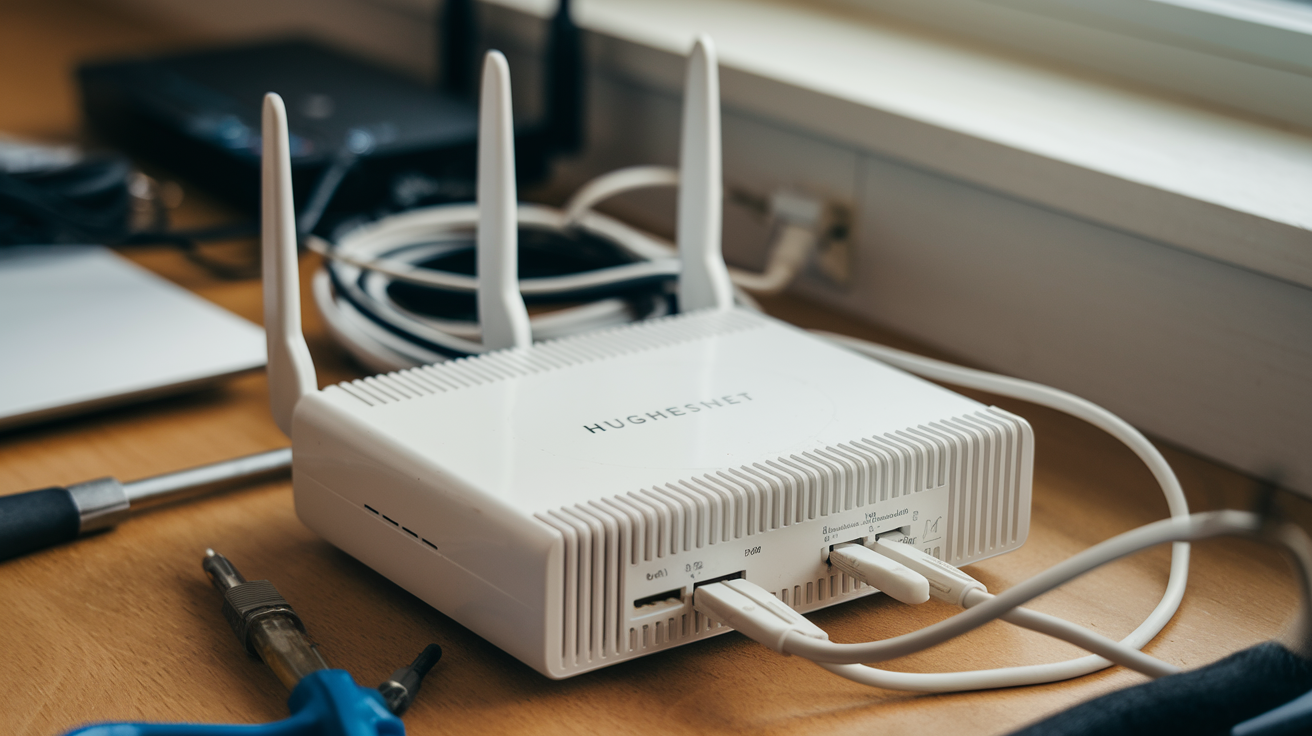
The HughesNet system, while relying on satellite technology for connectivity, operates on a local WiFi network within your home, managed by your HughesNet modem/router. This local network is where the security measures you implement have the most direct impact. Ensuring this local network is secure is the foundation of your overall online safety. This guide will demystify the process of changing your HughesNet WiFi password, making it accessible and manageable for everyone.
Why Changing Your HughesNet WiFi Password Matters
The default password assigned to your HughesNet WiFi network, while convenient for initial setup, presents a significant security risk. These default credentials are often standardized, making them predictable and vulnerable to brute-force attacks or simply being guessed by individuals with malicious intent. In 2025, where cyber threats are more sophisticated than ever, relying on default passwords is akin to leaving your front door unlocked.
One of the most immediate consequences of an unsecured WiFi network is unauthorized access. When your password is weak or unchanged, neighbors or even strangers within range can connect to your network. This can lead to a noticeable decrease in your internet speeds, impacting your ability to stream, work, or game effectively. Imagine trying to download a crucial file for work, only to find it taking hours because someone else is using your bandwidth to stream high-definition movies.
Beyond the inconvenience of slow speeds, unauthorized access poses more serious threats. Hackers can use your internet connection to engage in illegal activities, such as downloading copyrighted material or launching cyberattacks. If law enforcement traces these activities back to your IP address, you could face legal repercussions, even if you were not the perpetrator. This is a significant concern for any internet user, and HughesNet customers are not exempt.
Furthermore, a compromised WiFi network can expose your personal and financial information. If your network is not properly secured, hackers can potentially intercept the data transmitted between your devices and the internet. This could include sensitive information like credit card numbers, bank account details, login credentials for various online services, and private messages. The potential for identity theft and financial fraud is substantial, making password security a critical safeguard.
The frequency of cyberattacks continues to rise. According to recent cybersecurity reports for 2025, the number of data breaches and personal information compromises has seen a steady increase. This underscores the necessity of taking proactive steps to protect your digital footprint. Changing your HughesNet WiFi password regularly, and ensuring it is strong and unique, is one of the simplest yet most effective ways to bolster your home network's defenses against these pervasive threats.
Consider the lifecycle of a default password. It's often printed on a sticker on the router itself or is a common, easily discoverable sequence. This makes it a prime target for opportunistic individuals. By changing it to a complex, unique password, you significantly raise the barrier to entry for anyone attempting to access your network without permission. This act alone drastically reduces your risk profile.
The security of your connected devices is also at stake. In 2025, the average household has numerous smart devices – from smart TVs and thermostats to security cameras and voice assistants. If your WiFi network is compromised, these devices can become entry points for hackers to access your entire home network, potentially controlling smart home devices or gaining access to more sensitive data stored on your computers and phones.
In summary, changing your HughesNet WiFi password is not merely a technicality; it's a vital security practice that protects your privacy, finances, and digital identity. It ensures optimal performance of your internet service and prevents your connection from being used for illicit purposes. It’s a fundamental step towards creating a secure and private online environment for yourself and your family.
Preparing to Change Your HughesNet WiFi Password
Before you embark on the process of changing your HughesNet WiFi password, a little preparation can make the entire experience smoother and more efficient. This section will guide you through the essential steps to ensure you have everything you need and understand the implications of this change.
1. Gather Necessary Information:
- Your HughesNet Router's IP Address: This is the gateway to your router's settings. For most HughesNet installations, the default IP address is typically 192.168.0.1. However, this can sometimes vary. You can usually find this information on a sticker on the router itself or in the documentation provided by HughesNet.
- Your Router's Login Credentials: To access your router's settings, you'll need a username and password. Often, the default username is "admin" and the password might also be "admin," or it could be a unique password printed on the router. If you've changed these previously, make sure you have the current ones.
- A Device Connected to Your Network: You'll need a computer, smartphone, or tablet that is currently connected to your HughesNet WiFi network. This device will be used to access the router's settings interface. A wired Ethernet connection is often more stable for this process, but a strong WiFi connection will also suffice.
2. Understand Your New Password Requirements:
When creating a new password, it's crucial to make it strong and memorable for you, but difficult for others to guess. For 2025, best practices for WiFi passwords include:
- Length: Aim for at least 12 characters, but longer is always better.
- Complexity: Use a mix of uppercase and lowercase letters, numbers, and symbols (e.g., !, @, #, $, %).
- Uniqueness: Do not reuse passwords from other online accounts.
- Avoid Personal Information: Steer clear of names, birthdays, addresses, or common words.
- Consider a Passphrase: A memorable sentence turned into a password (e.g., "MyDogLovesToFetchBones!" becomes "MDLTFB!") can be very effective.
3. Inform Other Users:
If you share your internet connection with family members or roommates, it's essential to inform them about the upcoming password change. They will need the new password to reconnect their devices to the WiFi network after the change is made. Providing them with the new password in advance will prevent frustration and confusion.
4. Be Prepared to Reconnect Devices:
Once you change the WiFi password, every device connected to your network (laptops, smartphones, tablets, smart TVs, gaming consoles, smart home devices, etc.) will be disconnected. You will need to manually reconnect each device using the new password. It’s a good idea to have a list of your devices handy so you don’t forget any.
5. Have a Backup Plan (Optional but Recommended):
In rare cases, changing the password might inadvertently cause connectivity issues. If you have a backup internet connection (e.g., a mobile hotspot), it can be helpful to have it ready. This ensures you can still access online resources if something goes wrong during the process.
6. Note Down Current Settings (Optional):
Before making any changes, you might want to take a screenshot or write down your current WiFi network name (SSID) and password. This can be useful for reference if you need to revert to the old settings or if you encounter unexpected issues.
By taking these preparatory steps, you'll be well-equipped to change your HughesNet WiFi password efficiently and securely. This proactive approach minimizes potential disruptions and ensures you maintain a protected internet connection.
Step-by-Step Guide to Changing Your HughesNet WiFi Password
Changing your HughesNet WiFi password is a straightforward process that can significantly enhance your network security. Follow these detailed steps to ensure a successful update. Note that the exact interface may vary slightly depending on your specific HughesNet modem/router model, but the general principles remain the same.
Step 1: Access Your Router's Settings Interface
First, you need to access your HughesNet router's web-based configuration page. This is done through your web browser.
- Open a web browser (e.g., Chrome, Firefox, Edge, Safari) on a device connected to your HughesNet network.
- In the address bar, type your router's IP address. As mentioned earlier, this is typically 192.168.0.1. Press Enter.
- A login page for your router will appear. Enter the username and password for your router. If you haven't changed them, try the default credentials (e.g., username: admin, password: admin or a password printed on the router). If these don't work, consult your router's manual or HughesNet support.
Step 2: Locate the Wireless Settings
Once logged in, you'll be presented with your router's control panel. Navigate through the menus to find the wireless or WiFi settings. Look for sections labeled:
- "Wireless"
- "WiFi"
- "WLAN" (Wireless Local Area Network)
- "Security"
You might need to click on a specific sub-menu like "Wireless Security" or "Advanced Wireless Settings."
Step 3: Find the Password/Passphrase Field
Within the wireless settings, you should find options to configure your WiFi network's name (SSID) and its password. Look for a field labeled:
- "Password"
- "Passphrase"
- "WPA Pre-Shared Key"
- "Network Key"
There might be an option to "Show Password" or reveal the current password, which can be helpful for verification.
Step 4: Enter Your New WiFi Password
Carefully type your new, strong password into the designated field. Remember the best practices for creating a secure password discussed in the preparation section. Double-check for any typos.
Step 5: Select Your Security Protocol (if applicable)
Most HughesNet routers will default to WPA2-PSK (AES) or WPA3, which are the most secure options available. Ensure that your security protocol is set to one of these. Avoid older protocols like WEP or WPA, as they are considered insecure by modern standards. If you have the option, WPA3 is the latest and most secure protocol.
Step 6: Save Your Changes
After entering your new password and verifying the security protocol, look for a button to "Save," "Apply," or "OK." Click this button to confirm your changes. Your router may need to restart for the changes to take effect, which can take a minute or two.
Step 7: Reconnect Your Devices
Once the router has applied the changes, your WiFi network will likely disconnect all currently connected devices. You will need to reconnect each device using the new password you just set.
- On each device (smartphone, laptop, tablet, etc.), go to the WiFi settings.
- Find your network name (SSID).
- Select your network and when prompted, enter the new password.
- Repeat this process for all your devices.
Important Considerations for HughesNet Users:
HughesNet modems/routers are designed to be user-friendly, but sometimes they have specific firmware or interfaces. If you encounter a screen that looks significantly different or if you are unsure about a setting, it's always best to consult your HughesNet modem manual or contact HughesNet customer support for model-specific guidance. They can often guide you through the process or provide the correct default login credentials if you've lost them.
Example Scenario:
Let's say your HughesNet router IP is 192.168.0.1, and your default login is admin/admin. You navigate to "Wireless" > "Security." You see fields for SSID and WPA/WPA2 Password. You change the password from "HughesNet123" to "MySecureHomeWiFi!2025" and ensure WPA2-PSK (AES) is selected. You click "Save." After the router reboots, you'll need to reconnect your phone, laptop, and smart TV using "MySecureHomeWiFi!2025".
This comprehensive step-by-step guide should empower you to successfully change your HughesNet WiFi password and significantly improve your home network's security.
Troubleshooting Common Issues
While changing your HughesNet WiFi password is usually a smooth process, occasional hiccups can occur. This section addresses common problems users might face and provides solutions to get you back online securely.
Issue 1: Cannot Access Router Login Page (192.168.0.1 not working)
- Possible Cause: Incorrect IP address, network connectivity issue, or router not powered on.
- Solution:
- Verify IP Address: Double-check the IP address. It's usually on the router's sticker. If you've changed it previously, you'll need to remember it.
- Check Network Connection: Ensure your device is connected to the HughesNet WiFi network. Try a wired Ethernet connection if possible for a more stable test.
- Restart Router: Power cycle your HughesNet modem/router by unplugging it for 30 seconds and plugging it back in. Wait for it to fully boot up before trying again.
- Check for DHCP Issues: Ensure your device is set to obtain an IP address automatically (DHCP).
- Factory Reset (Last Resort): If all else fails, you might consider a factory reset of the router. This will revert all settings to their defaults, including the WiFi password. This is usually done by pressing and holding a small reset button on the router for 10-15 seconds. Be aware this will erase all custom configurations.
Issue 2: Incorrect Login Credentials for Router
- Possible Cause: Using wrong username/password, or they were changed and forgotten.
- Solution:
- Try Default Credentials: Reconfirm the default username and password (often "admin"/"admin" or printed on the router).
- Check Router Sticker: The login credentials might be printed on a sticker on the router itself.
- Consult HughesNet Support: If you've never changed the login credentials and the defaults don't work, contact HughesNet customer support. They can help you retrieve or reset your router's administrative login.
- Factory Reset: As a last resort, a factory reset will revert the administrative login to its default.
Issue 3: New WiFi Password Not Working or Devices Not Connecting
- Possible Cause: Typos in the new password, incorrect security protocol selected, or router not fully applying changes.
- Solution:
- Double-Check Password: Carefully re-enter the new password, paying close attention to capitalization, numbers, and symbols.
- Verify Security Protocol: Ensure you've selected a secure protocol like WPA2-PSK (AES) or WPA3. If you accidentally selected an incompatible or insecure option, revert to WPA2.
- Restart Router and Devices: Sometimes, a simple reboot of both the router and the device you're trying to connect can resolve connection issues.
- Forget and Reconnect: On your device, go to WiFi settings, "forget" your network, and then try to connect again, entering the new password.
- Check for Network Name (SSID) Change: Ensure you haven't accidentally changed your network name (SSID) along with the password.
Issue 4: Slow Internet Speeds After Changing Password
- Possible Cause: Network congestion, interference, or a device running in the background.
- Solution:
- Check for Unauthorized Devices: Ensure no unauthorized devices are connected to your network. Reconfirm your password and ensure only your devices are connected.
- Router Placement: Ensure your HughesNet router is placed in a central, open location, away from obstructions and other electronic devices that can cause interference.
- Test Wired Connection: Connect a computer directly to the router via Ethernet cable to see if speeds improve. This helps isolate whether the issue is with the WiFi signal or the internet service itself.
- HughesNet Service Check: Run a speed test (e.g., speedtest.net) and compare the results to your HughesNet plan's advertised speeds. If speeds are consistently low, contact HughesNet support to check for service issues or potential equipment problems.
- Limit Bandwidth-Heavy Applications: Ensure no single device is consuming excessive bandwidth (e.g., large downloads, continuous streaming on multiple devices).
Issue 5: Smart Home Devices Not Reconnecting
- Possible Cause: Some older smart home devices may have trouble reconnecting after a password change, especially if they only support older WiFi standards or have difficulty with complex passwords.
- Solution:
- Re-pair Devices: You may need to go through the setup process for each smart device again, as if it were a new installation. Consult the device's manual for specific instructions.
- Check Device Compatibility: Ensure your smart devices support the WPA2 or WPA3 security protocols used by your HughesNet router.
- Temporary Network Name (SSID) and Password: For particularly stubborn devices, you might temporarily revert to a simpler network name and password to get them connected, then change them back to your secure settings.
When to Contact HughesNet Support:
If you've tried these troubleshooting steps and are still experiencing issues, it's time to reach out to HughesNet customer support. They have access to your account information and specific details about your HughesNet equipment, which can be invaluable in resolving complex problems. Be prepared to describe the issue you're facing and the steps you've already taken.
Advanced Security Tips for HughesNet Users
While changing your WiFi password is the most critical step, several other advanced security measures can further fortify your HughesNet home network. Implementing these tips can provide a more robust defense against cyber threats in 2025 and beyond.
1. Change the Default Router Admin Login:
Just as you changed your WiFi password, it's crucial to change the default username and password used to access your router's administrative settings. If a hacker gains access to your router's control panel, they can change your WiFi password, redirect your internet traffic, or disable security features. Use a strong, unique password for your router login, distinct from your WiFi password.
2. Enable WPA3 Encryption (If Available):
WPA3 is the latest Wi-Fi security protocol, offering enhanced protection over WPA2. It provides stronger encryption, better protection against brute-force attacks, and improved privacy for individual devices. Check your HughesNet router's wireless settings to see if WPA3 is an option. If your devices also support WPA3, enabling it will significantly boost your network's security.
3. Disable WPS (Wi-Fi Protected Setup):
WPS is a feature designed to simplify connecting devices to your WiFi network, often using a PIN or a button press. However, WPS has known vulnerabilities that can be exploited by attackers to gain access to your network. For enhanced security, it's recommended to disable WPS in your router's settings.
4. Create a Guest Network:
Most modern routers, including many HughesNet models, allow you to create a separate guest network. This is ideal for visitors who need internet access. By providing them with a different network name and password, you isolate their devices from your main network, preventing them from accessing your personal files or sensitive information. This is particularly useful for smart home devices that may not require direct access to your primary network resources.
5. Update Router Firmware Regularly:
Router manufacturers, including those that provide HughesNet equipment, periodically release firmware updates. These updates often contain crucial security patches that fix newly discovered vulnerabilities. Check your router's administration interface for a "Firmware Update" or "System Update" section and ensure your router is running the latest version. Some routers can be configured to update automatically.
6. Enable the Router's Firewall:
Your HughesNet router likely has a built-in firewall. Ensure this firewall is enabled. A firewall acts as a barrier between your home network and the internet, blocking unauthorized incoming traffic and protecting your devices from potential threats. You can usually find firewall settings within the router's advanced security or firewall section.
7. Consider MAC Address Filtering (with caution):
MAC (Media Access Control) address filtering allows you to create a list of approved devices that can connect to your network based on their unique MAC addresses. While this can add a layer of security, it's not foolproof, as MAC addresses can be spoofed. Furthermore, managing this list can be cumbersome, especially with many devices. If you choose to use it, ensure you have a process for adding new devices.
8. Disable Remote Management:
Remote management allows you to access your router's settings from outside your home network. While this can be convenient, it also presents a security risk if not properly secured. It's generally recommended to disable remote management unless you have a specific, secure need for it. If you must use it, ensure you have a very strong password and consider restricting access to specific IP addresses.
9. Use Strong Passwords for All Connected Devices:
Remember that your WiFi password is just one piece of the security puzzle. Ensure all your connected devices (computers, smartphones, smart TVs, etc.) have strong, unique passwords and are kept updated with the latest security patches. For smart home devices, change any default passwords immediately upon setup.
10. Monitor Your Network:
Periodically check the list of connected devices in your router's interface. If you see any unfamiliar devices, it's a strong indication that your network might be compromised. Immediately change your WiFi password and investigate further.
By implementing these advanced security measures, HughesNet users can significantly enhance their home network's resilience against cyber threats, ensuring a safer and more private online experience in 2025.
Conclusion: Securing Your HughesNet Connection
In the digital age of 2025, securing your home internet connection is not just a recommendation; it's a necessity. For HughesNet subscribers, understanding and managing WiFi security, starting with a strong, unique password, is the cornerstone of protecting your online privacy and data. This comprehensive guide has demystified the process of changing your HughesNet WiFi password, providing clear, actionable steps for even the least technical users.
We've explored why this simple act is so crucial, from preventing unauthorized access and maintaining optimal speeds to safeguarding sensitive personal and financial information from evolving cyber threats. By following the step-by-step instructions, you can confidently update your password and fortify your network. Furthermore, we've equipped you with troubleshooting tips for common issues and advanced security strategies, such as enabling WPA3, creating guest networks, and regularly updating firmware, to build a truly robust defense.
Take control of your digital security today. Regularly review and update your passwords, stay informed about security best practices, and utilize the tools your HughesNet equipment provides to create a safer online environment for yourself and your household. A secure connection is a foundation for peace of mind in our increasingly connected world.