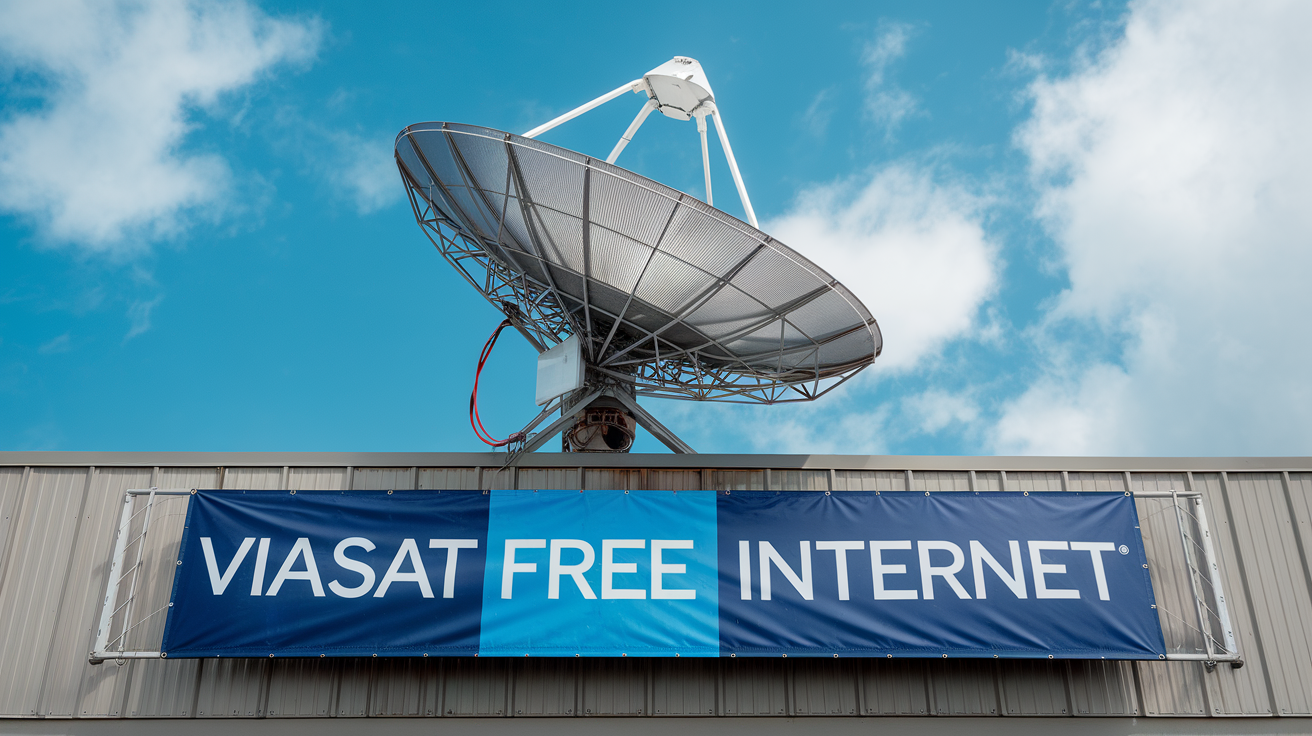
The promise of "free internet" from Viasat often sparks curiosity, but is it truly free? This in-depth guide breaks down the real costs, hidden fees, and true value proposition of Viasat's offerings, helping you make an informed decision beyond the initial allure.
Understanding Viasat's "Free Internet" Claims
Viasat, a prominent satellite internet provider, often advertises "free internet" or "free service" promotions. This marketing strategy is designed to attract new customers, particularly in rural and underserved areas where traditional broadband options are scarce. However, the term "free" in this context rarely means a complete absence of cost. Instead, it typically refers to introductory offers that waive or reduce certain upfront charges, such as equipment rental fees or installation costs, for a limited period. These promotions are a common tactic in the telecommunications industry to lower the barrier to entry. The underlying service, data usage, and ongoing monthly subscription fees are still very much a reality. It's crucial to understand that these "free" periods are temporary incentives, and customers will eventually be responsible for the standard monthly charges associated with their chosen internet plan. For many, especially those in areas with no other viable options, Viasat can be a lifeline, but transparency about the long-term financial commitment is paramount for managing expectations and avoiding surprises.
The satellite internet model itself involves significant infrastructure and operational costs. Viasat operates a constellation of satellites and ground stations, which require substantial investment in research, development, manufacturing, launch, and ongoing maintenance. These costs are passed on to consumers through service plans. Therefore, while promotions might offer a taste of "free" service, the fundamental economics of satellite internet dictate that ongoing payment is necessary. Understanding the nuances of these "free" offers requires looking beyond the headline and delving into the specifics of the contract and the service plan itself. This guide aims to illuminate these details, ensuring that consumers are fully aware of what they are signing up for and can make a decision that aligns with their budget and needs.
Deciphering Viasat Plans and Pricing
Viasat offers a range of satellite internet plans, each tailored to different usage needs and budgets. The core of their service revolves around data caps and download/upload speeds. Understanding these components is the first step in assessing the true cost of Viasat internet. It's important to note that Viasat's pricing and plan structures can vary by region, and promotions are frequently updated. Therefore, always verify the most current offerings directly with Viasat or a certified dealer in your specific area.
Common Viasat Plan Tiers and Features (2025-2026 Estimates)
While specific plan names and data allowances can change, Viasat generally structures its offerings around data buckets and speed tiers. Here's a general overview of what you might encounter:
1. Basic/Essential Plans
These plans are typically designed for light internet users who primarily use the internet for basic tasks like checking email, browsing websites, and occasional social media use. They usually come with the lowest data allowances and the slowest speeds. Speeds might range from 12 Mbps to 25 Mbps download, with upload speeds significantly lower, often around 3 Mbps. Data caps could be as low as 15 GB to 30 GB per month. These plans are often the ones featured in "free internet" promotions, where the monthly equipment fee might be waived for the first 3-12 months, but the data and service costs still apply.
2. Standard/Plus Plans
These plans offer a step up in both data and speed, catering to households with moderate internet usage. This could include streaming standard-definition video, more frequent social media engagement, and online gaming. Speeds might increase to 25 Mbps to 50 Mbps download, with upload speeds around 5 Mbps. Data allowances typically range from 30 GB to 60 GB per month. The promotional "free" aspects might still apply here, but the monthly service cost will be higher than the basic plans.
3. Premium/Pro Plans
For heavier users, these plans provide the most generous data allowances and the highest available speeds. They are suitable for households with multiple users, extensive streaming of high-definition or 4K content, large file downloads/uploads, and demanding online activities. Speeds could reach 100 Mbps download or more, with upload speeds around 5 Mbps to 10 Mbps. Data allowances might start at 60 GB and go up to 100 GB or more. These premium plans will naturally have the highest monthly subscription fees, even with introductory offers.
Understanding Data Caps and Priority Data
A critical aspect of Viasat plans is the data cap. This is the maximum amount of data you can use within a billing cycle before your speeds are potentially throttled or you incur overage charges. For satellite internet, data is a precious commodity due to the limited bandwidth available through the satellites. When you exceed your data cap, Viasat often implements a "data rollover" policy or, more commonly, a "deprioritization" policy. This means your speeds will be significantly reduced for the remainder of the billing cycle until the next cycle begins. This reduction can make basic internet tasks frustratingly slow.
Some plans might also differentiate between "priority data" and "unlimited data" that is subject to deprioritization. Priority data is the amount of data you can use at full speeds. Once you exhaust your priority data, your speeds will be reduced, especially during times of network congestion. It's essential to understand how much priority data is included in your plan and what the consequences are of exceeding it. For 2025-26, Viasat is likely to continue emphasizing these data management strategies to ensure network stability for all users.
Equipment Costs and Rental Fees
Viasat requires specialized satellite equipment, including a satellite dish and a modem. The cost of this equipment can be substantial. Historically, Viasat has offered options for purchasing the equipment outright or renting it on a monthly basis. Promotions often waive the monthly equipment rental fee for a set period (e.g., 24 months). However, once this promotional period ends, the rental fees can add a significant amount to your monthly bill. For instance, rental fees could range from $10 to $30 per month, depending on the plan and equipment. If you choose to purchase the equipment, the upfront cost could be several hundred dollars.
Installation Fees
Professional installation is almost always required for Viasat satellite internet. This involves mounting the satellite dish on your property and running cables to your modem. While some promotions might offer free or discounted installation, this is not always the case. Standard installation fees can range from $100 to $300 or more, depending on the complexity of the installation and your location. It's crucial to clarify whether installation is included in any "free" offer or if it will be an additional charge.
Hidden Costs and Fees to Watch For
Beyond the advertised monthly service fees and the initial "free" incentives, several other costs and fees can creep into your Viasat bill. Being aware of these potential charges is key to avoiding bill shock and understanding the true long-term expense of the service.
Promotional Period Expiration
This is perhaps the most significant "hidden" cost. The "free internet" or reduced monthly rate is almost always tied to a limited promotional period, typically lasting 3, 6, 12, or 24 months. Once this period concludes, your monthly bill will revert to the standard, higher rate for your chosen plan. For example, a plan advertised at $50/month for the first 12 months might jump to $100/month thereafter. It's vital to know exactly when your promotional period ends and what the standard rate will be. Many consumers are caught off guard by this increase.
Data Overage Charges (Less Common Now, but Possible)
While many providers have moved towards deprioritization rather than outright overage charges for exceeding data caps, some older or specific plans might still incur penalties for exceeding your monthly allowance. These charges can be substantial, often billed per gigabyte of data used over your limit. If your plan includes overage charges, it's imperative to monitor your data usage closely. Always clarify the provider's policy on data usage beyond your cap.
Equipment Rental Fees (Post-Promotion)
As mentioned earlier, if you opt for equipment rental instead of purchasing, the monthly fees can add up. Once any promotional waiver for these fees expires, you'll be responsible for paying the full rental cost. This can add $10-$30 or more to your monthly bill, significantly increasing the overall expense. If you plan to keep Viasat for an extended period, purchasing the equipment outright might be more cost-effective in the long run, despite the higher upfront cost.
Early Termination Fees (ETFs)
Viasat, like most internet service providers, typically requires customers to sign a contract, often for 24 months. If you decide to cancel your service before the contract term is up, you will likely face an Early Termination Fee (ETF). These fees can range from $15 to $30 per month for each remaining month on your contract. For a two-year contract, this could amount to several hundred dollars if canceled early. Always read the contract carefully to understand the ETF policy.
Service Upgrades and Add-ons
While not strictly "hidden," be mindful of any optional service upgrades or add-ons that might be presented during the sign-up process. These could include enhanced Wi-Fi extenders, static IP addresses, or premium support. Unless you specifically need these services, it's best to decline them to keep your monthly costs down.
Taxes and Surcharges
Like most utility services, Viasat bills are subject to various federal, state, and local taxes and surcharges. These are typically itemized on your bill and can add a percentage to your total cost. While these are standard, they can sometimes be overlooked when calculating the final monthly expense.
Service Calls and Equipment Issues
While Viasat aims to provide reliable service, technical issues can arise. If a technician needs to visit your home to resolve a problem that is not due to a defect in Viasat's equipment or network, you might be charged for the service call. Similarly, if you damage Viasat's equipment (beyond normal wear and tear), you could be liable for repair or replacement costs.
Comparison Table of Potential Costs (Illustrative 2025-2026)
This table illustrates potential costs associated with a Viasat plan, highlighting how "free" offers can evolve into regular expenses. Prices are estimates and can vary by location and specific promotion.
| Cost Component | Promotional Period (e.g., First 12 Months) | Standard Period (After Promotion) | Notes |
|---|---|---|---|
| Monthly Service Fee | $50 (e.g., advertised rate) | $100 (standard rate) | Varies by plan speed and data allowance. |
| Equipment Rental Fee | $0 (waived) | $15 | If not purchasing equipment outright. |
| Installation Fee | $0 (waived) | $150 (one-time) | If promotion includes free installation. |
| Data Overage (if applicable) | N/A (or standard policy) | $10 per GB (example) | Depends on plan structure. |
| Early Termination Fee (ETF) | N/A (until contract end) | $20/month for remaining contract | Applies if service is canceled early. |
| Taxes & Surcharges | ~$5-10 | ~$10-20 | Varies by local rates. |
| Total Estimated Monthly Cost | ~$55 - $60 | ~$125 - $135+ | Excludes potential overages or ETFs. |
Comparing Viasat to Alternatives
When considering Viasat, especially if you're drawn in by "free internet" offers, it's crucial to evaluate it against other available internet options in your area. The best choice depends heavily on your location, budget, and internet usage habits. In many rural areas where Viasat operates, the alternatives might be limited, but it's still worth exploring.
DSL Internet
Digital Subscriber Line (DSL) uses existing telephone lines to provide internet access. It's often available in areas where cable internet is not. DSL speeds are generally slower than cable or fiber but can be more consistent than satellite internet, especially in adverse weather conditions. Data caps on DSL plans are often more generous or non-existent compared to satellite. If you have a landline and DSL is available, it might offer a more stable and potentially cheaper long-term solution than Viasat, though speeds will likely be lower.
Cable Internet
Cable internet is delivered through the same coaxial cables that provide cable television. It generally offers higher speeds and lower latency than DSL and satellite internet. Many cable providers also offer unlimited data or very high data caps, making it a more suitable option for heavy internet users. If cable is available in your area, it is almost always a superior choice to Viasat in terms of performance and often in overall value, even without "free" introductory offers.
Fiber Optic Internet
Fiber optic internet is the gold standard for broadband. It uses thin strands of glass to transmit data at the speed of light, offering incredibly fast download and upload speeds, low latency, and virtually unlimited data. While fiber is not yet widespread in rural areas, its availability is growing. If fiber is an option, it will significantly outperform Viasat in every metric and is the most future-proof solution.
Fixed Wireless Internet
Fixed wireless providers use radio signals to transmit internet service from a local tower to a receiver on your home. This can be a viable option in rural areas where traditional wired infrastructure is lacking. Speeds and reliability can vary greatly depending on the provider and your proximity to the tower. Some fixed wireless plans offer competitive speeds and data allowances at a lower cost than satellite. It's worth investigating local fixed wireless providers.
Mobile Hotspots / 5G Home Internet
With the expansion of 5G technology, some mobile carriers are offering home internet solutions that use their cellular networks. These can provide surprisingly good speeds and are often more flexible than traditional wired services. However, data caps can still be a concern, and performance can be affected by cellular signal strength and network congestion. For some, a mobile hotspot plan with a dedicated hotspot device might also be an alternative, though data limits are usually quite restrictive.
Comparison Table: Viasat vs. Alternatives (Illustrative 2025-2026)
This table provides a general comparison. Actual performance and pricing will vary by provider and location.
| Feature | Viasat (Satellite) | DSL | Cable | Fiber Optic | Fixed Wireless | Mobile Hotspot/5G Home |
|---|---|---|---|---|---|---|
| Typical Download Speeds | 12-100+ Mbps | 1-100 Mbps | 50-1000+ Mbps | 100-10000+ Mbps | 25-100+ Mbps | 50-300+ Mbps |
| Typical Upload Speeds | 1-10 Mbps | 1-10 Mbps | 5-50+ Mbps | 100-10000+ Mbps | 5-20+ Mbps | 5-50+ Mbps |
| Data Caps | Strict (e.g., 15-100 GB priority) | Often Unlimited or High | Often Unlimited or High | Typically Unlimited | Varies (can be high) | Varies (can be restrictive) |
| Latency | High (500-700+ ms) | Moderate (50-100 ms) | Low (10-50 ms) | Very Low (<10 ms) | Moderate (30-100 ms) | Low to Moderate (20-80 ms) |
| Weather Impact | Significant | Minimal | Minimal | Minimal | Moderate | Moderate |
| Availability | Widespread (rural) | Moderate (rural/suburban) | Suburban/Urban | Growing (urban/suburban) | Varies (rural/suburban) | Widespread (cellular coverage) |
| "Free" Offers | Common (introductory) | Less Common | Less Common | Rare | Less Common | Occasional (device deals) |
| Long-Term Cost | Can be high after promo | Moderate | Moderate to High | Moderate to High | Moderate | Moderate to High |
Real-World Usage and Expectations
Understanding how Viasat's service performs in everyday scenarios is crucial, especially when considering the limitations imposed by satellite technology and data caps. The "free internet" promise might attract you, but the reality of using the service will dictate your satisfaction.
Impact of Latency
One of the most significant drawbacks of satellite internet, including Viasat, is high latency. Latency, or ping, is the time it takes for data to travel from your device to a server and back. Due to the vast distance the signal must travel to and from the satellite in orbit, Viasat's latency is considerably higher than terrestrial broadband services like cable or fiber. This high latency (often 500-700 milliseconds or more) can severely impact real-time applications:
- Online Gaming: Fast-paced online games are almost unplayable with high latency. Actions will feel delayed, leading to a frustrating experience and competitive disadvantage.
- Video Conferencing: While possible, video calls might experience noticeable delays in conversation, making them feel less natural and more challenging to follow.
- VoIP Calls: Similar to video conferencing, Voice over IP (VoIP) calls can suffer from choppy audio and delays.
- Real-time Transactions: Some online trading platforms or time-sensitive applications might be negatively affected.
For activities like browsing, email, and streaming non-live content, high latency is less of an issue, but it's still a factor that can make the internet feel less responsive.
Data Consumption: What Can You Do?
Viasat plans come with data caps, and understanding these is vital for managing your usage and avoiding speed throttling. Here's a general idea of data consumption for common activities (these are estimates and can vary):
- Web Browsing: 50-100 MB per hour.
- Email: Very low, negligible for typical use.
- Social Media: 100-300 MB per hour (more if watching videos).
- Standard Definition (SD) Video Streaming: 0.7-1 GB per hour.
- High Definition (HD) Video Streaming: 2-3 GB per hour.
- 4K Ultra HD Video Streaming: 5-7 GB per hour.
- Online Gaming (downloading games): Can range from 10 GB to over 100 GB per game.
- Video Conferencing: 0.5-1.5 GB per hour.
With typical Viasat data plans ranging from 15 GB to 100 GB of priority data, it's easy to see how quickly this can be consumed. For a household that streams a few hours of HD video daily, the priority data allowance could be exhausted within a week or two, leading to significantly slower speeds for the remainder of the month. This is where the "free" aspect of the initial offer can become misleading, as the limited data can severely restrict your internet usage.
Weather Impacts on Service
Satellite internet is susceptible to atmospheric conditions. Heavy rain, snow, or even dense cloud cover can interfere with the satellite signal, leading to intermittent service disruptions or significantly reduced speeds. This phenomenon is known as "rain fade." While Viasat uses advanced technology to mitigate these effects, severe weather can still impact performance, especially in certain geographic locations. This is a stark contrast to terrestrial broadband, which is generally unaffected by weather.
Installation and Equipment Realities
The installation process for Viasat requires a clear, unobstructed view of the southern sky (in the Northern Hemisphere) for the satellite dish. This often means mounting the dish on a pole or the side of your house. The installer will need to run cables through walls or conduits to your modem. While professional installers are generally skilled, ensure you understand where the dish will be placed and how the wiring will be managed. If the installation is complex, it might incur additional charges beyond the standard fee, even if the initial installation is advertised as "free."
Customer Service and Support
Customer service experiences can vary widely. While Viasat aims to provide support, many users report long wait times, difficulty resolving complex issues, and challenges with technical troubleshooting. Given the specialized nature of satellite technology, resolving problems can sometimes be more intricate than with other internet types. Understanding the support channels available and their responsiveness is part of managing expectations.
Case Study: Rural Family Scenario (2025)
The Miller family lives in a rural area with no access to cable or fiber. Their options are limited to Viasat or a very slow DSL line. They opt for a Viasat plan advertised with a "free 12 months of service."
- Initial Offer: $60/month for 50 GB of priority data, with the first 12 months of equipment rental and installation free.
- First 12 Months: The Millers enjoy speeds of around 30 Mbps download. They are mindful of their data usage, limiting streaming to weekends and ensuring devices are set to use less data. Their monthly bill is consistently around $60 (plus taxes/fees). They find browsing and email acceptable, but online gaming for their teenage son is impossible due to latency.
- Month 13: The promotional period ends. Their bill jumps to $110/month for the service, plus $15/month for equipment rental. The total bill is now around $125 plus taxes and fees.
- Usage Adjustment: Facing the higher cost, the Millers significantly reduce their streaming habits and try to download large files during off-peak hours. They find the reduced speeds after depleting their 50 GB priority data frustrating, especially when trying to stream educational videos for their children.
- Long-Term Consideration: After 18 months, they realize the ongoing cost and data limitations are becoming a significant burden. They begin researching alternatives again, including potentially more expensive fixed wireless options or satellite alternatives that might offer better data plans, even without the initial "free" incentive.
This scenario highlights how the "free" period is a temporary lure, and the long-term cost and performance limitations become the defining factors of the service.
Is Viasat Free Internet Worth It? The Final Verdict
The question of whether Viasat's "free internet" is worth it boils down to a few critical factors: your location, your budget, and your internet usage needs. The term "free" is a marketing tactic, and the service is never truly free in the long run. It represents an introductory offer designed to entice customers with reduced upfront costs or waived fees for a limited time.
Who might benefit from Viasat's offers?
- Individuals in extremely rural or underserved areas: If Viasat is your *only* option for broadband internet, and other alternatives like DSL are unavailable or prohibitively slow, then an introductory offer might provide a temporary, much-needed connection.
- Those with very light internet usage: If you primarily use the internet for occasional email checks, basic web browsing, and very limited social media, and you can strictly adhere to data caps, the initial promotional period might suffice for your needs at a lower cost.
- Budget-conscious users who understand the long-term costs: If you are fully aware that the monthly bill will increase significantly after the promotional period and you have budgeted for it, the initial savings can be beneficial.
However, for most users, Viasat's "free internet" is likely NOT worth it in the long term due to:
- High Latency: Makes real-time applications like gaming, video conferencing, and VoIP challenging or impossible.
- Strict Data Caps: Limits your ability to stream, download, or use the internet freely, leading to speed throttling.
- Significant Price Increase After Promotion: The monthly cost can double or more once introductory offers expire, making it a very expensive service compared to alternatives.
- Susceptibility to Weather: Performance can degrade during adverse weather conditions.
Recommendations:
- Exhaust All Other Options First: Before considering Viasat, thoroughly investigate DSL, fixed wireless, and even mobile hotspot options from local providers. Even a slower, more consistent DSL connection might be preferable to high-latency satellite internet.
- Read the Fine Print: If you do consider Viasat, scrutinize the contract. Understand the exact duration of the promotional period, the standard monthly rate after the promotion ends, equipment rental fees, and early termination fees.
- Calculate Total Cost of Ownership: Don't just look at the introductory price. Calculate the total cost over the contract term (e.g., 24 months) to get a realistic picture of your investment.
- Consider Your Usage: Be honest about how much data you consume. If you stream HD video regularly or have multiple users in your household, Viasat's data caps will likely be a major limitation.
- Look for Long-Term Value: While "free" sounds appealing, prioritize a service that offers consistent performance, sufficient data, and a sustainable monthly cost for your needs.
In conclusion, Viasat's "free internet" is a limited-time offer that can provide a connection where none exists. However, the inherent limitations of satellite technology, coupled with the substantial price increase after the promotional period, mean it's rarely a truly cost-effective or high-performance solution for the long haul. Always prioritize transparency and long-term value over temporary "free" incentives.