-
Posted on: 20 May 2026
-
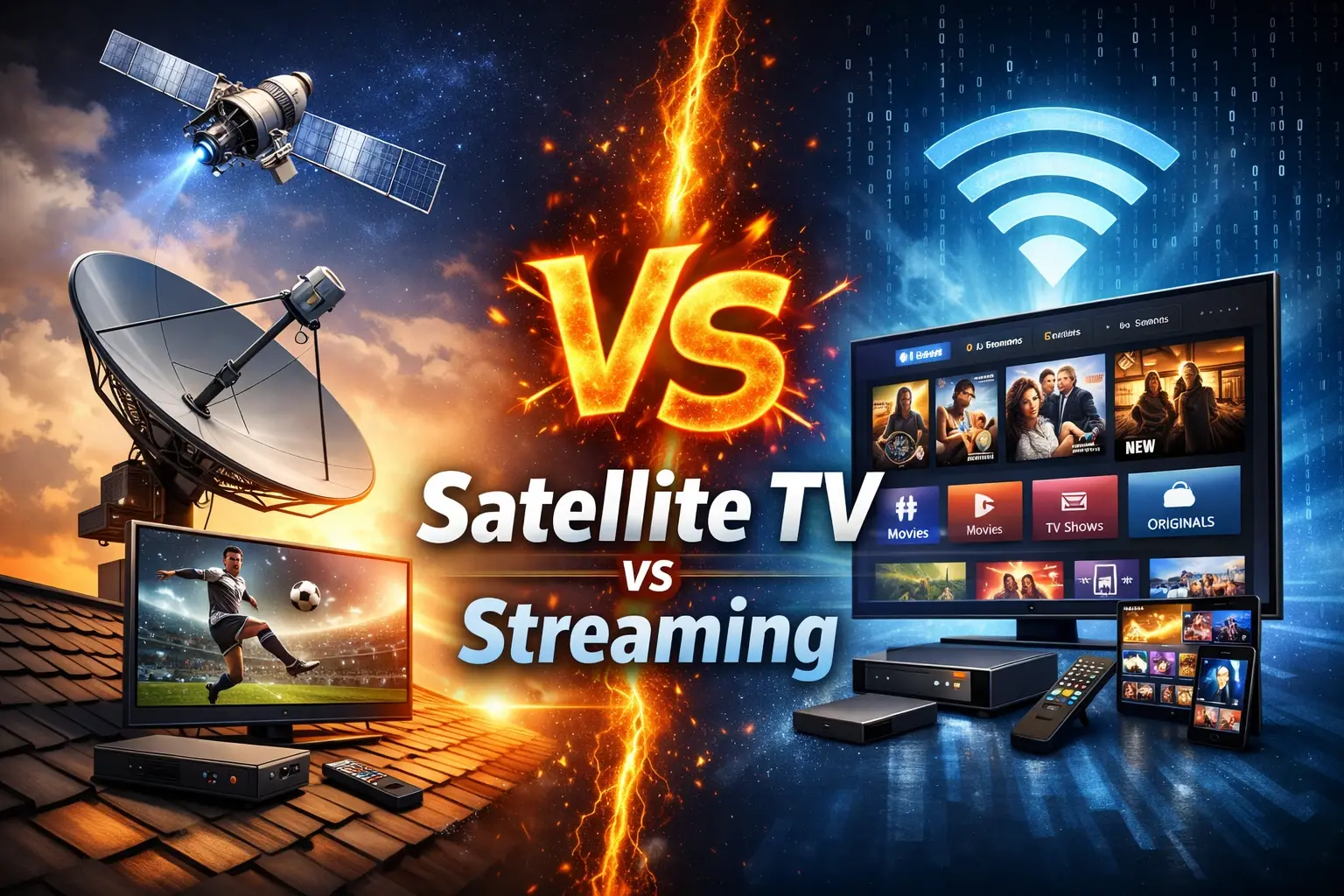
Streaming provides unmatched flexibility and lower upfront costs, currently accounting for 47% of US viewing time. Satellite TV delivers superior reliability for live sports and rural households lacking high-speed internet. Your optimal choice depends entirely on your broadband stability and live sports viewing habits.
The television market looks completely different today than it did a decade ago. Over 80 million US households have abandoned traditional cable and satellite subscriptions as of 2026. Streaming platforms dominate the cultural conversation. Yet, traditional satellite TV providers still serve roughly 50 million households. These subscribers aren't just holding onto the past. They recognize specific advantages that streaming technology still struggles to match.
You face a significant decision when setting up your home entertainment system. You must choose between the modern agility of internet-based streaming and the established reliability of satellite broadcasts. This choice impacts your monthly budget, your access to local sports, and your daily viewing experience. We will break down the exact differences in cost, content, reliability, and hardware to help you make the right choice for your household.
The Financial Reality: Cost vs Value
Many consumers switch to streaming under the assumption that it will save them money. Early streaming platforms offered massive content libraries for a few dollars a month. That era ended. Media companies fractured the market by launching their own proprietary platforms.
Today, a single streaming service like Netflix, Hulu, or Max costs significantly less than a basic satellite package. The problem arises from subscription fatigue. A single platform rarely covers all your viewing needs. You might want Netflix for original series, Disney+ for family content, and Amazon Prime for movies. This juggling act of subscribing to four or five different services pushes your monthly entertainment bill perilously close to traditional satellite pricing.
Streaming services also frequently alter their pricing structures. Platforms introduce ads to lower-tier plans or raise subscription rates with little warning. You absorb these cost increases instantly. Furthermore, streaming requires high-speed internet. You must factor the cost of a robust broadband plan into your streaming budget.
Satellite TV demands higher upfront commitments but offers financial predictability. Providers typically require two-year contracts. In exchange for this commitment, they lock your monthly rate. You know exactly what your bill will be next January. Satellite packages often include hundreds of channels, meaning you pay a premium, but you gain a consolidated, predictable entertainment budget without hidden app fees.
Feature
Streaming Services
Satellite TV
Pricing Model
Month-to-month subscriptions. Frequent price hikes.
2-year contracts. Price locks guarantee stability.
Hidden Costs
Paying for multiple platforms to access desired shows. Requires broadband.
Equipment rental fees, broadcast TV surcharges.
Flexibility
Cancel or pause anytime through an app.
Cancellation fees apply if you break the contract.
Data Limits
Consumes massive amounts of internet bandwidth. Subject to ISP data caps.
Uses zero internet data for live broadcast viewing.
The Content Battleground: Sports vs. On-Demand
Streaming platforms built empires on on-demand entertainment. They invest billions in exclusive original movies and binge-worthy television series. When you open a streaming app, an algorithm recommends content based on your exact viewing history. You watch what you want, precisely when you want it.
Satellite TV struggles to compete with this level of personalization. Broadcasters follow fixed schedules. You watch a show when the network airs it, or you remember to record it. However, satellite maintains absolute dominance in one critical arena: live sports.
Regional sports networks remain heavily tied to traditional broadcast agreements. Streaming platforms acquire more sports rights every year, such as exclusive NFL or MLB packages. Yet, finding all your local team's games across various streaming apps requires frustrating research and multiple subscriptions.
Satellite provides comprehensive access to live sports, local news, and major events in one centralized location. Sports fans frequently retain a satellite package specifically to avoid streaming blackouts and the fragmented viewing experience of jumping between five different apps to find a Saturday football game. The channel guide offers a unified interface that streaming aggregators have yet to replicate seamlessly.
Technical Requirements and Reliability
Your streaming experience depends entirely on the quality of your internet connection. High-definition and 4K streaming demand substantial bandwidth. If multiple people in your house stream simultaneously, or if your local network experiences congestion, your movie will buffer. The resolution will drop. In areas lacking fiber-optic infrastructure, streaming live events often results in delays or total connection failure.
Satellite television bypasses local broadband infrastructure entirely. Broadcasters beam the signal directly from orbit to the dish mounted on your roof. Once connected, you receive a consistent, high-quality broadcast. You do not need high-speed internet to watch satellite TV. This makes it an essential utility for rural homes far from municipal broadband networks.
Weather represents the only significant threat to satellite reliability. Severe thunderstorms or heavy snow accumulating on the dish can disrupt the signal. However, these interruptions usually last only minutes. For daily viewing, particularly in remote locations where reliable internet remains scarce, satellite television provides a more stable picture than broadband-dependent streaming.
Hardware and User Experience
Streaming offers unmatched portability. Your subscription lives in the cloud. You watch shows on your living room television, your tablet on a train, or your phone during a lunch break. You simply download an app and log in. You don't need proprietary hardware, as most modern televisions have streaming capabilities built directly into the screen.
Satellite TV ties you to a physical location. A technician must bolt a dish to your house and run cables through your walls. You rent proprietary set-top boxes for every television in your home. This hardware requires physical space and electrical outlets.
Satellite providers try to bridge this gap by offering advanced DVR systems. These boxes record hundreds of hours of live television. You can skip commercials on recorded programs. Some modern satellite receivers even integrate streaming apps into their channel guides, allowing you to access Netflix or Prime Video without changing television inputs.
The 2026 Hybrid Approach
The market no longer demands a strict choice between the two technologies. Consumers increasingly adopt a hybrid approach. Many households keep a streamlined satellite package to guarantee access to live sports and local news. They supplement this broadcast foundation with one or two rotating streaming subscriptions for on-demand movies and original series.
Satellite operators understand this trend. They aggressively market smaller, sports-focused channel bundles. They build set-top boxes that act as central hubs for both satellite broadcasts and streaming apps, creating a unified entertainment ecosystem for the living room.
Conclusion
Streaming wins on flexibility, portability, and on-demand libraries. It suits urban users with reliable internet who prefer paying only for specific content. Satellite TV remains the superior choice for dedicated sports fans, rural residents with poor broadband, and viewers who value a unified, channel-surfing experience over app-hopping. Evaluate your internet speed, calculate your total monthly streaming subscriptions, and list your must-watch live sports to determine the optimal setup for your home.
Frequently Asked Questions
What is the main difference between satellite TV and streaming?
Streaming delivers content via high-speed internet, offering flexible, on-demand viewing. Satellite TV beams live broadcast signals directly from orbit to a dish mounted on your home, bypassing local internet infrastructure entirely.
Is streaming actually cheaper than satellite TV?
A single streaming service costs significantly less than a satellite package. Subscribing to four or five platforms to match a satellite channel lineup often costs the same or more than traditional pay TV.
Do I need high-speed internet for satellite TV?
You do not need internet access to watch traditional satellite TV programming. You only require a clear view of the southern sky for the dish. Streaming demands a fast, stable broadband connection.
Why do sports fans prefer satellite TV?
Satellite packages include regional sports networks and comprehensive local broadcast channels in one bundle. Streaming sports often requires navigating multiple apps, dealing with regional blackouts, and watching delayed feeds.
Can I use streaming and satellite TV together? Yes. Modern satellite set-top boxes integrate popular streaming apps directly into their main menus. You watch live satellite broadcasts and switch to a streaming service using the same remote.
Is Satellite TV Better Than Streaming?
Research, Compare & Choose With Confidence
Last updated: June 25, 2026