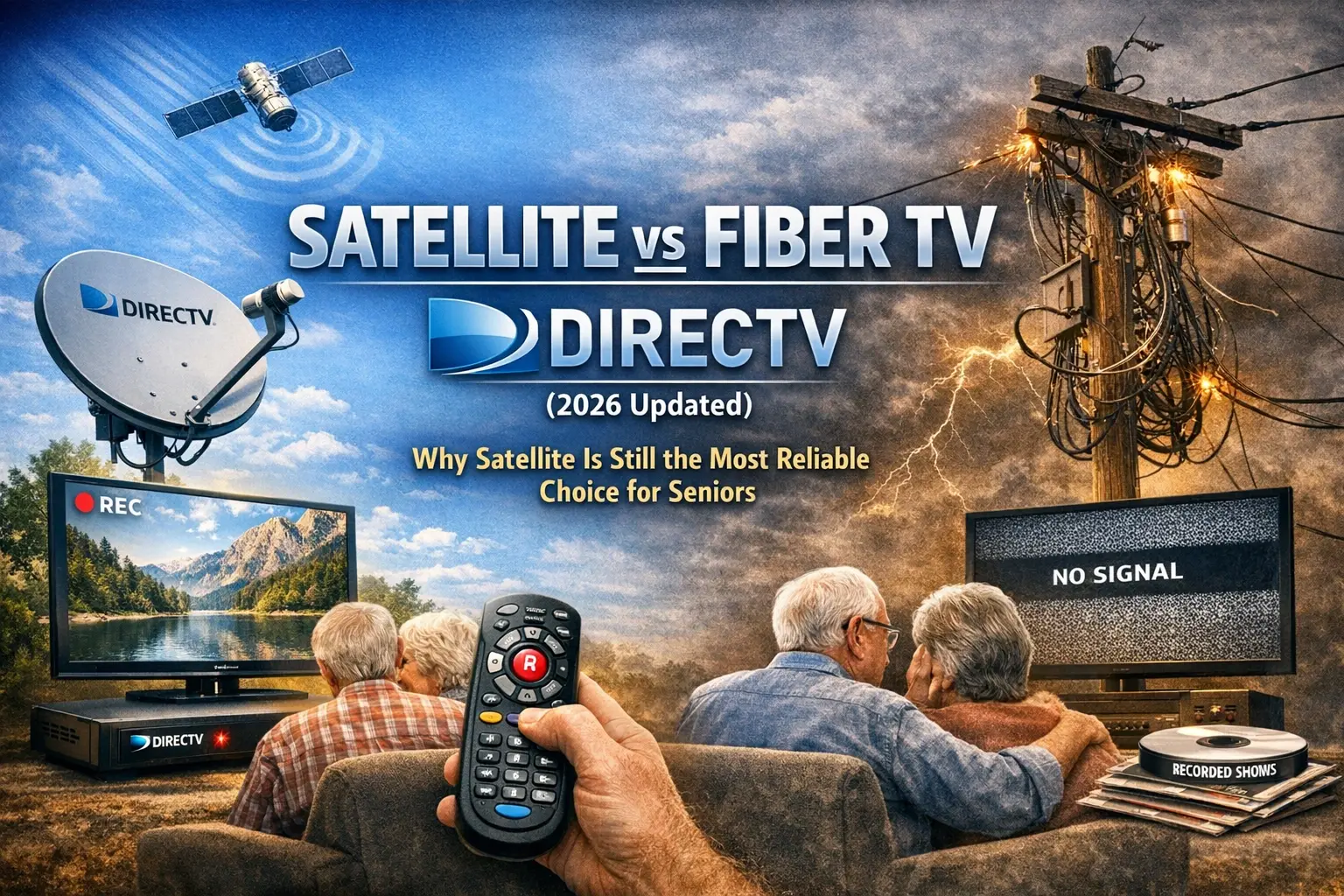
For most seniors in the US — especially those in rural or suburban areas — satellite TV is still the more reliable and easier choice. It works without a broadband internet connection, covers all 50 states, and uses a simple remote that most people already know how to use. Fiber TV offers faster streaming and modern features, but it is only available in select cities and requires a strong internet connection to function.
Quick Answer — At a Glance:
- Best for reliability - Satellite TV
- Best for speed - Fiber TV
- Best for rural areas - Satellite TV
- Best for tech simplicity - Satellite TV
- Best for streaming and apps - Fiber TV
- Best for fixed-income households - Satellite TV
Satellite TV vs Fiber TV: Full Comparison
| Feature | Satellite TV | Fiber TV |
|---|---|---|
| Availability | All 50 states, including rural areas | Urban and suburban areas only |
| Reliability | High — works without internet | Depends on the internet connection stability |
| Weather Impact | The signal may dip in heavy storms | Not affected by the weather |
| Setup Complexity | Dish install + simple remote | Router + app-based interface |
| Monthly Cost | $60–$120/month | $65–$150/month (bundle) |
| Channel Variety | 150–330+ live channels | Varies by streaming package |
| Ease of Use for Seniors | Very high — familiar channel guide | Moderate — requires app navigation |
| Internet Required? | No | Yes |
| Contract Required? | Often yes (1–2 years) | Usually no |
| DVR Included? | Yes, on most plans | Depends on the provider |
Why Satellite TV Works Better for Most Seniors
It Works Everywhere — Including Rural Areas
One of the biggest advantages of satellite TV is simple: it works anywhere with a clear view of the sky. Whether you live in rural Montana, a small town in Georgia, or a suburb of Oklahoma City, satellite TV reaches you.
Fiber TV is only available in densely populated cities. If you live outside a major metro area, fiber is often not an option at all. For the millions of seniors living in rural America, satellite TV is not just a preference — it is often the only reliable TV option available.
No Internet Connection Needed
Fiber TV and most streaming services rely entirely on your home internet connection. If your internet goes down — whether from an outage, a billing issue, or a router problem — you lose your TV too.
Satellite TV works independently of your internet service. You can have no internet at all and still watch your local news, favorite shows, and live sports without interruption. For seniors who are not heavy internet users, this independence is a significant advantage.
Simple Remote, Familiar Interface
Fiber TV services often require navigating apps, switching between streaming platforms, and managing multiple remote controls or smart TV menus. For someone who simply wants to turn on the TV and find their channel, this added complexity is frustrating.
Satellite TV uses a single remote and a straightforward channel guide — the same type of interface that most people have used for decades. You press a number or use the up/down arrows. That is it. No login screens, no buffering wheels, no app updates required.
Consistent Channel Experience Every Day
With satellite TV, you know exactly what you are getting every time you turn on the TV. Your local news is on channel 5. Your favorite network shows are where they have always been. The guide looks the same every morning.
Fiber TV and streaming services change constantly — apps update, menus shift, channels move between platforms. For seniors who value a predictable, consistent TV experience, satellite delivers that stability every day.
Dedicated Customer Support
Both DISH Network and DIRECTV offer dedicated customer support lines, in-home technician service, and senior-friendly assistance. If something goes wrong with your satellite dish or receiver, you can call a number and get real help — including an in-person technician if needed.
Real-Life Scenarios: Who Benefits Most from Satellite TV
Scenario 1 — The Rural Retiree
Margaret is 72 and lives on a small farm in rural Tennessee. Fiber internet is not available in her area, and her broadband connection is slow and unreliable. She tried streaming TV for a few months but kept losing her picture mid-show.
She switched to DISH Network satellite TV. Now she gets 190+ channels, a reliable signal, and a DVR to record her favorite programs. Her TV works the same whether her internet is up or down.
Scenario 2 — The Senior Who Wants Simple TV
Robert is 68 and lives in a Phoenix suburb. He is not interested in learning new apps or managing a smart TV interface. His kids set him up with a fiber TV service, but he kept accidentally switching between apps and losing his place.
He switched to DIRECTV satellite. He has one remote, a familiar channel guide, and all the channels he actually watches. He has not had a single problem in two years.
Scenario 3 — The Fixed-Income Household
Dorothy and her husband are both retired and living on Social Security and a small pension in rural Arkansas. They need reliable TV on a tight budget. Fiber is not available in their zip code, and streaming services add up fast when you need multiple subscriptions to replace live TV.
DISH's basic satellite package gives them local channels, news, and their favorite cable networks for a predictable monthly rate — with no surprise fees for equipment or service calls.
When Fiber TV Is the Better Choice
Fiber TV is the right choice for some households. Here is when fiber makes more sense:
You live in a major city with reliable fiber coverage. If Verizon Fios, AT&T Fiber, or Google Fiber is available in your area and your internet connection is fast and stable, fiber TV can be excellent.
You watch a lot of on-demand content. Fiber TV services often include large on-demand libraries and seamless streaming integration. If you watch more Netflix, Hulu, or Prime Video than live TV, fiber bundles can be a better value.
You have multiple people using multiple devices. Fiber internet handles multiple streams at once without any quality loss. For households with grandchildren visiting, fiber handles the extra load easily.
You are comfortable with app-based navigation. If you are tech-savvy and enjoy exploring streaming apps and smart TV features, fiber offers greater flexibility and more modern features.
DISH Network and DIRECTV: The Top Satellite Providers for Seniors
DISH Network
DISH Network is one of the most senior-friendly satellite TV providers in the US. Here is what makes it a strong choice:
Hopper DVR System: DISH's Hopper lets you record up to 16 shows at once and store hundreds of hours of content. You never miss a program, even if you forget to watch it live.
Simple Voice Remote: DISH includes a voice-activated remote that lets you say the name of a show instead of typing it. For seniors with arthritis or limited dexterity, this is a significant quality-of-life improvement.
Channel Packages Starting Around $69.99/month: DISH's America's Top 120 package includes 190+ channels and is one of the most affordable live TV options on the market.
2-Year Price Lock: DISH offers a price guarantee for the first two years, so your monthly bill will not suddenly increase — a real benefit for fixed-income households.
24/7 Customer Support: DISH's US-based support team is available around the clock by phone.
DIRECTV
DIRECTV has been the most popular satellite TV provider in the US for decades, with over 15 million subscribers. Key features for seniors include:
NFL Sunday Ticket and Premium Sports: For seniors who love live sports — especially football — DIRECTV's sports packages are unmatched by any fiber or streaming service.
Genie DVR: DIRECTV's Genie DVR records up to 5 shows at once and can be shared across every TV in your home. One subscription covers the whole house.
Simple Senior-Friendly Packages: DIRECTV's ENTERTAINMENT package starts around $64.99/month and includes 165+ channels — covering all major networks, news channels, and cable favorites.
In-Home Service Guarantee: DIRECTV sends a technician to your home for equipment issues at no additional charge under their protection plan.
Consistent Long-Term Pricing with Bundles: DIRECTV bundles with AT&T internet in many areas, giving seniors a single bill for both TV and internet service.
Pricing and Value: What You Actually Pay
Understanding the real cost of satellite TV vs fiber TV helps you make the right decision for your budget.
Satellite TV Costs
| Provider | Entry Package | Mid-Tier Package | Premium Package |
|---|---|---|---|
| DISH Network | ~$69.99/mo (190+ ch) | ~$84.99/mo (240+ ch) | ~$99.99/mo (290+ ch) |
| DIRECTV | ~$64.99/mo (165+ ch) | ~$89.99/mo (225+ ch) | ~$134.99/mo (330+ ch) |
Typical additional costs: Equipment lease fee ($5–$15/month), regional sports fee ($15/month on some plans), installation (often free with contract).
Fiber TV Bundle Costs
Fiber TV is typically sold as a bundle with internet service. Expect to pay:
- Entry bundle (TV + internet): $80–$110/month
- Mid-tier bundle: $110–$140/month
- Premium bundle: $150–$200/month
Hidden costs to watch for: Router rental ($10–$15/month), broadcast TV fees ($10–$25/month), regional sports surcharges, and streaming add-ons required for certain channels.
The Bottom Line on Cost
For seniors who do not need fast internet, satellite TV is almost always the better value. You pay for TV — and only TV — without being required to bundle with an internet plan you may not need or use heavily.
Final Verdict: Which Is Better for Seniors?
Satellite TV is the better choice for most seniors in the US.
If you live outside a major city, rely on a simple TV experience, do not want your TV tied to your internet connection, or are on a fixed income, satellite TV from DISH Network or DIRECTV gives you the reliability, simplicity, and nationwide coverage that fiber simply cannot match.
Fiber TV is excellent for tech-comfortable urban users who stream heavily and have a fast, stable internet connection. But for the majority of American seniors, satellite TV remains the most dependable, most accessible, and easiest-to-use TV option available today.
Check Satellite TV Availability in Your Area
Ready to find the right satellite TV plan for your home? Call (855) 212-8877 to speak with a specialist who will compare DISH and DIRECTV plans available in your zip code, explain your options in plain English, and help you find the best channel package at the right price — with no pressure and no confusing upsells.
Call (855) 212-8877 today — it takes less than 5 minutes to find your perfect plan.
Frequently Asked Questions
1. Is satellite TV reliable for seniors?
Yes. Satellite TV is one of the most reliable TV options available for seniors in the US. It does not depend on an internet connection, works in all 50 states, and delivers a consistent channel experience every day. Providers like DISH and DIRECTV have served millions of American households for decades with high uptime and dependable service.
2. Does the weather affect satellite TV signal?
Heavy rain or thick storm clouds can briefly reduce satellite TV signal quality — this is called "rain fade." However, most interruptions last only a few minutes and resolve on their own. Modern satellite equipment handles most weather events without any noticeable disruption. For the vast majority of viewing time, the weather has no impact on your picture quality.
3. Is fiber TV better than satellite TV for seniors?
Fiber TV can offer more features and faster on-demand performance, but it requires a strong internet connection and is only available in select urban areas. For seniors who live in rural or suburban areas, prefer a simple channel guide, or do not want their TV tied to their internet service, satellite TV is the better and more reliable choice.
4. What is the easiest TV service for seniors?
Satellite TV — specifically DISH Network or DIRECTV — is widely considered the easiest TV service for seniors. Both use a single remote, a simple numbered channel guide, and do not require navigating apps or streaming platforms. DISH also offers a voice remote that lets you find shows by speaking rather than typing, which many seniors find easier and more comfortable.
5. Can I get satellite TV in rural areas?
Yes. This is one of the biggest advantages of satellite TV over fiber. Satellite TV is available in all 50 states, including remote rural areas where cable and fiber internet have never reached. As long as your home has a clear view of the southern sky, a satellite dish can be installed, and you can receive a full channel lineup — regardless of your location.
6. Which is cheaper — fiber TV or satellite TV?
For seniors who only need TV service without a bundled internet plan, satellite TV is typically cheaper. DISH and DIRECTV entry packages start around $65–$70/month for 165–190+ channels. Fiber TV is almost always sold as a bundle with internet, pushing the monthly cost to $80–$150 or more. If you already have internet service and just need TV, a standalone satellite TV package is usually the most affordable option.